US zero-carbon future would require 6TWh of energy storage
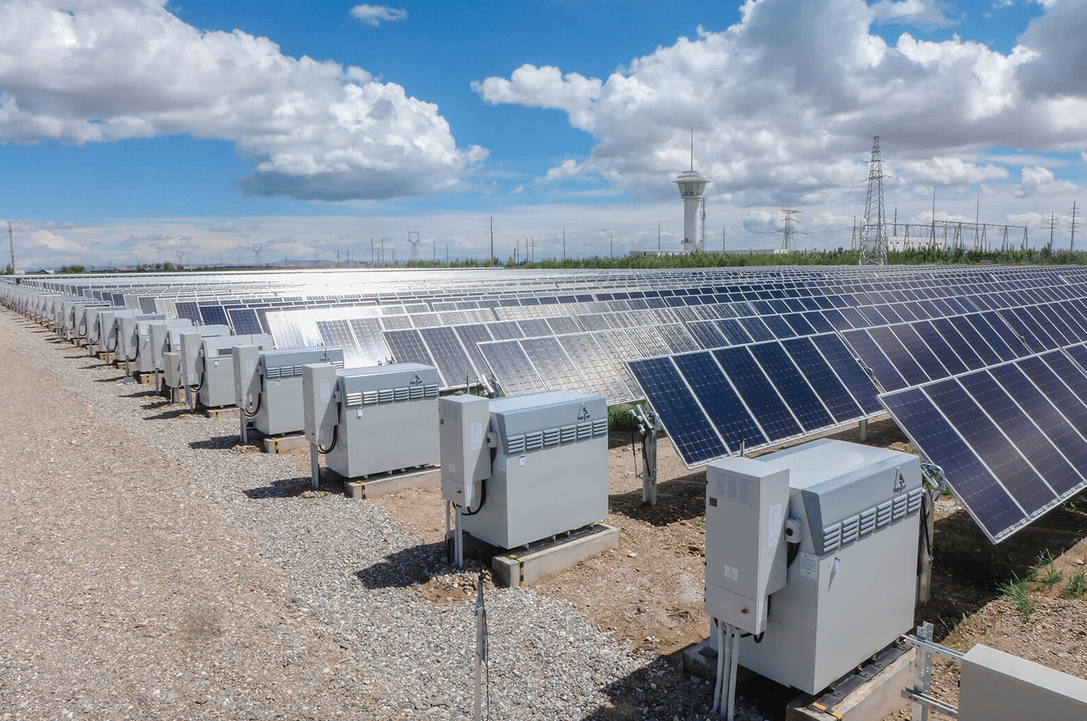
From pv magazine USA
The U.S. Department of Energy’s National Renewable Energy Laboratory (NREL) has released its sixth paper – “Grid Operational Impacts of Widespread Storage Deployment” – in its Storage Future Series. The purpose of the document is to analyze some of the effects of energy storage on the power grid as it evolves toward five unique scenarios in 2050.
The scenarios include the Reference Scenario, which follows all default pricing and technology assumptions by the US National Renewable Energy Laboratory (NREL). These assumptions can be found in the document, and other papers referenced, in full. NREL also examined the four following scenarios:
- Low-Cost Battery
- Low-Cost PV
- High Natural Gas Cost & Low-Cost Battery scenario
- Zero Carbon
Even the Reference Scenario includes a lot of wind and solar – 20.4% and 28.8% of all US electricity, respectively. Solar PV generation projections among the five scenarios range from a low of 28.8% to a high of 46% in the High Natural Gas/Low Battery Cost scenario.
Interestingly, the Zero Carbon pathway predicts the third-highest total of solar power out of the five scenarios, at 33.4%. The solar is complemented by the highest wind volume in this scenario at 37.3%.
Energy storage power capacities range from 213GW to 932GW, with the average duration ranging from 4.7 to 6.5 hours. The chart below shows this volume being deployed in power, with its hourly rating specified by color. As time goes on, we see the longest duration batteries – and by far the highest total volume of product – installed in the 2040s as we approach the 2050 end year of the analysis.
The total volume of storage in the batteries ranges from 1.3 TWh to just over 6.0 TWh in the 94% renewable electricity, Zero Carbon scenario. Several years ago, a different group of researchers suggested that the United States could get to 80% wind and solar with approximately 5.4 TWh of energy storage.
The researchers revealed some nuances between the various scenarios. For instance the Zero Carbon scenario results in large amounts of curtailment of wind and solar nearly 24 hours a day, all year round. This leads to the batteries actually being used less than in other scenarios because the wind and solar is always running, and in its over producing nature, meets the grid demands often.
Furthermore, as the volumes of renewables grow, it becomes clear that storage’s charging needs most aligns with solar power’s generation curves, due to solar’s daily predictability. The report notes that oftentimes wind power will over-generate for days on end, far longer than the energy storage hourly durations considered for this document.
An expected outcome was that even though energy storage’s capacity factor is relatively low across all scenarios – the actual time spent outputting electricity is only 10% to 20% – its capacity factor exceeded 75% during the top 10 net load hours across all scenarios and years.
The authors compare these capacity factors and the utilization technique of batteries to a recent analysis of combustion turbine generators in the United States – often referred to as peaking plants – which had an average capacity factor of 11% in 2019. They pointed out several key benefits that energy storage delivered beyond simply offering electricity on demand.
On average, energy storage increased powerline utilization rates. However, these utilization rates varied widely depending on location. Some regions saw greater powerline usage as these locations exported more energy than they were using. Areas with strong local balance between generation, storage, and demand saw lower powerline utilization as little was imported or exported.
Of course, the fact that storage was able to charge up with the overgeneration of wind and solar in the Zero Carbon scenarios was its greatest benefit. Also seen was that diurnal storage – 12 hours of output and longer – does have an increasing opportunity as 2050 is reached, and 100% clean electricity is approached. Longer- term storage wasn’t analyzed in this report, but it might be in future documents from NREL.
As an aside, one can currently purchase 3.08 GWh worth of Tesla Megapacks for just over $1 billion. At these prices, 6 TWh would cost about $2 trillion. The gross domestic product of the United States in 2021 was about $23 trillion.
This content is protected by copyright and may not be reused. If you want to cooperate with us and would like to reuse some of our content, please contact: [email protected].

Please login to comment

[…] offers an extremely stable and dependable energy source which will not require any of the costly energy storage workarounds or complex smart grids that solar and wind power will increasingly require. It’s what’s known […]
[…] the path to the green energy transition. In fact, a net-zero energy future will require a whopping 6TWh of energy storage. A report released in October of last year projects that the global off-grid energy storage system […]
[…] the path to the green energy transition. In fact, a net-zero energy future will require a whopping 6TWh of energy storage. A report released in October of last year projects that the global off-grid energy storage system […]
[…] the path to the green energy transition. In fact, a net-zero energy future will require a whopping 6TWh of energy storage. A report released in October of last year projects that the global off-grid energy storage system […]
[…] of the renewable energy sector. In fact, a net-zero energy future will require a whopping 6TWh of energy storage. It is needed to capture excess energy captured when production is high and then release that […]
[…] growth is all about energy storage.In fact, a net-zero energy future will require a whopping 6TWh of energy storage. A new report projects that the global off-grid energy storage system market is expected to grow by […]
[…] fact, a net-zero energy future will require a whopping 6TWh of energy storage. A new report projects that the global off-grid energy storage system market is expected to grow […]
[…] growth is all about energy storage.In fact, a net-zero energy future will require a whopping 6TWh of energy storage. A new report projects that the global off-grid energy storage system market is expected to grow by […]
[…] fact, a net-zero energy future will require enormous 6TWh of energy storage. A new report projects that the global market for off-grid energy storage systems is expected to […]
[…] fact, a net-zero energy future will require a whopping 6TWh of energy storage. A new report projects that the global off-grid energy storage system market is expected to grow by […]
[…] с нулева нетна енергия ще изисква огромно количество 6TWh съхранение на енергия. А нов отчет прогнозира, че глобалният пазар на […]
[…] fact, a net-zero energy future will require a whopping 6TWh of energy storage. A new report projects that the global off-grid energy storage system market is expected to grow by […]
[…] which predicted a battery module price increase of 5% this year will drive up the overall cost of stationary battery projects around 3%. The analyst recorded price rises of 10-20% for lithium-ion batteries in the “later […]
[…] which predicted a battery module price increase of 5% this year will drive up the overall cost of stationary battery projects around 3%. The analyst recorded price rises of 10-20% for lithium-ion batteries in the “later […]
[…] which predicted a battery module price increase of 5% this year will drive up the overall cost of stationary battery projects around 3%. The analyst recorded price rises of 10-20% for lithium-ion batteries in the “later […]
[…] US zero-carbon future would require 6TWh of energy storage […]
[…] is energy storage, and lots of it. In fact, a zero-carbon energy future will require a whopping 6TWh of energy storage. The energy storage sector is still in its infancy, but it’s expanding rapidly and is expected to […]
[…] is power storage, and plenty of it. In reality, a zero-carbon power future would require a whopping 6TWh of power storage. The power storage sector continues to be in its infancy, nevertheless it’s increasing quickly […]
[…] is energy storage, and lots of it. In fact, a zero-carbon energy future will require a whopping 6TWh of energy storage. The energy storage sector is still in its infancy, but it’s expanding rapidly and is expected to […]

Cannot see any problems here its all been worked out and perfected. Cannot wait for all the free power as was promised in the 1950s with nuclear power generation when we were promised that the power was so cheap it wouldn’t need to be metered. Luckily now with all our eggs in the one basket the world will be saved from climate change. Im truely looking forward to the winterless weather years of the future and extremely cheap electricity.
[…] Read More […]
[…] Read More […]
[…] Read More […]
[…] US researchers suggest that by 2050, when 94% of electricity comes from renewable sources, approximately 930GW of energy storage power and six and a half hours of capacity will be needed to fully cover demand for electricity in the United States. The U.S. (Full article) […]
[…] This content is protected by copyright and may not be reused. If you want to cooperate with us and would like to reuse some of our content, please contact: [email protected]. […]
[…] a good starting point, but we’re going to have to climb higher to reach the summit. According to researchers, for the U.S to provide 94% of its energy for renewable sources, it’ll need 930 GW of power for […]