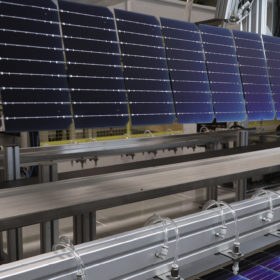
The weekend read: The return of global PV manufacturing
A successful initial public offering on the Istanbul stock exchange this year proved that a business model with an emphasis on solar cell and module manufacturing outside of China or Southeast Asia can find the backing of institutional investors. The landmark finance deal gives fresh shine to the ongoing discussions about the chances of re-establishing the crystalline silicon solar value chain in Europe.

Manz exits solar business
The German PV equipment manufacturer said it will discontinue all activities in the CIGS thin-film area after writing off €23.2 million due to a failed fab project in China.
Chinese PV Industry Brief: Polysilicon price remains flat
In other news, JinkoSolar is seeking to raise CNY 10 billion ($1.48 billion) to finance its capacity expansion plans and Trina Solar predicts strong profit growth for the first half of the year.

Forecast methodology for photovoltaic power yield during solar eclipses
In October there will be a partial solar eclipse in Central Europe. The Fraunhofer IEE has developed a solution that reportedly enables the most accurate forecast possible of the photovoltaic feed-in power during the extreme event.
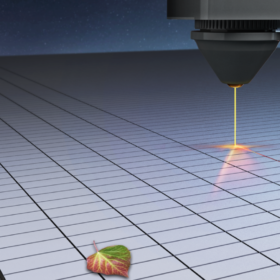
Reverse bias – a hidden challenge for perovskite solar cell stability
New research from renowned PV scientist Martin Green and colleagues at UNSW reveals that perovskite solar cells may struggle to deal with reverse-bias caused by uneven shading or other issues likely to appear in the field. Both the reverse-bias itself and resulting build up of heat can cause several of the materials commonly used in perovskite solar cells to degrade, and these issues have received only limited attention in research published to date. Solutions, however, are at hand.

Solar tree-based photovoltaic plants for mountainous areas
Scientists in land-scarce Korea are proposing to use solar trees to build PV installations in forest areas. Although more expensive than conventional ground-mounted facilities, solar plants made of solar trees may capture carbon from forest land and produce energy at the same time.
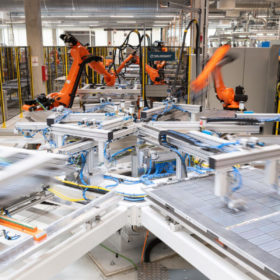
Solarwatt obtains ‘cradle-to-cradle’ certification for its glass-glass solar modules
The ‘cradle-to-cradle’ certification is considered a globally recognized holistic product quality standard. The assessment is made for five categories: material health, recyclability of materials, energy management and CO2 emissions, water management and social responsibility
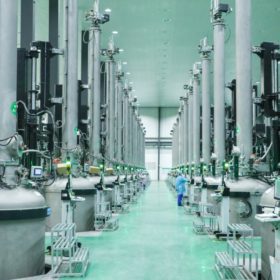
The PV industry needs 12 times more polysilicon production capacity by 2050
New research from the University of New South Wales (UNSW) predicts cumulative polysilicon demand of 46-87 Mt will be required to achieve 63.4 TW of PV installed by 2050.
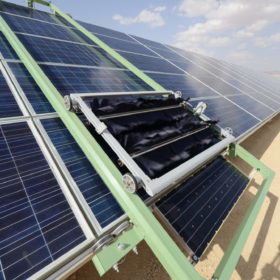
India’s cumulative installed PV capacity tops 57.7 GW
Rajasthan (14.4 GW), Gujarat (7.8 GW) and Karnataka (7.6 GW) are the Indian states with the largest amount of solar power.

The Hydrogen Stream: $8 billion green hydrogen facility near the Suez Canal
Egypt is taking several steps to support renewable and hydrogen projects, aiming to produce 42% of its electricity from renewable sources by 2030. Meanwhile, a team of researchers led by UCLA developed a method for predicting platinum alloys’ potency and stability; Iberdrola and bp are working on strategic collaboration, including large-scale green hydrogen production hubs in Spain, Portugal and the UK.
