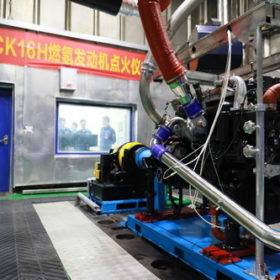
The Hydrogen Stream: Ignited hydrogen-fueled engine from China
Machinery company Yuchai expects mass production by the end of 2022, targeting tractors and other heavy commercial vehicles in mountainous or plateau areas. Sunfire is installing a 2.6 MW high-temperature electrolyzer at Neste’s renewable products refinery in Rotterdam, with commissioning expected in early 2023. Meanwhile, hydrogen-based projects in the mobility and transportation sectors are taking off in France, Czech Republic, and the UK.
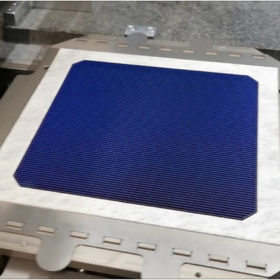
Heterojunction solar cells with lower silver consumption via rotary screen printing
Scientists from the Fraunhofer ISE built a bifacial heterojunction solar cell with a power conversion efficiency of 21.7% via rotary screen printing. They used a machine that is able to achieve a cycle time of just 0.6 seconds per solar cell and enables a strong reduction in silver use.
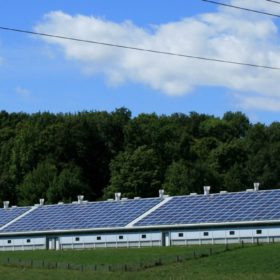
France simplifies environmental permitting for solar up to 1 MW
The new measures are expected to accelerate solar deployment across the country.
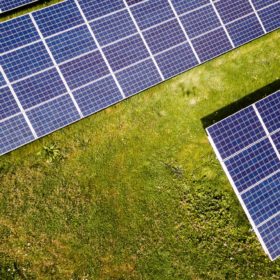
The supply chain requirements UK solar developers will have to grapple with under CfD scheme
Any developers bidding to construct solar plants with more than 300 MW of generation capacity in the latest round of the UK’s clean power auction program will have to draw up a supply chain plan showing how they will address matters ranging from skills gaps to new technology to modern slavery.
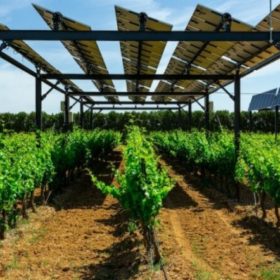
Italy publishes new national guidelines for agrovoltaic plants
On June 27, the Guidelines for The Design, Construction and Operation of Agrovoltaic Plants were published in Italy by the Ministry of Ecological Transition, in coordination with the Council for Agricultural Research and Analysis of Agricultural Economics (CREA), Gestore dei Servizi Energetici S.p.A. (GSE), the National Agency for New Technologies, Energy and Sustainable Economic Development (ENEA), and Research on the Energy System S.p.A. (RSE). From now on, developers and, in general, RES plant owners will have to consider the principles herein outlined, to have their plants classified as agrovoltaic.

Kenya defines net-metering rules for solar
Kenya’s new net-metering regulations will apply to PV systems up to 1 MW in size.
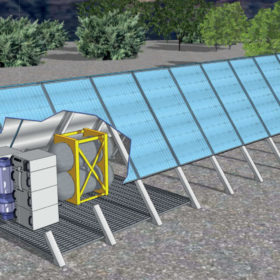
Solar-powered direct air carbon capture tech from Australia
Australian company AspiraDAC, which uses solar-powered Direct Air Capture (DAC) technology to remove carbon from the atmosphere, has been selected to be part of the first round of purchases from Frontier, a program backed by Facebook and Google’s parent companies, Meta and Alphabet.

Singapore regulator issues fresh appeal for clean power
The Energy Market Authority has already attracted proposals for 1.2 GW of renewable electricity, to be generated in four southeast Asian nations, and wants to raise that figure to 4 GW by 2035.
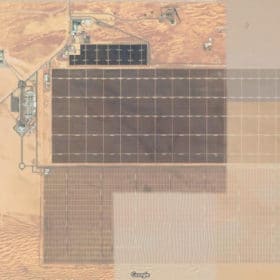
Dewa installs 100 MW of capacity at massive Dubai solar park
The Dubai Electricity and Water Authority installed 514 MW of the fifth 900 MW phase of the 5 GW Mohammed bin Rashid Al Maktoum Solar Park in May.
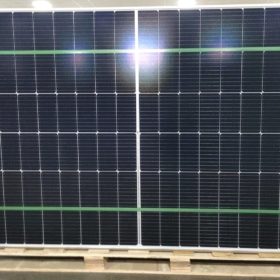
Ifri-Sol launches M10 rooftop solar module
The Tunisian module maker said its new product is based on p-type gallium-doped solar cells and is suitable for both residential and commercial applications. The panel is available in nine versions with nominal power of up to 505 W and an efficiency of up to 21.44%.
