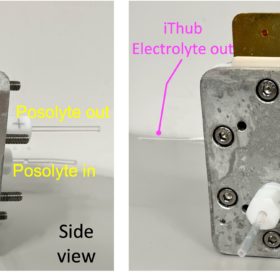
Zinc-cerium redox flow battery for renewable energy storage
Scientists in Hong Kong have designed a redox flow battery with electrolytes made of zinc and cerium. They claim to have solved the incompatibility issue posed by these two elements. The device achieved a record average Coulombic efficiency of 94% during cycling.
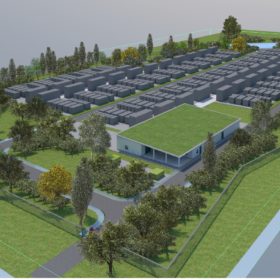
Large-scale battery to support German power network
An energy transmission system operator (TSO) has announced plans to install a 250 MW battery project in Kupferzell, Germany, in order to transmit wind power from the northern part of the country to the south.
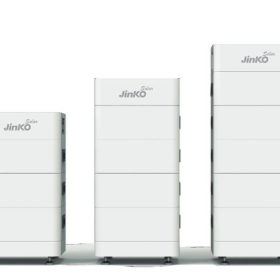
Storage could reshape solar market in MENA
Waleed AlHallaj, the head of business development for the Middle East and North Africa (MENA) at JinkoSolar, recently spoke to pv magazine about the prospects for the regional energy storage market. He said that storage systems have already penetrated markets with weak grids, such as Yemen and Lebanon.
Ripple effects of EU revenue cap on renewable energy
The European Union’s much-needed emergency measures to tackle the ongoing energy crisis may have unintended consequences for the region’s renewable energy ambitions, warn analysts, but the impact on power purchase agreements will likely vary, depending on the contracts.
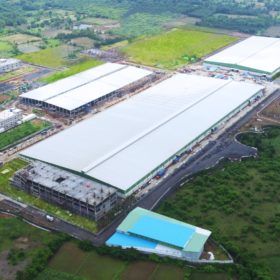
Waaree Energies raises $122.4 million to expand solar manufacturing
Indian solar manufacturer Waaree Energies has raised INR 1,000 crore ($122.4 million) from a number of private investors to support its module capacity expansion to 9 GW and its new cell line to 5.4 GW.
RE-Source 2022: EU revenue cap hamstrings PPA market in hour of need
The RE-Source 2022 event is taking place this week in Amsterdam amidst what is being described as “the perfect storm” of challenges for the European PPA market. Prices have skyrocketed, permitting continues to hamper accelerated development, and a new European Commission policy decision has only added to the inertia in the market.
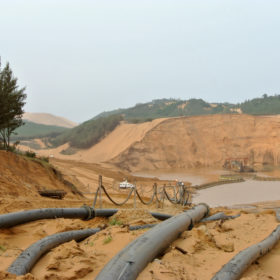
Rio Tinto unit signs up for 148 MW of solar
Richards Bay Minerals has signed a 20-year power purchase agreement with French renewables developer Voltalia, which plans to build a 148 MW solar project in South Africa’s Limpopo province.

Italian government loosens permits for more large-scale renewables
The Italian government has decided to unlock 314 MW of new renewable energy projects, including a 60 MW agrivoltaic plant in the southern region of Apulia.
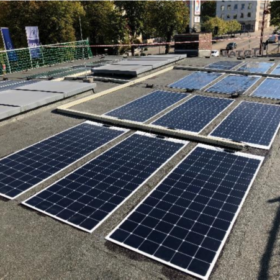
Maxeon shuts down French solar module factory
Maxeon has closed its last PV module factory in Europe, as it cannot remain competitive due to its small size and high raw material costs.
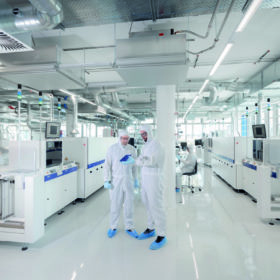
Fraunhofer ISE develops direct metallization tech for heterojunction solar cells
Germany’s Fraunhofer ISE is applying its FlexTrail-printing technology to the direct metallization of silicon heterojunction solar cells. It said the technique reduces the use of silver, while maintaining high efficiency levels.
