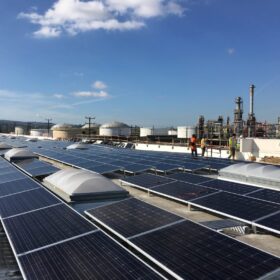
U.S. government announces tax credit boost for solar projects serving low-income, tribal communities
Applications are now open for the Low-Income Communities Bonus Credit Program supported by the Inflation Reduction Act. The program’s goal is to expand access to low-cost and clean energy for underserved communities.
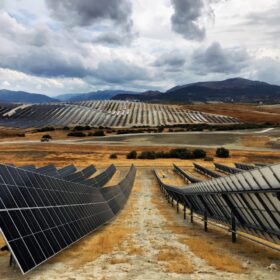
Merchant PV growing in Spain, Germany
Some see merchant solar as risky, but investors are increasingly snapping up Europe-based merchant PV opportunities for “huge profits,” a researcher from the International Energy Agency Photovoltaic Power Systems Program tells pv magazine.
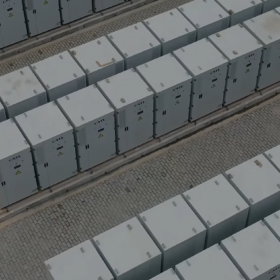
Brazilian regulator opens consultations on storage integration
Aneel, the Brazilian energy regulator, has launched a plan to implement new storage provisions in three phases. It has also defined storage resources and services to be provided this year and has outlined new rules for pumped hydro facilities in 2024.
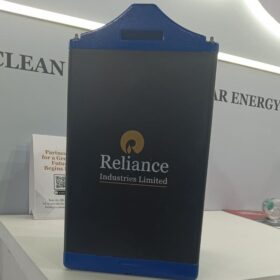
Reliance begins trials of swappable EV batteries
Reliance Industries recently showcased its swappable lithium iron phosphate (LFP) batteries for electric two-wheelers. The batteries can be charged through the grid or with solar to run home appliances.

Australian student team to push for change in World Solar Challenge
The solar-powered Stella Terra test car from Eindhoven University in the Netherlands has just completed a 1,000-kilometer test drive from northern Morocco to the Sahara. In Australia, the solar car racing team from the University of New South Wales says the real challenge is to find new ways to push the boundaries of solar car races.
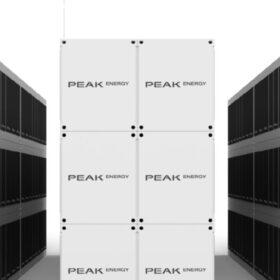
Peak Energy to set up domestic market for sodium-ion batteries
Sodium-ion energy storage system manufacturer, Peak Energy, is working to streamline what it believes is the biggest bottleneck to scaling enough battery energy storage systems to accommodate 80% renewable energy generation and 100% carbon-free electricity in the United States by 2035.

High interest rates, regulatory changes crushing US residential solar
Many US solar installers are filing for bankruptcy, with stocks falling by 15% to 30% based on weak guidance.
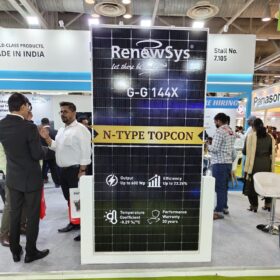
RenewSys unveils 600 W TOPCon solar module with 23.26% efficiency
Mumbai-based RenewSys has launched the Deserv Extreme series of bifacial dual-glass solar modules based on TOPCon technology. The modules are available in peak power outputs of 560 W to 600 W, with front-side efficiencies of up to 23.26%
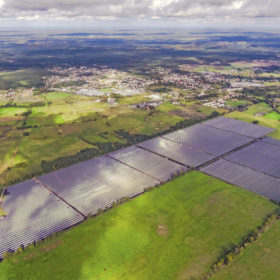
New model to identify land eligibility, calculate LCOE for utility-scale PV
Created by scientists in Poland, the model is based on GIS and can be adapted to different market conditions. The researchers applied it to the Polish market and found that 3.61% of the country’s available land can host utility-scale PV systems.
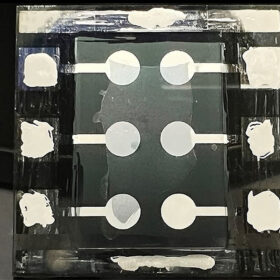
Hong Kong researchers develop inverted perovskite solar cell with 25.6% efficiency
The research team said the cell also achieved remarkable thermal stability, as it was able to retain 90% of its original efficiency for over 1,000 h. The device uses a self-assembled monolayer to stabilize the interface between the perovskite absorber and the hole transport layer.
