DNV acquires Australia’s Solcast
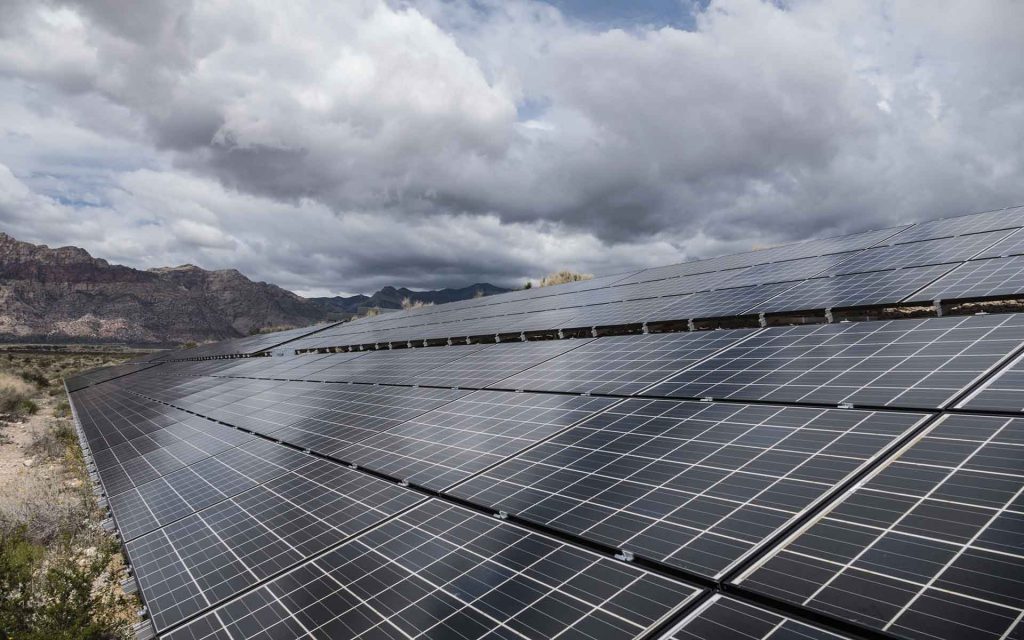
DNV, a Norway-based energy consultancy and ship classification society, has acquired Australian solar forecasting specialist Solcast. The Sydney-based company says the deal will allow it to expand its digital and data-driven services.
Solcast uses global weather satellite imagery, machine learning, and historical and live data on solar irradiance to produce more than 600 million new forecasts per hour, while providing real-time access via an application programming interface (API). Its forecasting system and data set is used by solar power producers, utilities, and grid operators to determine their solar resource availability at any given time.
Solcast Chief Executive Officer James Luffman said DNV’s acquisition of the company will allow it to improve its forecasting models and unlock additional value for its customers.
“DNV is investing in Solcast and providing expertise and other resources,” he said. “The result is a huge boost to our effectiveness and impact. This partnership will bring the world’s leading solar irradiance and forecasting API to an even larger global audience, whilst maintaining the same level of service that our customers expect.”
Remi Eriksen, DNV group president and chief executive officer, said digital products like those provided by Solcast are key to unlocking the potential of solar.
“Solar forecasting will enable the renewable energy market to grow and accelerate the global transformation to a clean energy future,” he said.
DNV’s Energy Transition Outlook (ETO) forecasts that by 2050 global electricity production will more than double and 30% of all electricity will be provided by solar.
“Our ETO forecasts solar PV and wind are already the cheapest forms of electricity in most locations and by 2050 they will grow 20-fold and 10-fold,” Eriksen said. “Digitalization is an important enabler of the energy industry and a key component to scaling solar to the levels needed for a greener energy future.”
The acquisition will take effect immediately, although Solcast, which already has offices in Sydney, Asia, Europe and the Americas, will continue to operate under its current name. The company’s existing management and staff will remain in Australia and there are no immediate changes planned for customers and partners.
This content is protected by copyright and may not be reused. If you want to cooperate with us and would like to reuse some of our content, please contact: [email protected].

Please login to comment

[…] Solcast produces these figures via its irradiance forecasting and weather API by tracking clouds and aerosols at 1 to 2 km resolution globally using satellite data and proprietary AI/ML algorithms. This data is used to drive irradiance models, enabling Solcast to calculate irradiance at high resolution, with typical bias of less than 2%, and also cloud-tracking forecasts. This data is used by more than 300 companies managing over 150 GW of solar assets globally. […]
[…] Solcast produces these figures via its irradiance forecasting and weather API by tracking clouds and aerosols at 1 to 2 km resolution globally using satellite data and proprietary AI/ML algorithms. This data is used to drive irradiance models, enabling Solcast to calculate irradiance at high resolution, with typical bias of less than 2%, and also cloud-tracking forecasts. This data is used by more than 300 companies managing over 150 GW of solar assets globally. […]
[…] Solcast produces these figures by tracking clouds and aerosols at 1 to 2 km resolution globally using satellite data and proprietary AI/ML algorithms. This data is used to drive irradiance models, enabling Solcast to calculate irradiance at high resolution, with typical bias of less than 2%, and also cloud-tracking forecasts. This data is used by more than 300 companies managing over 150 GW of solar assets globally. […]
[…] Solcast produces these figures by monitoring clouds and aerosols at 1 to 2 km decision globally utilizing satellite tv for pc knowledge and proprietary AI/ML algorithms. This knowledge is used to drive irradiance fashions, enabling Solcast to calculate irradiance at excessive decision, with typical bias of lower than 2%, and likewise cloud-tracking forecasts. This knowledge is utilized by greater than 300 corporations managing over 150 GW of photo voltaic belongings globally. […]
[…] Solcast produces these figures by device of its irradiance forecasting and weather API by tracking clouds and aerosols at 1 to 2 km resolution globally the utilization of satellite tv for laptop files and proprietary AI/ML algorithms. This records is ragged to drive irradiance models, enabling Solcast to calculate irradiance at excessive resolution, with fashioned bias of less than 2%, and furthermore cloud-tracking forecasts. This records is ragged by extra than 300 companies managing over 150 GW of characterize voltaic sources globally. […]