




From pv magazine USA
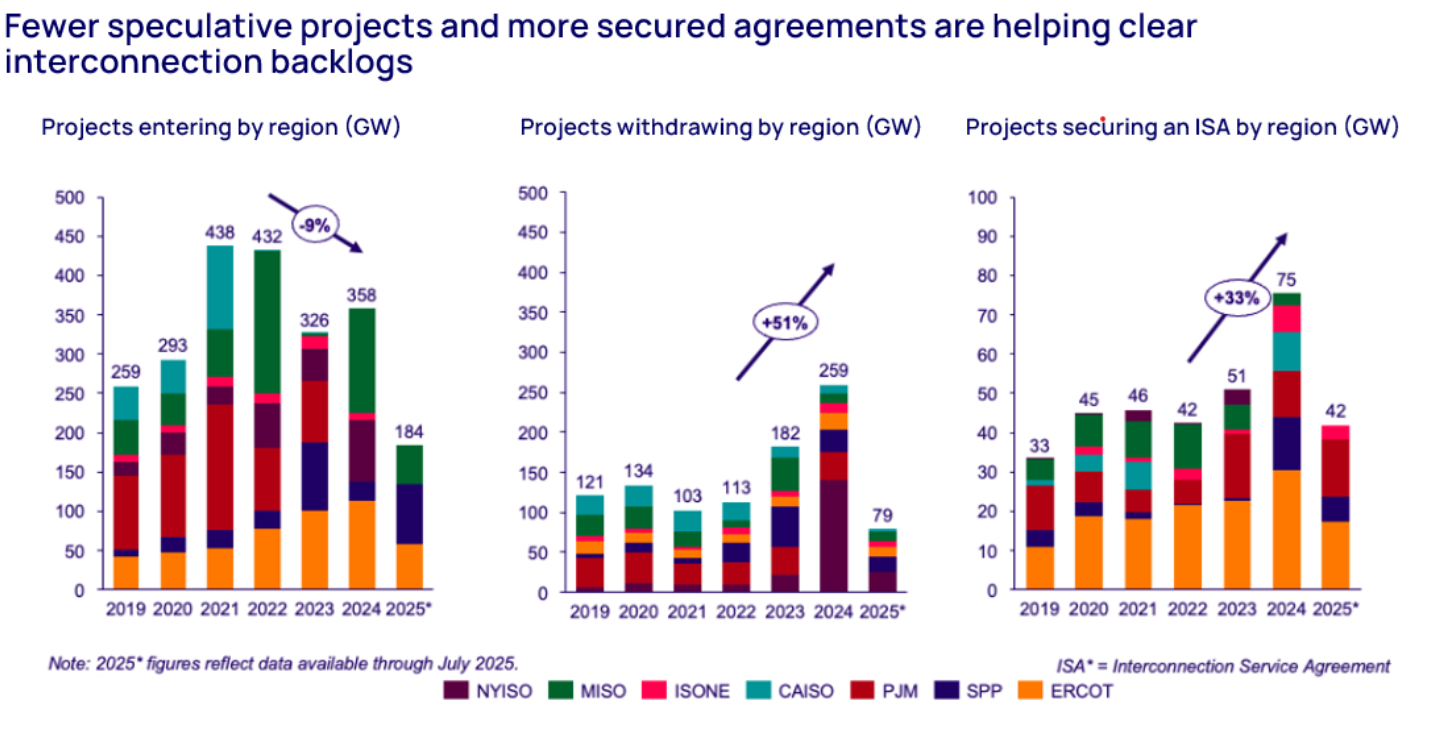
US grid interconnection agreements soared 33% year over year in 2024, reaching a record 75 GW, according to a new report from Wood Mackenzie.
Solar and energy storage projects captured 75% of the record total, securing 58 GW of interconnection agreements, said the report.
Grid interconnection processes have become more streamlined and efficient over time. On top of increased connection agreements, regional grid operators are experiencing 9% fewer new project entries, a 51% increase in withdrawals of non-viable projects since 2022, said Wood Mackenzie.
“It’s clear that these reforms are showing early signs of promise in accelerating the pace of interconnection studies,” said Kaitlin Fung, research analyst, North America Utility-Scale Solar for Wood Mackenzie.
Wood Mackenzie expects solar to continue to maintain its leading share of interconnection agreements in 2025. Solar has accounted for half of all signed interconnection agreements since 2019, a trend that Wood Mackenzie expects to continue in 2025.
“Interconnection success rates and queue processing times vary dramatically for different grid operators across regions,” said Fung.
Texas’ Electric Reliability Council of Texas (ERCOT) leads US grid operators in success rates and processing speed, which Wood Mackenzie credits to its streamlined queue process and connect-and-manage approach.
New England’s Independent System Operator (ISO-NE) ranked second for its high application success rate but recorded the longest processing time because of its slow shift from serial to cluster-based applications.
California’s Independent System Operator (CAISO) ranked third but posted one of the lowest interconnection success rates, which Wood Mackenzie linked to a high volume of speculative projects.
Wood Mackenze noted that natural gas has increased its quantity of interconnection requests since 2022, adding 121 GW of capacity, a trend it expects to continue. However, natural gas projects are having an increasingly difficult time gaining interconnection approval, with successful projects down 25% since 2022, said Wood Mackenzie. The decline in natural gas interconnection success rates is driven by PJM, MISO, and ERCOT.
“While we’re seeing positive momentum, significant challenges remain,” said Fung. “Regional disparities in processing times highlight the need for continued reform efforts.”
This content is protected by copyright and may not be reused. If you want to cooperate with us and would like to reuse some of our content, please contact: editors@pv-magazine.com.


By submitting this form you agree to pv magazine using your data for the purposes of publishing your comment.
Your personal data will only be disclosed or otherwise transmitted to third parties for the purposes of spam filtering or if this is necessary for technical maintenance of the website. Any other transfer to third parties will not take place unless this is justified on the basis of applicable data protection regulations or if pv magazine is legally obliged to do so.
You may revoke this consent at any time with effect for the future, in which case your personal data will be deleted immediately. Otherwise, your data will be deleted if pv magazine has processed your request or the purpose of data storage is fulfilled.
Further information on data privacy can be found in our Data Protection Policy.