





A Charles Darwin University study has found 89% of respondents to a research survey support the construction of Darwin-based renewable energy company SunCable’s Australia-Asia PowerLink (AAPowerLink), a proposed solar megaproject in Australia's Northern Territory.
However, the “Made in Australia, used in Asia: Public acceptance and the cable controversy of Australia-Asia PowerLink, a remote solar megaproject” study found that approval would wane, if the produced energy doesn’t benefit them.
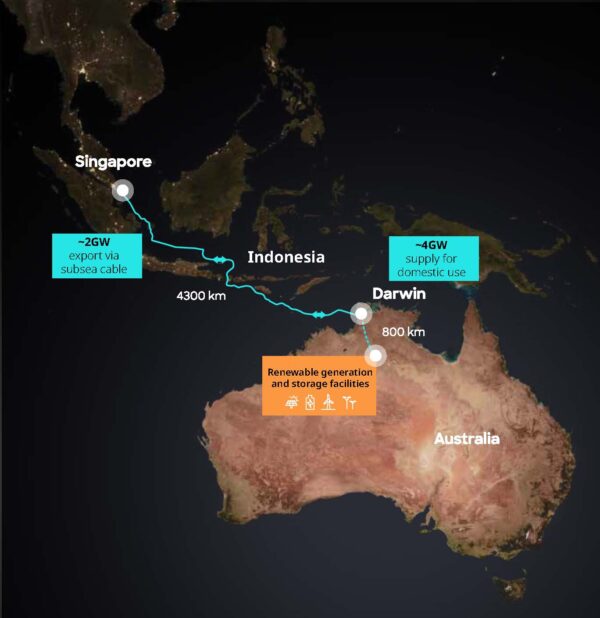
The study examined social acceptance of the proposed world’s largest solar plant, which would export solar energy produced in the Northern Territory to Darwin and Singapore, via a submarine cable.
Survey participants were from across Australia offering insights into attitudes towards renewable energy and the proposed project, with the majority again saying remote Northern Territory was “the perfect place to build it.”
Charles Darwin University’s Northern Institute said approval of the project declined when respondents were asked if they agreed it was acceptable to export energy overseas, with just over half at 54% of respondents saying it was acceptable to do so. However, they would change their minds if the produced solar energy was used exclusively in Australia.
Charles Darwin University Professor Kerstin Zander said while the results indicate that the developer might have a social licence to build the solar megafarm, they do not necessarily have it for exporting a large proportion of the energy.
“Part of this may be entangled with concern about the cable itself, there may also be concerns related to distributive justice,” Zander said. “Unlike in Europe where energy moves relatively freely among countries in the European Union, only half of the respondents considered it fair to produce the energy on Australian land then export most of it for use in a different country.”
Zander suggests what may be needed to raise acceptance is further consultation and awareness raising for potential benefits of the planned strategy, especially the lower greenhouse gas production in Asia if it is replaced by Australian renewable solar power.
Further results include 78% of respondents agree renewable energy production is needed to reduce Australia’s carbon emissions.
This content is protected by copyright and may not be reused. If you want to cooperate with us and would like to reuse some of our content, please contact: editors@pv-magazine.com.

By submitting this form you agree to pv magazine using your data for the purposes of publishing your comment.
Your personal data will only be disclosed or otherwise transmitted to third parties for the purposes of spam filtering or if this is necessary for technical maintenance of the website. Any other transfer to third parties will not take place unless this is justified on the basis of applicable data protection regulations or if pv magazine is legally obliged to do so.
You may revoke this consent at any time with effect for the future, in which case your personal data will be deleted immediately. Otherwise, your data will be deleted if pv magazine has processed your request or the purpose of data storage is fulfilled.
Further information on data privacy can be found in our Data Protection Policy.