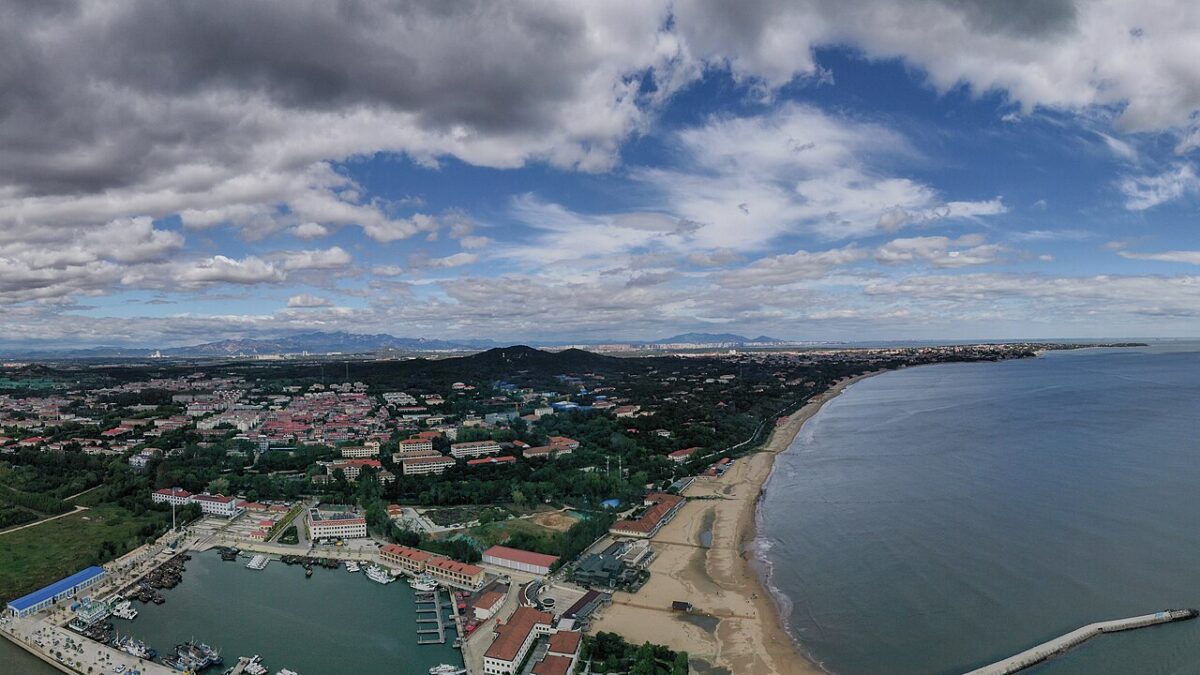





Around 16% of the photovoltaics deployed in China’s coastal regions are located in areas deemed high risk to typhoons, according to new research conducted by a team from Beijing's Chinese Academy of Sciences and the China Meteorological Administration.
The scientists utilized Landsat imagery to analyze spatiotemporal changes to solar distribution in China’s coastal regions and assess the potential impact of typhoon disasters.
The study area covered 15 coastal provincial-level administrative regions of China and found that as of December 2023, these regions collectively hosted around 1962.89 km2 of photovoltaics. This figure was largely made up of smaller-scale installations, with sites under 0.5 km2 accounting for 51% of the total area.
Provinces north of the Yangtze River accounted for around 70% of the coastal total, more than double the deployment south of the river. Most solar installations exceeding 1 km2 were concentrated in the northern provinces of Hebei, Jiangsu, Shandong, Tianjin and Zhejiang.
A typhoon risk assessment calculated that approximately 20% of China’s coastal lands fall within high or extreme risk zones. These areas, identified particularly around the East China Sea and South China Sea, were found to be home to 16% of China’s coastal photovoltaic fleet.
In contrast, 82.15% of recent solar expansion was found to be located in low-to-medium risk regions, leading the researchers to determine that current layout strategies already account for typhoon threats.
In the research paper’s conclusion, the team recommends prioritizing offshore solar developments in the Bohai and Yellow Sea regions, while exercising caution in the more hazardous eastern and southern coastal zones. “The spatial risk differentiation provides critical guidance for balancing renewable energy expansion with climate resilience in China's coastal and marine environments,” the team added.
Its findings are presented in the research paper Spatio-temporal exposure of photovoltaic farms to typhoon disasters for sustainable development in China's Coastal Regions, available in the journal Resources, Environment and Sustainability.
Last November, China Three Gorges Corp. said it had almost finished building a 180 MW offshore solar plant in China’s Fujian province that has been specifically designed to be resistant to typhoons.
A typhoon struck southern Taiwan in early July, damaging over 135,000 solar panels.
This content is protected by copyright and may not be reused. If you want to cooperate with us and would like to reuse some of our content, please contact: editors@pv-magazine.com.


By submitting this form you agree to pv magazine using your data for the purposes of publishing your comment.
Your personal data will only be disclosed or otherwise transmitted to third parties for the purposes of spam filtering or if this is necessary for technical maintenance of the website. Any other transfer to third parties will not take place unless this is justified on the basis of applicable data protection regulations or if pv magazine is legally obliged to do so.
You may revoke this consent at any time with effect for the future, in which case your personal data will be deleted immediately. Otherwise, your data will be deleted if pv magazine has processed your request or the purpose of data storage is fulfilled.
Further information on data privacy can be found in our Data Protection Policy.