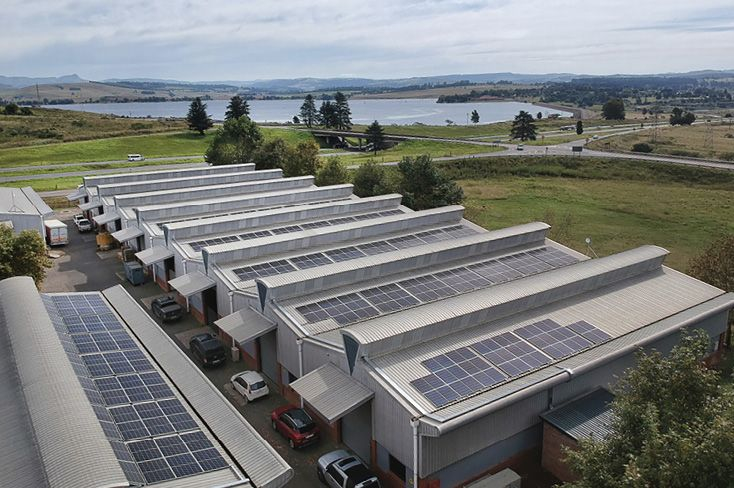





South African power utility Eskom has simplified the registration process for PV systems operating under the Small-Scale Embedded Generation (SSEG) scheme.
“The major change, finalised last month and effective from 1 October 2025, is that Eskom’s residential customers may now have their systems signed off by a Department of Labour (DoL)–registered person (excluding single-phase testers), and an Engineering Council of South Africa (ECSA)-registered professional is no longer required,” the company said in a statement. “This follows a review of compliance and safety requirements as well as a stringent due diligence process, pending the expected changes by the South African Bureau of Standards (SABS).”
By registering their SSEGs, customers not only meet regulatory requirements but can also sell surplus energy to Eskom via net billing, store excess power within the utility framework, and reduce electricity costs through self-generation.
“We encourage customers to come forward and register their systems to meet NERSA’s legal requirements. Registration not only ensures compliance and safety but also positions customers to benefit from future programs that reward clean energy generation,” Eskom said.
The company began urging all South African customers with Small-Scale Embedded Generators (SSEG) to register their solar installations in February.
The utility reminded residential customers with unregistered SSEGs up to 50 kW – typically between 5 kW and 10 kW in households – that they could qualify for an exemption from registration-related fees until March 2026.
Generators operating entirely off-grid and not connected to Eskom’s network do not need to register but must provide proof they function independently of Eskom’s supply.
This content is protected by copyright and may not be reused. If you want to cooperate with us and would like to reuse some of our content, please contact: editors@pv-magazine.com.


By submitting this form you agree to pv magazine using your data for the purposes of publishing your comment.
Your personal data will only be disclosed or otherwise transmitted to third parties for the purposes of spam filtering or if this is necessary for technical maintenance of the website. Any other transfer to third parties will not take place unless this is justified on the basis of applicable data protection regulations or if pv magazine is legally obliged to do so.
You may revoke this consent at any time with effect for the future, in which case your personal data will be deleted immediately. Otherwise, your data will be deleted if pv magazine has processed your request or the purpose of data storage is fulfilled.
Further information on data privacy can be found in our Data Protection Policy.