




From pv magazine Germany
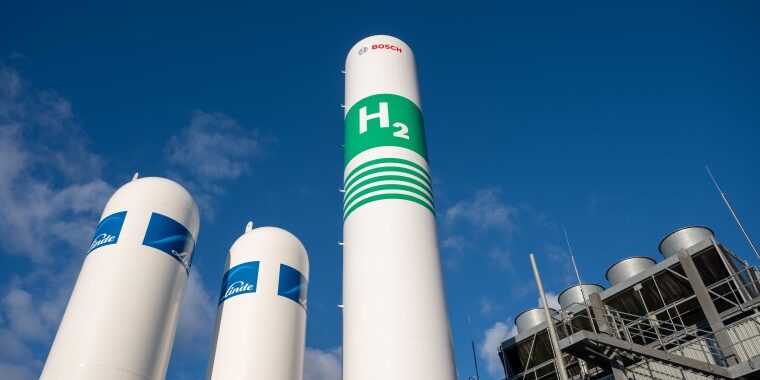
German manufacturer Bosch has commissioned its first self-operated hydrogen electrolyzer, comprising two proton exchange membrane (PEM) electrolysis stacks with a combined capacity of 2.5 MW, at its Bamberg site in southern Germany.
Bosch said the new in-house system produces renewable hydrogen in line with European Union requirements, which mandate simultaneous generation of renewable electricity and proximity between energy source and electrolyzer within the same price zone.
The Bosch Hybrion electrolysis stacks can reportedly produce 23 kg of green hydrogen per hour. They were built at the company’s Bamberg plant and assembled into a complete unit by German hydrogen specialist FEST GmbH in Goslar.
At full load, the system can generate more than one ton of green hydrogen per day – enough to power a 40-ton electric truck equipped with Bosch’s Fuel Cell Power Module (FCPM) for up to 14,000 kilometers.
Bosch also plans to operate the FCPM continuously inside a “lifetime container” at Bamberg, where hydrogen from the electrolyzer will be used to test long-term system performance. Electricity produced by the FCPM will feed back into the electrolyzer both for testing and on-site hydrogen generation. Bosch said multiple operating scenarios will be simulated within the test container.
This content is protected by copyright and may not be reused. If you want to cooperate with us and would like to reuse some of our content, please contact: editors@pv-magazine.com.


By submitting this form you agree to pv magazine using your data for the purposes of publishing your comment.
Your personal data will only be disclosed or otherwise transmitted to third parties for the purposes of spam filtering or if this is necessary for technical maintenance of the website. Any other transfer to third parties will not take place unless this is justified on the basis of applicable data protection regulations or if pv magazine is legally obliged to do so.
You may revoke this consent at any time with effect for the future, in which case your personal data will be deleted immediately. Otherwise, your data will be deleted if pv magazine has processed your request or the purpose of data storage is fulfilled.
Further information on data privacy can be found in our Data Protection Policy.