




When I think about the future of our industry, I feel optimistic, not just about the role we play in decarbonising Europe, but about our potential to redefine leadership, fairness, and opportunity in a rapidly evolving world. Solar and batteries are expanding at an extraordinary pace, and will become Europe’s main source of power very soon. The industry’s mission is to deliver clean, affordable energy for all, but it should also be aligned with social goals.
By 2030, the European solar workforce is expected to reach nearly one million people, up from around 860,000 today. Unlike legacy industries that carry deeply rooted cultural norms, ours is still being shaped. This gives us an extraordinary opportunity to embed equity, inclusion, and fairness from the ground up.
One of the reasons I believe so strongly in the potential of our sector is the strong foundation we already have. Although women remain underrepresented in leadership and technical roles, they constitute almost half of the total workforce, significantly higher than in most other energy segments. Starting from this baseline is a privilege. It positions us to close STEM gaps, expand access for minorities, and build an industry that truly reflects the society we serve.
But for that to happen, we must confront the reality that the energy transition cannot be successful if it excludes half of the population or sidelines the perspectives we desperately need to innovate. In an industry where dynamics shift so rapidly and challenges emerge unexpectedly, adaptability and swift reactions are essential. Building homogeneous teams will only get you stuck in old or obsolete ways of thinking that cannot cope with such a dynamic sector. You need fresh ideas and unique viewpoints, which can only come from diverse teams.
Yet, despite our progress, achieving real gender equality in the solar industry remains far from easy. Among the many obstacles, two stand out to me. The first is the widespread lack of awareness about the barriers women face throughout their professional journeys. Many of these obstacles are invisible or completely normalised. Without more education and conscious effort, this self-perpetuating cycle will not be reversed.
The second barrier is the persistent underrepresentation of women in technical roles and, even more critically, in leadership positions. Hiring more women is crucial, both for technical and non-technical positions, but doing so at the highest level of every organisation is essential. Then, it is about creating spaces where all voices are equally important, regardless of the gender.
My own understanding of these issues in our industry has deepened as my career has progressed. I remember the first energy conferences I attended. I was quite appalled by the small number of women and minorities, not only in the audience but especially in the panel discussions. While the former reflects systemic issues, the latter is a choice. Conference organisers decide who sits on a stage, and those choices influence who is seen as an expert, who shapes the narrative, and who is legitimised as a leader. Crafting panels with DEI in mind is fundamental, even if it requires extra effort. Talent is equally distributed, but opportunities are not. And while it’s possible that, despite best intentions, a panel may still end up being all men, this should be the exception, not the norm.
This awareness also shaped how I think about leadership. Traditionally, leadership has been coded as masculine: dominance over others, detachment from emotions, and decision-making focused solely on personal or corporate outcomes. This framework, celebrated for generations, has contributed to many of the challenges we face today.
I consider myself fortunate. I grew up surrounded with people that questioned many of the social norms imposed on men. That doesn’t mean I’ve been immune to those. But it has pushed me to approach leadership differently. I consciously try to act with open-mindedness, deep listening, and self-awareness. These are not “soft skills”, they are critical enablers of strong, inclusive, and future-oriented leadership. They allow teams to thrive, innovate, and feel psychologically safe.
At the systemic level, I am a huge believer in embracing the change you want to see in the world. Yes, we must demand accountability from our leaders and push for systemic reforms. But change must also start from within, within organisations, teams, and individuals.
Equity cannot be treated as a side project or a communications exercise. It must be fully integrated into corporate strategy, embedded into governance, operations, culture, and decision-making. This will catalyse true change at the macro-level and create resilience and long-term value.
As I look to the next generation entering the solar industry, I feel a strong sense of responsibility. My number one advice to young students is that they should always pursue their passion, which will be their main ally when entering the labour market. In my case, it took some time before I realised my passion was about tackling environmental issues, and that eventually led me to the solar industry.
We should really encourage more women and minorities to pursue careers in STEM, through school programs, career fairs, scholarships and grants. We need to create the space for young women to feel like they can also play a fundamental role in the energy transition. Early engagement with young women and minorities significantly increases STEM interest and career intentions, especially if these initiatives are led by women and individuals coming from minorities.
In a world where the pendulum of power is swinging towards the other side of the spectrum, threatening to undo all the progress we have achieved, it’s imperative that we double down on foundational principles like DEI. The pendulum will swing back, and progress will march on, but until then, we need to remain strong.
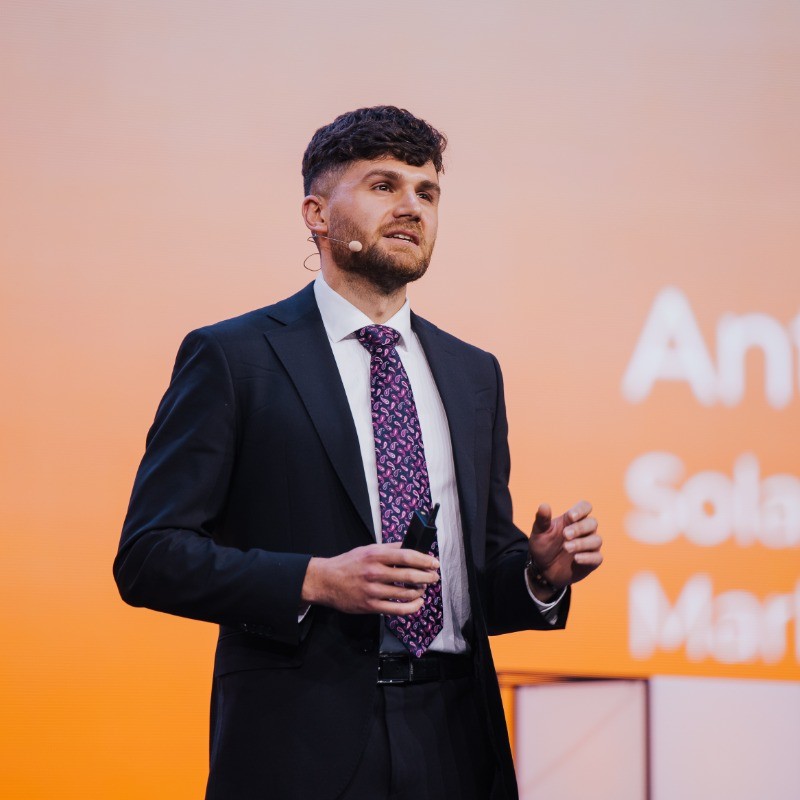
Antonio Arruebo works as a market analyst at SolarPower Europe, specialising in energy storage, and is one of the main contributors to the newly-established Battery Storage Europe Platform. He focuses on storage markets, supply chains, and policy developments in Europe. Before joining SolarPower Europe, he studied Business Administration at the University of Zaragoza and obtained a master’s degree in Environmental Economics at the Vrije Universiteit Amsterdam.
Interested in joining Antonio Arruebo and other women industry leaders and experts at Women in Solar+ Europe? Find out more: www.wiseu.network
The views and opinions expressed in this article are the author’s own, and do not necessarily reflect those held by pv magazine.
This content is protected by copyright and may not be reused. If you want to cooperate with us and would like to reuse some of our content, please contact: editors@pv-magazine.com.

1 comment
By submitting this form you agree to pv magazine using your data for the purposes of publishing your comment.
Your personal data will only be disclosed or otherwise transmitted to third parties for the purposes of spam filtering or if this is necessary for technical maintenance of the website. Any other transfer to third parties will not take place unless this is justified on the basis of applicable data protection regulations or if pv magazine is legally obliged to do so.
You may revoke this consent at any time with effect for the future, in which case your personal data will be deleted immediately. Otherwise, your data will be deleted if pv magazine has processed your request or the purpose of data storage is fulfilled.
Further information on data privacy can be found in our Data Protection Policy.