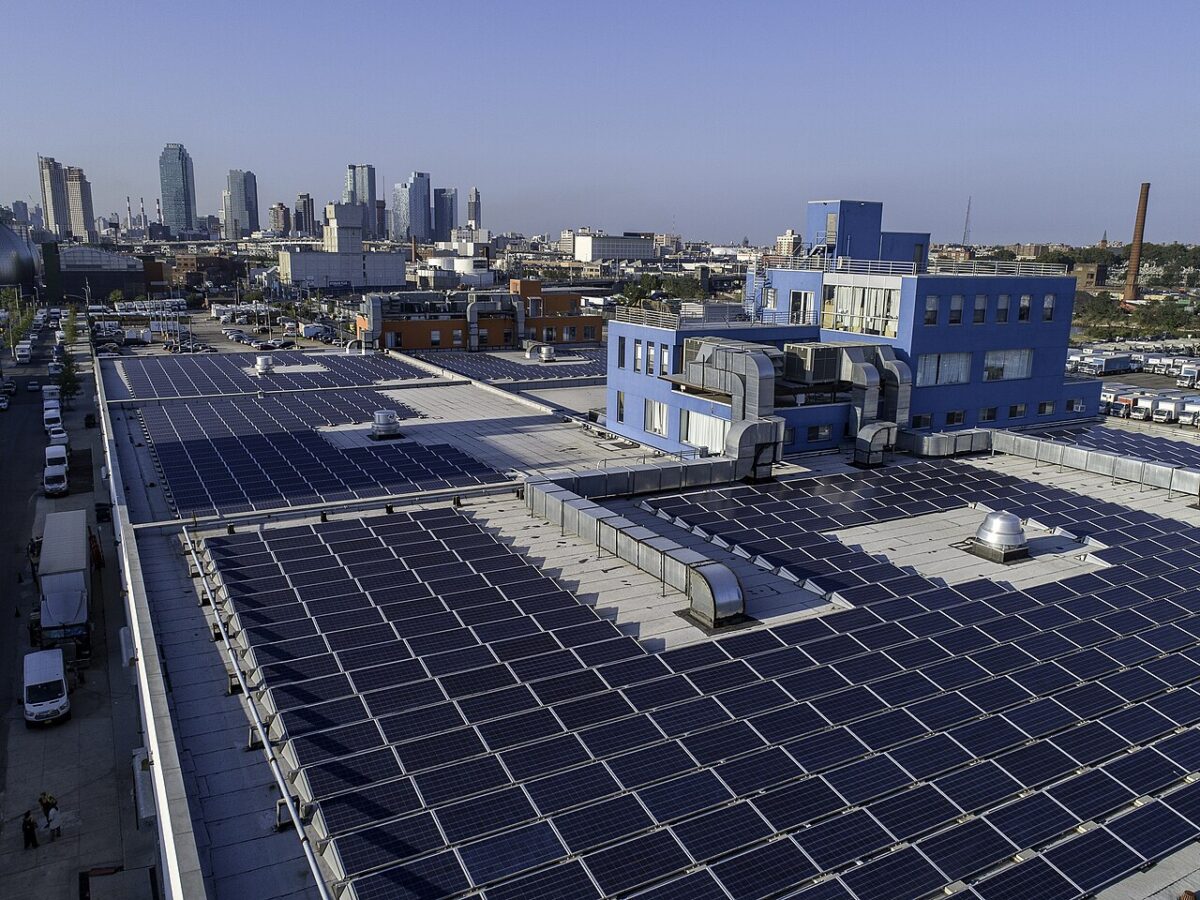





From pv magazine USA
The New York Power Authority, which has begun investing in renewable energy projects and bringing them to completion, said in a renewable energy strategic plan that the levelized cost of energy (LCOE) for new solar projects is twice the projected merchant revenue, and discussed how selling renewable energy credits (RECs) could make up the difference.
The LCOE for new solar projects “has increased to at least $100/MWh,” the plan says, while “based on modeling of merchant revenue streams (energy, capacity, and ancillary services), projects can expect to make less than $50/MWh on an annual basis for the foreseeable future.”
The strategic plan says that Tier 1 RECs, which NYPA may sell to the New York State Energy Research and Development Authority, can provide revenue “that will help NYPA achieve the necessary financing and returns to bring about a larger buildout of renewables.”
NYSERDA purchases RECs from renewables projects offering the lowest bids, typically using multi-year contracts, and then retires the RECs to help the state reach its renewable energy targets. To purchase the RECs, NYSERDA uses funds collected by utilities from customers through a charge on utility bills.
NYPA’s plan presents a hypothetical example in which NYPA bids a price of $90/MWh for an “indexed REC” for a given project and earns $50/MWh from merchant revenue, with NYSERDA paying NYPA $90/MWh minus monthly average zonal energy and capacity prices. In that example, the $90/MWh total revenue would fall below NYPA’s projected solar LCOE of $100/MWh.
For ordinary, non-indexed Tier 1 RECs, NYSERDA has paid renewable generators an average ranging from $22 to $36 per MWh across five recent quarters. Those REC values, when added to $50/MWh of merchant revenue, would also not meet NYPA’s projected solar LCOE.
S&P Global reported in August, however, that as New York aims for a 70% renewable grid, REC prices “should rise.”
Opportunity set
NYPA’s “President and CEO Report” shows that NYPA screening has identified an opportunity set totaling 5.5 GW of in-state renewables and storage projects in which NYPA could invest, including 3.5 GW of solar.
The citizens group Public Power NY has called for NYPA to add 15 GW of renewables by 2030. The group said that for New York to meet its renewables goal it will need between 7 and 21 GW of land-based renewables, largely depending on future electricity demand, a range based on its analysis of data in a consulting firm’s report.
NYPA currently has time-limited exclusive agreements with renewable project developers to pursue 350 MW of projects, a NYPA spokesperson said.
To date, NYPA has announced three projects:
- A 20 MW solar project in Fort Edward, NY that is fully owned by NYPA
- A 1.5 MW agrivoltaics project, supported by a $750,000 NYSERDA demonstration grant, at the State University of New York College of Agriculture and Technology in Cobleskill, NY
- A 1.5 MW solar project on a closed Albany landfill co-developed with the City of Albany.
New York’s 2023-24 state budget authorized NYPA to advance renewable energy in the state, support workforce training for renewable energy jobs, and subsidize the utility bills of low- and moderate-income customers.
This content is protected by copyright and may not be reused. If you want to cooperate with us and would like to reuse some of our content, please contact: editors@pv-magazine.com.

By submitting this form you agree to pv magazine using your data for the purposes of publishing your comment.
Your personal data will only be disclosed or otherwise transmitted to third parties for the purposes of spam filtering or if this is necessary for technical maintenance of the website. Any other transfer to third parties will not take place unless this is justified on the basis of applicable data protection regulations or if pv magazine is legally obliged to do so.
You may revoke this consent at any time with effect for the future, in which case your personal data will be deleted immediately. Otherwise, your data will be deleted if pv magazine has processed your request or the purpose of data storage is fulfilled.
Further information on data privacy can be found in our Data Protection Policy.