




From ESS News
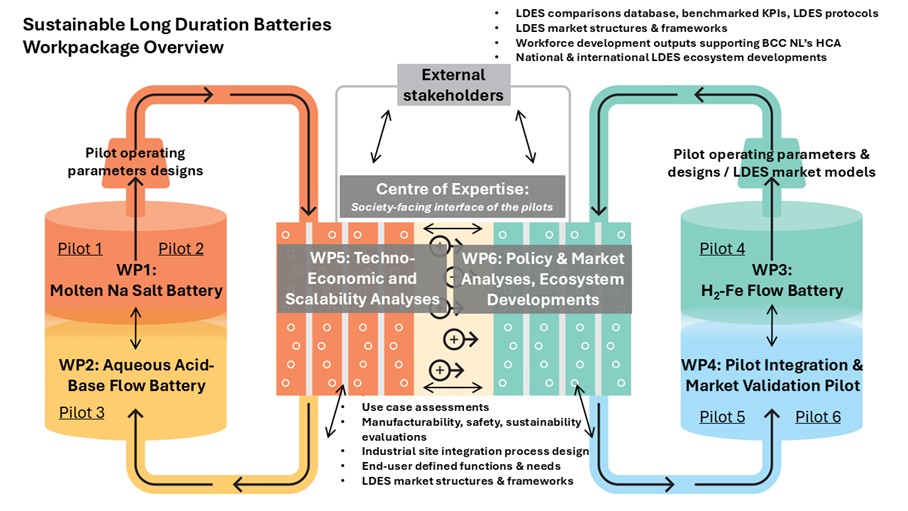
A Dutch consortium, ranging from innovative start-ups to internationally operating energy companies, is developing a new type of long-duration energy storage (LDES) solution capable of storing renewable energy for 8 to 100 hours. Backed by over €30 million in funding from the Nationaal Groeifonds and the Rijksdienst voor Ondernemend Nederland (RvO), the SLDBatt project is the Netherlands’ largest R&D initiative focused on battery technologies for long-term storage of sustainably generated electricity.
The project aims to reduce the costs of storing renewable electricity and scale up technologies developed by Dutch start-ups – AQUABATTERY, Elestor, and Exergy Storage – while involving nationally anchored industrial partners such as chemical company Nobian, internationally operating energy companies such as RWE, and three technical universities: Eindhoven University of Technology, Delft University of Technology, HAN University of Applied Sciences, and the University of Twente. Battery Competence Cluster NL (BCC‑NL) coordinates the project, acting as a national catalyst for knowledge sharing, collaboration, and acceleration across the battery value chain.
“The goal of this project is to develop and deploy TRL 7 battery technologies with the potential to achieve costs below €50/kWh, addressing challenges related to grid congestion,” Hylke van Bennekom, CEO of Elestor, tells ESS News.
To continue reading, please visit our ESS News website.
This content is protected by copyright and may not be reused. If you want to cooperate with us and would like to reuse some of our content, please contact: editors@pv-magazine.com.


By submitting this form you agree to pv magazine using your data for the purposes of publishing your comment.
Your personal data will only be disclosed or otherwise transmitted to third parties for the purposes of spam filtering or if this is necessary for technical maintenance of the website. Any other transfer to third parties will not take place unless this is justified on the basis of applicable data protection regulations or if pv magazine is legally obliged to do so.
You may revoke this consent at any time with effect for the future, in which case your personal data will be deleted immediately. Otherwise, your data will be deleted if pv magazine has processed your request or the purpose of data storage is fulfilled.
Further information on data privacy can be found in our Data Protection Policy.