




From pv magazine Spain
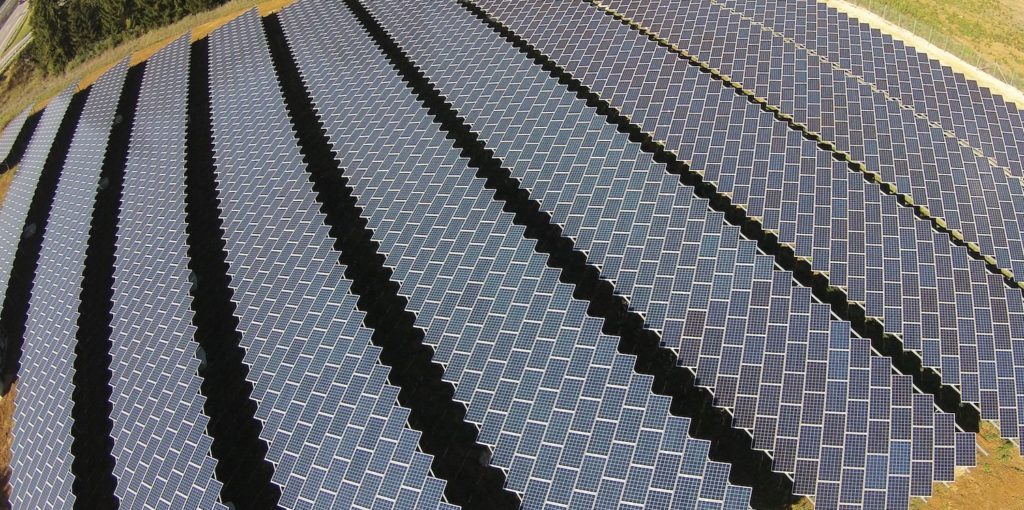
According to data from Spain’s Ministry of Agriculture for 2024, photovoltaic parks occupy an area equivalent to 0.2% of the country’s usable agricultural land and 0.12% of its total land area. Over the same period, the area dedicated to olive groves increased by 2.6% compared to 2018.
While land availability for photovoltaic plants is not currently a constraint in Spain, it is becoming an issue in other countries, where large-scale deployment plans are intensifying competition for land use. SolarPower Europe estimates that global installations could reach 1 TW per year between 2025 and 2030. In the European Union, more than 160 GW of new capacity is expected to be added before 2029, led by Germany, Spain, and Italy.
Agricultural land, due to favorable topography, high solar irradiation, and limited physical obstacles, is a very attractive location for solar power plants. However, concerns about the potential displacement of food production have triggered regulatory responses. Italy and Spain have introduced measures that limit or prohibit large-scale solar plants on high-value agricultural land, particularly in irrigated areas, and have adjusted the Common Agricultural Policy (CAP) to discourage farm abandonment. In Spain, agrivoltaic projects have been eligible for CAP subsidies since October 2024. At the same time, many farmers view photovoltaics as an opportunity to stabilize income amid volatile agricultural prices.
Scientists from Chile and Spain have examined land-use competition in Spain in a study titled “Land-use dilemma: Evaluating the transition from crops to solar PV plants using a real options approach,” which will be published next week in the Journal of Cleaner Production.
The study introduces a real options framework to assess the installation of photovoltaic power plants on agricultural land, taking into account uncertainty in electricity prices and technology costs. Previous research shows that decisions to convert farmland to solar use are complex and influenced by multiple factors. Empirical studies highlight the role of crop type, water consumption, labor requirements, and market prices in determining farmers’ willingness to install PV systems. From an economic perspective, several analyses suggest that falling PV costs are making it increasingly difficult for many crops to remain competitive in the medium term.
Applying the framework to a case study covering 134 crops in 15 regions of Spain, the researchers found that PV technology costs are the main driver of land-use change. The model suggests that the transition from agricultural land to solar use could occur within 16 to 21 years, starting earlier in southern regions due to higher solar irradiance. In less than two decades, solar energy is expected to outperform traditional agriculture in terms of profitability, particularly in southern Spain.
Unlike the conventional net present value (NPV) method, the real options approach accounts for the value of flexibility, including the ability to delay or adapt investment decisions, offering a more realistic representation of decision-making under uncertainty.
The study also shows that the NPV approach tends to accelerate the projected land-use transition by around four years compared to the real options model, as it does not fully account for uncertainty.
The findings are relevant for farmers and policymakers, as they provide insights for investment planning and policy design aimed at balancing solar energy expansion with the protection of agricultural activity.
This content is protected by copyright and may not be reused. If you want to cooperate with us and would like to reuse some of our content, please contact: editors@pv-magazine.com.

By submitting this form you agree to pv magazine using your data for the purposes of publishing your comment.
Your personal data will only be disclosed or otherwise transmitted to third parties for the purposes of spam filtering or if this is necessary for technical maintenance of the website. Any other transfer to third parties will not take place unless this is justified on the basis of applicable data protection regulations or if pv magazine is legally obliged to do so.
You may revoke this consent at any time with effect for the future, in which case your personal data will be deleted immediately. Otherwise, your data will be deleted if pv magazine has processed your request or the purpose of data storage is fulfilled.
Further information on data privacy can be found in our Data Protection Policy.