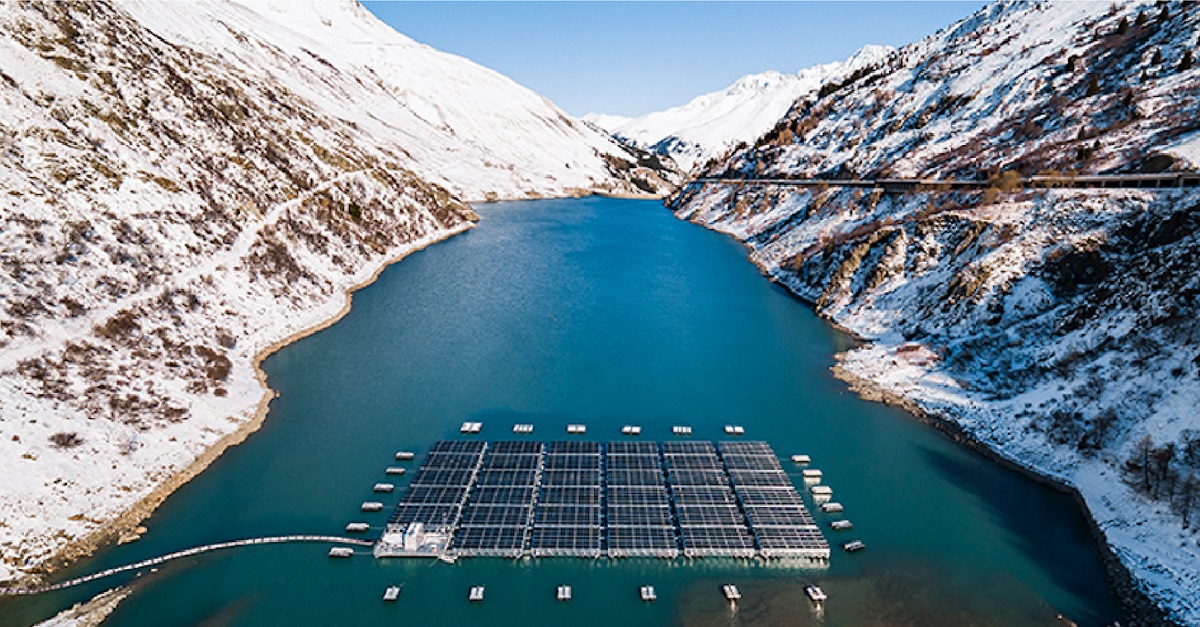





Large-scale renewable energy projects are set to advance more quickly in Switzerland. On Feb. 25, the Federal Council decided to bring most provisions of the draft law on accelerating procedures into force on April 1.
The draft law, adopted by the Federal Assembly on Sept. 26, 2025, mainly amends the Energy Act. The changes aim to simplify and shorten planning and permitting for solar, wind and hydropower projects of national interest. Grid expansion planning, as well as permitting and appeal procedures, will also be streamlined.
For solar and wind projects of national interest, cantons must introduce a centralized plan approval process. The canton where a project is located will issue all required cantonal and municipal permits for construction, expansion or renovation in a single procedure.
The appeals process for solar, wind and hydropower projects of national interest is also being simplified. At the cantonal level, appeals will be limited to the superior cantonal court.
The Federal Council will implement the revised law on April 1, 2026, except for two amendments concerning the feed-in tariff for renewable electricity at the point of injection and minimum feed-in tariffs for installations under 150 kW. Implementing provisions in the Energy Ordinance are being drafted and are expected to take effect later.
According to the National Survey Report of PV Power Applications in Switzerland, published in October by the International Energy Agency Photovoltaic Power Systems Programme (IEA-PVPS), photovoltaics generated 5.96 TWh of electricity in Switzerland by the end of 2024, accounting for 10.36% of national electricity consumption that year.
The report added that Switzerland’s cumulative solar capacity reached 8.17 GW at the end of 2024, after 1,799 MW were installed during the year.
This content is protected by copyright and may not be reused. If you want to cooperate with us and would like to reuse some of our content, please contact: editors@pv-magazine.com.



By submitting this form you agree to pv magazine using your data for the purposes of publishing your comment.
Your personal data will only be disclosed or otherwise transmitted to third parties for the purposes of spam filtering or if this is necessary for technical maintenance of the website. Any other transfer to third parties will not take place unless this is justified on the basis of applicable data protection regulations or if pv magazine is legally obliged to do so.
You may revoke this consent at any time with effect for the future, in which case your personal data will be deleted immediately. Otherwise, your data will be deleted if pv magazine has processed your request or the purpose of data storage is fulfilled.
Further information on data privacy can be found in our Data Protection Policy.