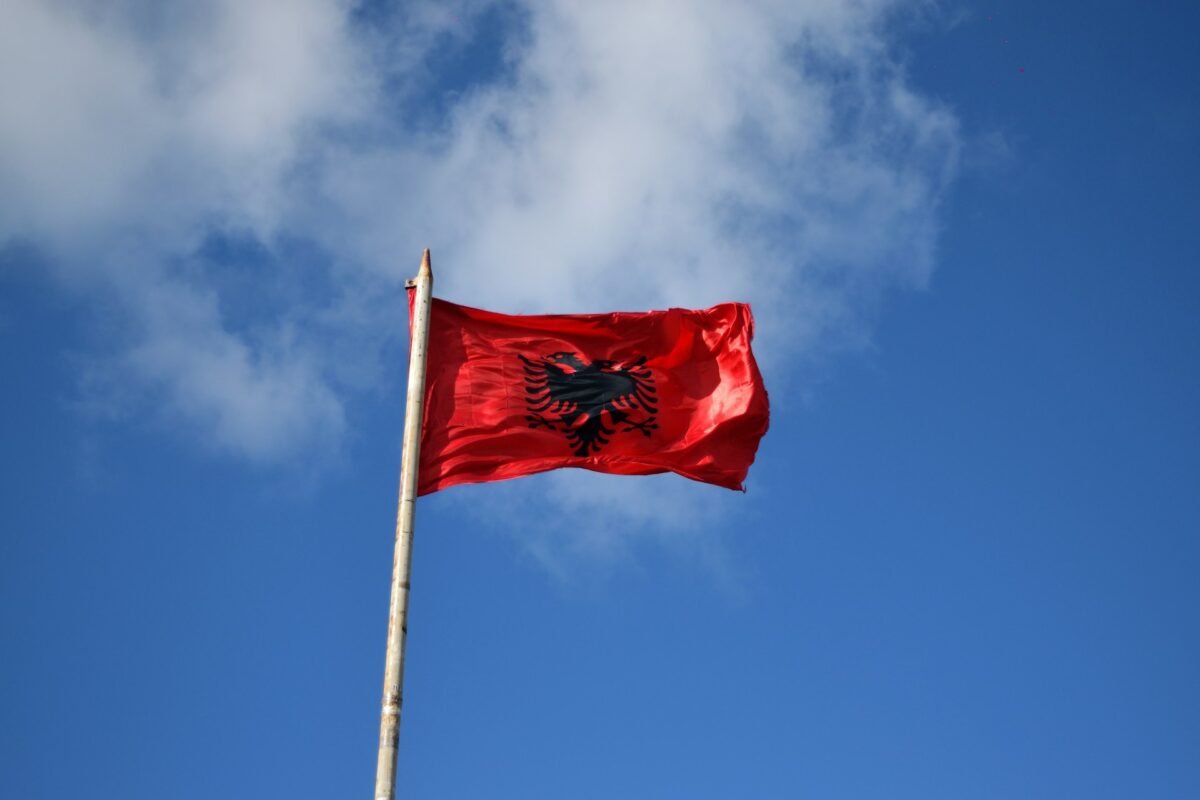





Albania added approximately 180 MW to 210 MW of solar capacity in 2025, according to analysis from Dr. Lorenc Gordani, an energy market and regulatory lawyer and lecturer.
Gordani told pv magazine that the estimation, based on market observations and project tracking, brings Albania’s total solar capacity to around 600 MW to 650 MW.
He explained that the utility-scale market is currently Albania’s main engine of growth, with the country attracting a growing amount of interest from international investors, particularly from developers already active in southeastern Europe.
“The market has gradually evolved toward market-based renewable investment, with merchant projects playing a more prominent role,” Gordani explained, adding that several merchant solar projects advanced through permitting and construction last year, reflecting investor confidence in Albania’s evolving electricity market.
Gordani cited the 50 MW Belsh PV project, located around 50 km south of the capital Tirana, as an example of a key site under development. Financing for the project has been secured, including a €30 million ($34.3 million) loan from the European Bank for Reconstruction and Development and a grant from the Western Balkans Investment Framework totaling around €9.25 million, with the project currently at the tendering and pre-construction stage.
Albania’s C&I solar market is gaining traction, Gordani continued, explaining that industrial customers are increasingly viewing rooftop solar as a tool to hedge against market price volatility. And while residential solar currently makes up the smallest share of Albania’s solar market, Gordani said interest is rising as the technology becomes more accessible and awareness increases. “However, growth in this segment still depends on regulatory simplification and improved access to financing mechanisms,” he stressed.
Gordani said that while the outlook for solar in Albania remains structurally positive, the pace of new installations may become more investment-driven rather than policy-driven. “The early phase of the market focused primarily on capacity expansion, supported by auctions and favorable resource conditions,” he explained. “The next stage of development will likely depend increasingly on investment bankability and system integration conditions.”
Gordani suggested clearer and more transparent grid connection procedures, the development of corporate power purchase agreement (PPA) frameworks and clearer rules on curtailment risk allocation would help strengthen Albania’s solar market further.
He also recommended improved market integration with regional electricity exchanges and stronger frameworks for energy storage and system flexibility, which he said will be essential in order to maintain system stability while continuing to attract investment as solar penetration increases.
“Regulatory and sector discussions during 2025 increasingly focused on grid connection capacity management, the role of energy storage and system flexibility, and the digitalization of the distribution system, including the planned rollout of smart meters and modernization measures within [Albanian electricity distribution operator] OSHEE,” Gordani also told pv magazine. “These discussions reflect the gradual transition of Albania’s renewable energy sector from an auction-driven phase toward a more market-driven investment environment.”
While no new solar auctions were finalized last year, discussions continued around potential future renewable energy tenders in Albania, Gordani added. Albania hosted its first unsubsidized large-scale solar project in 2024. The 300 MW procurement exercise received 283.93 MW of project proposals at an average price of €0.0513 ($0.059)/kWh.
This content is protected by copyright and may not be reused. If you want to cooperate with us and would like to reuse some of our content, please contact: editors@pv-magazine.com.


By submitting this form you agree to pv magazine using your data for the purposes of publishing your comment.
Your personal data will only be disclosed or otherwise transmitted to third parties for the purposes of spam filtering or if this is necessary for technical maintenance of the website. Any other transfer to third parties will not take place unless this is justified on the basis of applicable data protection regulations or if pv magazine is legally obliged to do so.
You may revoke this consent at any time with effect for the future, in which case your personal data will be deleted immediately. Otherwise, your data will be deleted if pv magazine has processed your request or the purpose of data storage is fulfilled.
Further information on data privacy can be found in our Data Protection Policy.