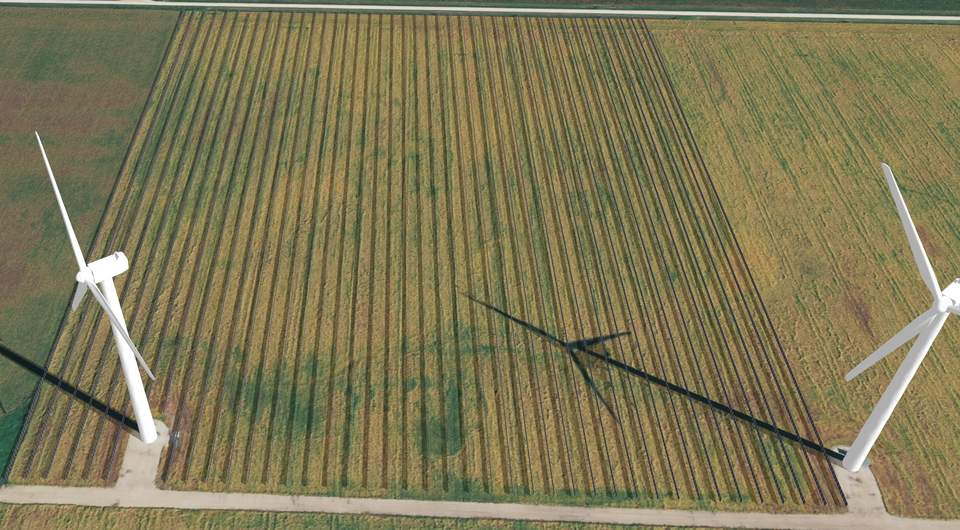





Irish data center developer Echelon has begun construction on a data center co-located with large-scale renewable energy infrastructure, including solar PV systems and battery energy storage.
Echelon’s DUB20 data center campus will be Ireland’s first Green Energy Park (GEP), representing a significant milestone in the delivery of the government’s Large Energy Users Action Plan (LEAP).
LEAP was introduced by the Department of Enterprise, Trade and Employment in January 2026 to promote indigenous renewable energy developments co-located with large energy users. Green energy parks are part of this strategy and the government will work with large energy users to identify suitable sites for developing GEPs that co-locate renewables and high-energy demand infrastructure.
Ireland’s commission for utilities regulation (CRU) stipulates that data centers seeking connection to the national grid must commit to achieving 80% of utilized power from a renewable source within six years.
Located in Arklow, Co Wicklow, the DUB20 campus will include solar PV systems with the potential to generate more than 6,000 MWh per year. The campus will also have two onsite energy centers, including one capable of exporting power to the national grid during periods of low renewable output. The GEP will also feature co-located battery energy storage systems and it will include a joint 220 kV substation developed with SSE Renewables facilitating access for up to 800 MW of offshore wind energy from Arklow Bank Wind Park Phase 2.
Darragh O’Brien TD, Minister for Climate, Energy and the Environment, said he expects GEPs to play a key role in achieving Ireland’s climate targets while attracting investment, employment and digital infrastructure growth.
He described DUB20 as an important example of the LEAP model in action. “This is exactly the kind of forward-planned, sustainable development we want to see delivered under LEAP.”
“LEAP sets out a clear pathway for how energy-intensive industries can develop in a way that strengthens Ireland’s grid, accelerates renewable deployment and supports our climate ambitions,” the Minister added.
The LEAP strategy has been billed as a way of meeting Ireland's climate goals without deterring investment in its lucrative IT and biopharma sectors by large energy users and multinationals.
However, climate advocacy groups such as Friends of the Earth have been critical of LEAP and oppose data center development. In March 2026, Friends of the Earth and other civil society groups appealed to the government to place a moratorium on new data center connections until the risks they pose to Ireland's grid and electricity supply have been independently assessed. They also advocate for scrapping proposed legislation allowing private wires connections, which they describe as potential back doors to data center development.
Solar Ireland, the group representing Irish solar business interests, also recently shared concerns about the proposed private wire legislation, claiming its wording could unintentionally lead to a slow down in Ireland's thriving residential rooftop PV sector. Solar Ireland previously welcomed the move to legislate for private wire connections in certain cases, highlighting the potential benefits for the national grid.
Commenting on the upcoming DUB20 project, Echelon co-founder Graeme McWilliams said it “demonstrates how large-scale digital infrastructure can be developed responsibly and in lockstep with national climate and energy policy.”
“By co-locating data center capacity with offshore wind, onsite solar and grid-supporting infrastructure, we are delivering the exact model envisioned under the Government’s LEAP framework – cutting emissions, reinforcing energy security and supporting regional economic growth,” McWilliams added. Construction on DUB20 is due to be completed by 2028.
This content is protected by copyright and may not be reused. If you want to cooperate with us and would like to reuse some of our content, please contact: editors@pv-magazine.com.


By submitting this form you agree to pv magazine using your data for the purposes of publishing your comment.
Your personal data will only be disclosed or otherwise transmitted to third parties for the purposes of spam filtering or if this is necessary for technical maintenance of the website. Any other transfer to third parties will not take place unless this is justified on the basis of applicable data protection regulations or if pv magazine is legally obliged to do so.
You may revoke this consent at any time with effect for the future, in which case your personal data will be deleted immediately. Otherwise, your data will be deleted if pv magazine has processed your request or the purpose of data storage is fulfilled.
Further information on data privacy can be found in our Data Protection Policy.