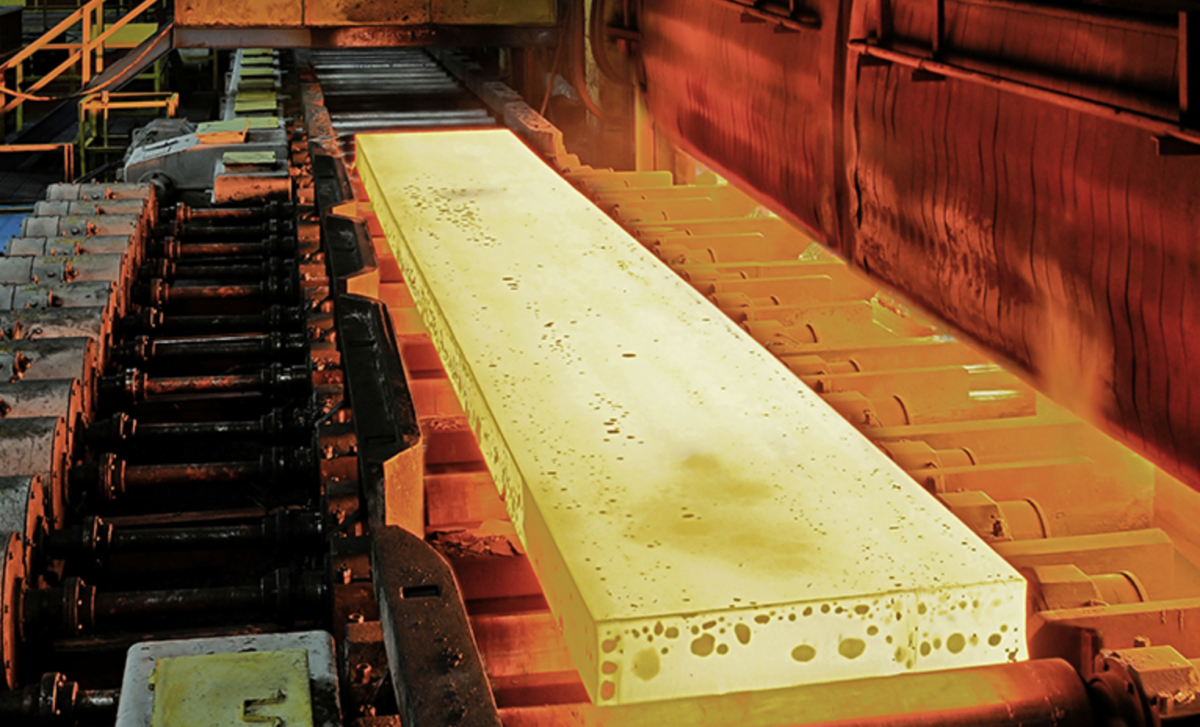





Australia’s transition to clean industry could unlock approximately AUD 300 billion in economic opportunity if action is taken to deliver a pipeline of 70 projects, according to a new briefing from two global alliances pushing to decarbonize industry.
Switzerland-based Mission Possible Partnership (MPP) and a multi-location alliance that includes the United Arab Emirates (UAE), the Industrial Transition Accelerator (ITA), announced recommendations during Climate Action Week Sydney from March 9 to 15, 2026.
The briefing titled, “Clean industry spotlight: Turning Australia’s natural advantage into industrial leadership,” recommends key policy and investment levers to future-proof the country’s economy through a transition to clean industry.
Michael Bartlett, the acting branch head at the Australian Department of Climate Change, Energy, the Environment and Water (DCCEEW), said immediate action to kick-start the clean industrial revolution in Australia can realize an immense economic opportunity valued at more than a quarter of a trillion dollars.
“Australia has strong advantages, with world-class mineral deposits, renewable potential and a strong reputation as a trusted trading partner,” Bartlett said. “International partners already look to us to support the decarbonization of steel, fuels, and heavy industry. There’s a clear economic opportunity if we can move early and build scale.”
Referencing 70 clean industrial projects in development – including 15-20 in advanced stages – the briefing said Australia could realize more than AUD 290 billion in investment if demand is stimulated through mandates, public procurement, and revenue certainty mechanisms.
Build Clean Now (BCN) is a global campaign to advance clean industry, bringing together governments, companies, and finance to accelerate the pace at which clean industrial projects are financed and built, year on year.
Led by the ITA and MPP, BCN aims for rapid ramping-up of investments in the near term, with an initial target of 50 new final investment decisions (FIDs) on major clean industry projects in 2025-26.
BCN workshop participant Copenhagen Infrastructure Partners Director Matthew Stuchbery said clean industry can anchor long-term investment and economic resilience if the conditions are right.
“Build Clean Now reinforces the importance of predictable demand and coordinated action so capital can flow into projects at scale,” Stuchbery said.
Clean Energy Finance Corp. (CEFC) Executive Director Rupert Maloney said there is a clear role for a public financier to step in where the private sector is not yet ready, manage risk prudently across a portfolio, and help turn first-of-a-kind clean industry projects from a “no” into a “yes.”
MPP’s Global Project Tracker identifies 53 commercial-scale zero or near-zero emissions projects and, through BCN, the ITA is also tracking a further 17 lower-emissions projects bringing Australia’s total clean industrial pipeline to 70 projects in development.
Most of the 70 projects are in the ammonia sector (41), with a further seven in aviation, nine in steel, three in methanol, five in aluminium, and five in HVCs (High-value chemicals), with 20 approaching financial close and one has reached FID.
MPP Asia-Pacific (APAC) Director Rachel Howard said Australia’s clean industrial pipelines potential can translate into huge economic and social benefits across the country, while supporting the path to net zero.
“To achieve that, we need true collaboration between government, industry and finance to create a blueprint that can be replicated around the world,” said Howard.
The briefing said that Australia has 70 clean industrial projects in development, but many face barriers such as insufficient buyers willing to pay a green premium, policy uncertainty, fragmented demand and high upfront capital costs.
Decisive government actions can overcome these barriers, which the briefing said could:
- Use public procurement and mandates to create reliable early demand
- Introduce price guarantees and carbon contracts to reduce investment risk
- Deploy loan guarantees, export finance and transferable tax credits to crowd in private capital
- Invest in shared infrastructure and contingency facilities to lower delivery risk
This content is protected by copyright and may not be reused. If you want to cooperate with us and would like to reuse some of our content, please contact: editors@pv-magazine.com.

By submitting this form you agree to pv magazine using your data for the purposes of publishing your comment.
Your personal data will only be disclosed or otherwise transmitted to third parties for the purposes of spam filtering or if this is necessary for technical maintenance of the website. Any other transfer to third parties will not take place unless this is justified on the basis of applicable data protection regulations or if pv magazine is legally obliged to do so.
You may revoke this consent at any time with effect for the future, in which case your personal data will be deleted immediately. Otherwise, your data will be deleted if pv magazine has processed your request or the purpose of data storage is fulfilled.
Further information on data privacy can be found in our Data Protection Policy.