Longer-duration BESS finds footing in Germany’s toll market

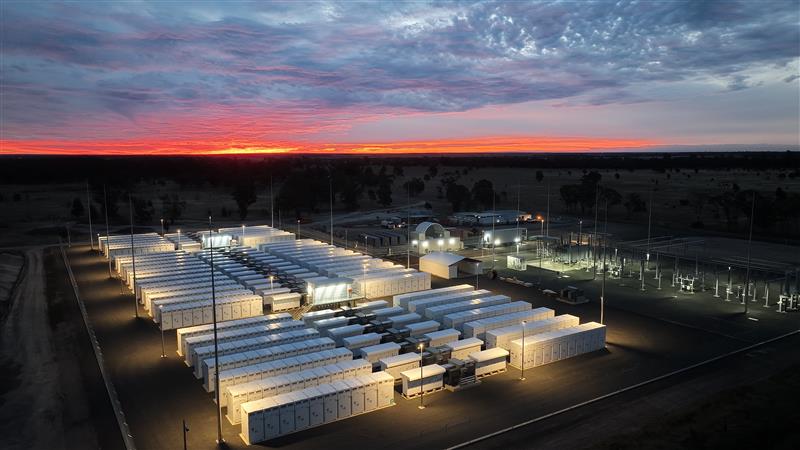
Akaysha Energy, the Australian BESS developer owned by BlackRock, has formed a joint venture with Copenhagen Energy to develop large-scale battery storage sites across Germany. The partnership is backed by an AUD 300 million ($217.8 million) corporate debt facility raised in September 2025 from a syndicate including Deutsche Bank, BNP Paribas, ING, SMBC, and Westpac.
Paul Curnow, Akaysha Energy’s managing director and chief commercial officer, said each German project will be funded through non-recourse project finance alongside potential regional co-investment.
“In Germany, we’ve had positive early engagements with Frankfurt-based banks and potential investors,” Curnow told pv magazine.
Akaysha Energy targets 60% to 80% contracted capacity at the project level and around 80% across the portfolio, retaining some merchant exposure, said Curnow.
Cosima Sagmeister, analyst at Modo Energy, said Germany’s merchant fundamentals are among the strongest in Europe. “Day-ahead top-bottom spreads for a two-hour battery reached €85,000 ($100,000)/MW in 2025, 60% higher than in Great Britain, and the intraday market is the most liquid on the continent,” she said.
Modo Energy’s modeling points to more than 15 GW of grid-scale BESS in Germany by 2030, according to Sagmeister.
“Grid connection requests reportedly exceeded 720 GW last year, about nine times German peak load, and grid access terms are tightening,” she said. “Continued growth depends on infrastructure and regulatory evolution moving in parallel with investment.”
Sagmeister noted that the revenue stack is undergoing a structural shift. “The defining feature of the German revenue stack is the shift from ancillary to wholesale, which takes over as the structural backbone in the long term,” she explained.
Longer durations are becoming increasingly attractive, she said, both in conversations with market participants and in Modo Energy’s modeling. “The tolling market is also very active, which is particularly relevant for project finance,” Sagmeister added. “When we look at disclosed revenue structures across Europe, Germany was the leader in tolling agreements in Q1 2026.”
Australian playbook
Curnow said the contracting structures Akaysha intends to deploy in Germany draw on its Australian experience.
“In Australia, the products that have really accelerated deployment are things like virtual toll structures and revenue-sharing structures, and we’ve also seen strong demand for capacity swap-style arrangements,” he said. “These are highly structured products that start with what the offtake customer actually needs and what risk they can take, then we design the structure so it’s still financeable. We think these types of products will play a big role in unlocking larger, scalable project finance in a market that’s seeing enormous demand for storage.”

Germany’s grid fee regime presents a key uncertainty for projects targeting commissioning in 2029 and 2030. The current exemption from grid capacity charges expires for batteries commissioned after Aug. 4, 2029, and Germany’s Federal Network Agency (Bundesnetzagentur) has not finalized the replacement regime. Curnow said Akaysha Energy manages the risk by maintaining flexibility over project sequencing.
“Our intention is to advance a broad pipeline of projects in Germany, with options over sequencing that enable us to make final investment decisions with the best possible visibility on the regulatory and grid-connection economics,” he said.
Akaysha Energy commissioned Baringa to model the impact of forthcoming dynamic grid charges on German BESS economics. Curnow said the modeling – published in a report titled “Reforming grid charges in Germany: The case for dynamic pricing” – shows that “forthcoming dynamic grid charges are likely to have a neutral to slightly positive impact on battery economics, while incentivizing batteries to operate in a way that supports the grid.” He said capacity fees in particular risk undermining the investment case if set too high.
Sagmeister said grid access and usage costs have become a defining variable for project economics over the next two to three years. She flagged flexible connection agreements, granted under section 17(2b) of Germany’s Energy Industry Act (EnWG), as a growing feature of new grid connections that can materially affect project economics.
“At the project level, grid access and usage terms have become a defining variable for project economics,” she said. “You need to make sure you know what to account for, quantify it, and price it in.”
A panel at the recent Battery Business & Development Forum 2026 (BBDF 2026) conference heard that banks increasingly insist on toll or floor structures and that pure merchant exposure is tolerated only by niche capital providers. Europe contracted nearly 24 GWh of BESS capacity under flexibility purchase agreements in 2025, with Germany among the leading markets.

Please login to comment