Emiliano Bellini

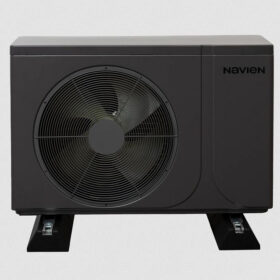
Navien unveils 4-17 kW air-source heat pump for residential applications
The South Korean heating specialist said its new heat pump system can achieve a seasonal coefficient of performance of up to 4.79 and flow temperatures of up to 75 C.

Semi-translucent solar window based on concentrated photovoltaics
Researchers in Spain have designed a PV window that performs active daylighting management while producing electricity. The system can reportedly ensure high power density, as it harvests all the direct light incident on the aperture area.
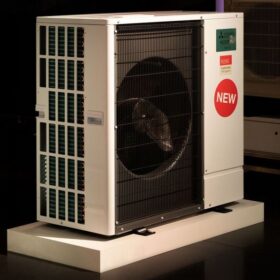
Mitsubishi Electric debuts new residential air-source heat pumps
The manufacturer has expanded its Ecodan R290 heat pump series with three new products. The systems use propane (R290) as the refrigerant and can purportedly deliver flow temperatures of up to 75 C.

Fire damages PV system on school in Belgium
A fire damaged around 100 of the 160 solar panels on the roof of Don Bosco school in Halle, Belgium. Firefighters quickly extinguished the blaze, and no injuries were reported.
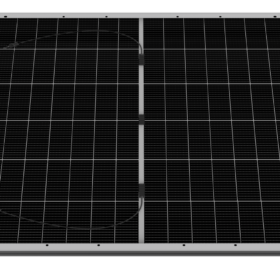
Canadian Solar unveils 630 W anti-hail TOPCon PV panel
The Chinese manufacturer said its new bifacial module features a thicker 35 mm frame and 2.5 mm fully tempered glass on both sides. It has a power conversion efficiency of 23.3% and a temperature coefficient of -0.29%/C.
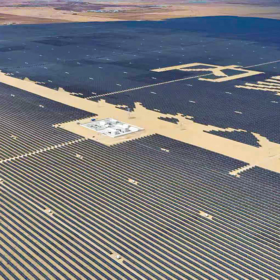
Inner Mongolia Energy Group switches on 1.6 GW solar farm in northern China
Inner Mongolia Energy Group has turned on a 1.6 GW solar project in Bayannur, Inner Mongolia, using inverters from China’s Sineng Electric.
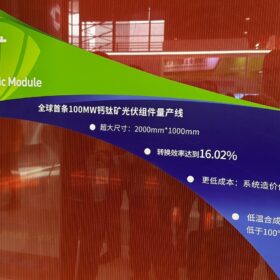
GCL claims 19.04% efficiency for perovskite solar panel
The Chinese manufacturer was able to increase the panel efficiency from 18.04% to 19.04% in 16 months. The panel has a size of 2,005 mm x 1,005 mm x 35 mm and a weight of 34.5 kg.
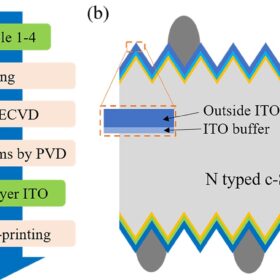
Heterojunction solar cell based on indium tin oxide buffer layer achieves 25.36% efficiency
Researchers in China have sought to increase the efficiency of heterojunction solar cell through a buffer layer made of indium tin oxide. This innovation reportedly resulted in a 0.1% efficiency increase deriving from optimized short-circuit current density and fill factor.

Dutch homeowners file suit over 2027 phase-out of net metering
Around 137,000 Dutch homeowners have filed a legal claim seeking compensation over the planned cancellation of net metering in 2027.
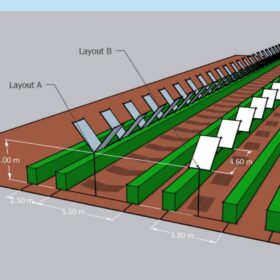
V-shaped PV system for agrivoltaic applications
An Italian startup supported by a group of scientists is developing a V-shaped agrivoltaic system that can reportedly find optimal application with bifacial modules and single-axis tracking. The proposed system configuration is claimed to reduce land use by 24 % compared to conventional setups.
