Emiliano Bellini


Tunisia issues fifth 70 MW PV tender
The Tunisian government hopes to build six solar plants in its latest procurement round, with capacities of 10 MW each, in addition to 10 smaller solar arrays, each up to 1 MW in size.
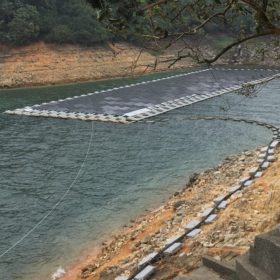
Dubai launches tender for floating PV pilot project
The tender was launched by the Dubai Electricity and Water Authority (DEWA). Interested developers will have time until February 15 to submit their offers.
Colombian oil giant announces solar projects
Ecopetrol has announced plans to develop six new solar projects, which will bring its total installed PV capacity to 155 MW by the end of this year.
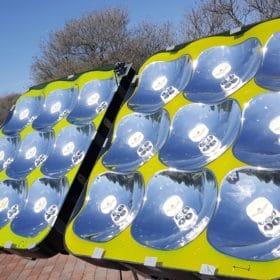
CPV module with triple-junction cells and double-bonded copper carriers
Université de Sherbrooke researchers have tested a new concentrator PV module for potential applications in heating, ventilation, and air conditioning systems in commercial buildings.

Polish oil company plans 100 MW solar park at brown coal mine
The solar park is expected to be connected to the grid infrastructure of a coal power plant located nearby. Polish oil group Orlen is targeting 2 GW of renewable energy assets by 2030.
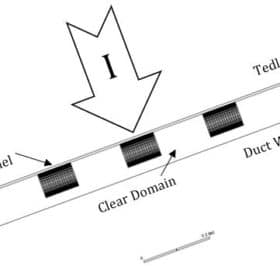
Passive cooling with porous materials for PV modules
Researchers in the Middle East have proposed a new passive technology to cool off solar modules, based on highly conductive porous materials.

More than 800 MW of floating PV under development in Greece
Greek conglomerate Gek Terna has unveiled plans to deploy three large-scale floating PV plants at three different water reservoirs. Total investment in the projects is expected to amount to €170 million. Furthermore, the national utility PPC is reportedly planning to deploy another 50 MW and InterPhoton Group is considering to build a 500 MW facility.

Lowest bid in Malta’s third PV tender hits €0.12/kWh
The highest bid in Malta’s latest procurement exercise was €0.129/kWh. The Maltese authorities selected eight PV projects, with capacities ranging from 1 MW to 3 MW.

Improving PV-powered water electrolysis with external fields
Australian researchers have analyzed different ways to improve the efficiency of PV-powered water electrolysis for hydrogen generation. They include the use of magnetic fields, light energy, ultrasonic fields, and pulsating electric fields. Energy costs remain prohibitive, but molecular movement and the redistribution of molecules in water during electrolysis could open a path to viability.

Norway’s residential PV market saw small contraction in 2020
Around 31.7 MW was installed and 1,613 rooftop PV systems were deployed under the Plusskundeordningen solar rebate program last year. This compares to 31.9 MW and 1,666 projects a year earlier. Low power prices and policy confusion are the main causes of this slight market contraction.
