Emiliano Bellini


Tunisia issues tender for 300 MW solar plant with 150 MW/540 MWh storage
The country’s first solar-plus-storage project will be located on a 400 hectare surface near Kébili, a town in the south of Tunisia and one of the main cities in the Nefzaoua region.
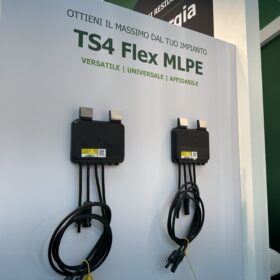
Tigo debuts 725 W optimizer for high-power solar modules
The new product has a maximum wattage of 725 W, a maximum current of 22 A, and a maximum efficiency of 99.6%.
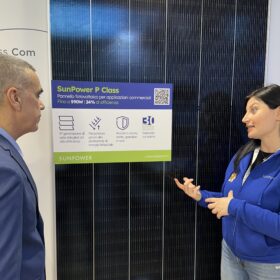
TCL Sunpower presents shingle TOPCon solar panels for rooftop PV
The Chinese manufacturer expanded its P Class portfolio with two new shingled-module series for residential and commercial rooftop installations. Both lines feature high-density, multi-busbar shingled cells for improved shade tolerance and long-term reliability with 30-year warranties.
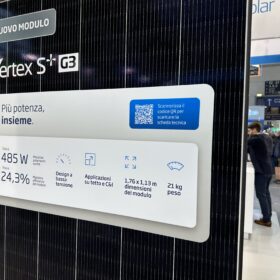
Trina Solar unveils 485 W TOPCon PV panel with 24.3% efficiency
The Chinese manufacturer has launched its third-generation Vertex S+ G3 dual-glass TOPCon modules for residential and commercial applications. The new products feature upgraded module architecture and a temperature coefficient if -0.26% per C.
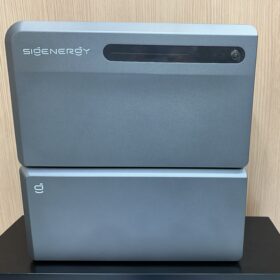
Sigenergy unveils 2.68 kWh battery for balcony PV
Sigenergy has launched a 2.68 kWh balcony storage system with four MPPTs and up to 4 kW of PV input. The scalable LFP solution offers 800 W grid output, 1.2 kW backup power, and expansion up to 18 kWh per tower.
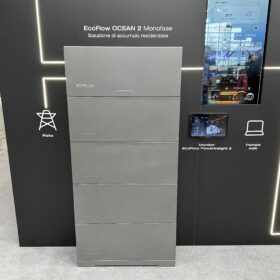
Ecoflow debuts 5 kWh residential inverter battery with 100% depth of discharge
EcoFlow has unveiled the single-phase Ocean 2 all-in-one battery inverter at Key Energy in Rimini. The system features a more compact 5 kWh LFP battery stackable up to 30 kWh and offering 100% depth of discharge, 3.4 kW discharge power, and IP66 protection.
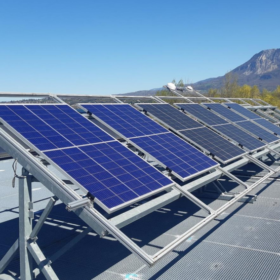
CEA-Ines, 3Sun build heterojunction solar modules based on UV downshifting
The new heterojunction solar module concept is based on co-extruded EVA/POE/EVA (EPE) encapsulant with UV downshifting (UV-DS) films, which convert harmful UV light into blue light, protecting cells and slightly boosting short-circuit current by 1.5–1.75%.
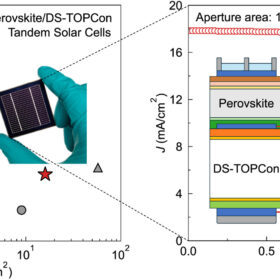
SERIS builds 22.1%-efficient perovskite-silicon tandem solar cell based on double-sided polysilicon layers
SERIS researchers developed a 16-cm² perovskite-silicon tandem solar cell with a double-sided TOPCon bottom cell, enhancing passivation, reducing recombination, and increasing voltage and fill factor.
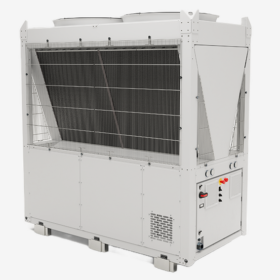
Daikin launches new propane heat pumps for commercial, industrial applications
Daikin has introduced two new propane heat pump lines for industrial and district heating applications, combining monobloc units from 20 kW to 85 kW with modular systems scalable up to 2 MW.
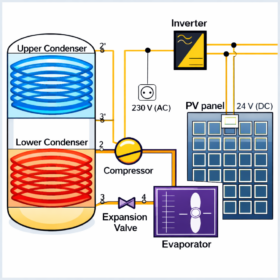
PV-assisted heat pump prototype with dual condenser reaches 7.59 coefficient of performance
Researchers in Spain have developed a dual-condenser air-to-water heat pump that shifts domestic hot water production to daylight hours, maximizing PV self-consumption. The prototype boosted solar energy use from 9.9% to 55.5% and achieved a peak coefficient of performance of 7.59 under PV-assisted operation.
