Emiliano Bellini


Saudi Arabia launches 3 GW solar tender
Saudi Power Procurement Co. (SPPC) has announced a request for qualification (RFQ) for 3 GW of solar across four projects in the sixth round of Saudi Arabia’s renewable energy tender program.

Sharp unveils 610 W TOPCon solar panel with 22.58% efficiency
Sharp’s new IEC61215- and IEC61730-certified solar panels have an operating temperature coefficient of -0.29% per C and a bifaciality factor of over 80%.

Jordan launches rebate scheme for residential PV
The Jordanian government says it will cover up to 30% of the cost of buying and installing residential PV systems through its new rebate scheme.

Italian scientists build 12.6%-efficient nickel oxide-based large-area perovskite solar modules
An Italian research group has fabricated 110 cm² perovskite solar module with an inverted configuration and a hole transport layer that uses nickel oxide instead of commonly utilized poly(triarylamine) (PTAA). The proposed architecture aims to achieve high efficiency that is competitive with PTAA-based panels while improving stability.

Daiwa House unveils solar carport
Daiwa House, Japan’s largest homebuilder, has developed a new carport made from extruded aluminum profiles. It comes in two versions, accommodating either four or two vehicles.

Taiwan improves PPA rules for renewables
The Taiwanese government has introduced a new, favorable framework for renewable-energy power purchase agreements (PPAs). Large energy consumers are no longer required to buy the entire output of large-scale facilities.
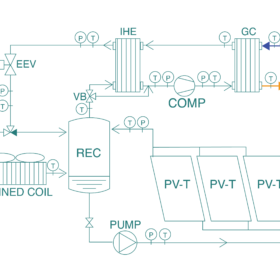
Dual-source CO2 heat pump based on photovoltaic-thermal evaporators
Researchers in Italy have conceived a dual-source heat pump system that uses both a finned-coil evaporator and a solar evaporator made with three photovoltaic-thermal panels. Thanks to the combined action of the two evaporators, the heat pump can achieve higher evaporation pressure and coeffficient of performance.
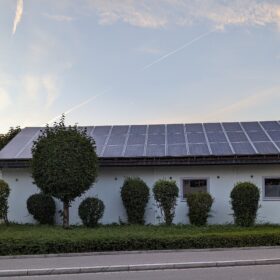
Photovoltaic systems are a no-regret investment decision
New research from Germany shows that investing in residential PV remains an optimal choice even when price breaks on electricity and natural gas are applied. The scientists quantified the savings that PV systems achieved between 2019 and 2022, when the COVID-19 crisis and the outburst of the war in Ukraine made prices in the electricity markets extremely volatile.
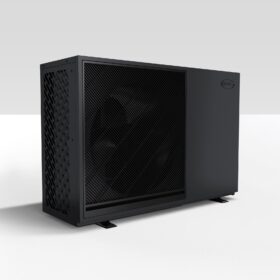
Grant launches air source heat pump for residential applications
The novel propane heat pump has a coefficient of performance of up to 4.9 and can reportedly achieve a flow temperature of up to 55 C.
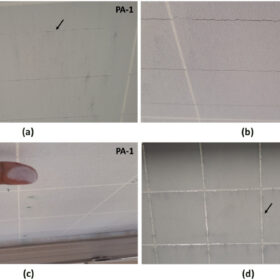
A closer look at backsheet degradation in desert enviromnents
A Qatari research group has analyzed the performance of polyethylene terephthalate backsheets in real outdoor testing conditions in desert areas and has identified the main causes that lead to degradation. These include prolonged exposure to high ultraviolet radiation, high operating temperature cycling, and relative humidity.
