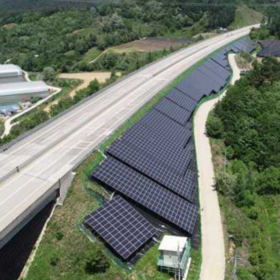
Guided-learning model for PV power forecasting without irradiance sensors
South Korean researchers have developed a guided-learning framework that accurately predicts PV power without requiring irradiance sensors during operation, using routine meteorological data instead. The model reportedly showed strong out-of-sample performance while outperforming conventional irradiance-based approaches, particularly under noisy or inconsistent data conditions.

Growatt launches 5 kWh AC-coupled balcony storage system
The IP66-rated Aura 5000 system features bidirectional inverter functionality and an AC output of up to 2.5 kW.

Reducing PV module temperature with leaf vein–inspired fins
Researchers in Iraq have developed biomimetic leaf vein–inspired fins for photovoltaic panels, with reticulate (RET) venation reducing panel temperature by 33.6 C and boosting efficiency by 18% using passive cooling. Their study combines 3D CFD simulations and electrical evaluations to optimize fin geometry, offering a sustainable alternative to conventional cooling methods.
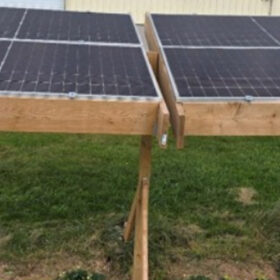
Agrivoltaics can help lettuce survive extreme heat
Scientists have grown organic romaine lettuce under 13 different types of PV modules, in an unusual hot Canadian summer. Their analysis showed lettuce yields increased by over 400% compared to unshaded control plants.

Cubenergy releases energy storage block for utility, C&I applications
Cubenergy has launched FlexCombo 2.0, a scalable battery energy storage system for utility, commercial, and industrial applications, offering up to 16 MWh capacity with LFP batteries. Its modular design, advanced BMS, and cloud-based operations enable easy installation, seamless expansion, and efficient grid integration, according to the manufacturer.
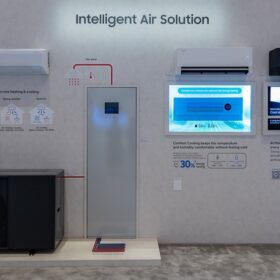
Samsung releases new all-in-one heat pump for residential use
The South Korean giant said its new EHS All-in-One provides air heating and cooling, floor heating, and hot water from a single outdoor unit. It can supply hot water up to 65 C in below-zero weather.
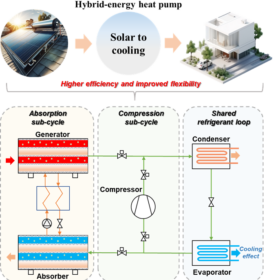
Scientists unveil hybrid-energy heat pump combining absorption and compression cycles
Researchers in Hong Kong have developed a hybrid-energy heat pump that seamlessly combines absorption and compression cycles using crystallization-free ionic liquids, improving efficiency and reliability across varying solar conditions. Simulations in multiple Chinese cities show the system can significantly cut electricity use and cooling costs, making it promising for sustainable building cooling and future commercial scaling.
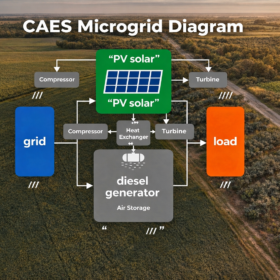
How to combine C&I solar with compressed air energy storage
Researchers have studied the potential of combining photovoltaic systems with compressed air energy storage (CAES) to power a commercial building in South Africa. They found that a co-optimized system could lower total capital costs by 15–20% compared to traditional sequential sizing approaches.

Analysts warn of possible, sudden silver price fall
pv magazine has spoken with silver analysts from Bloomberg and StoneX about the vertiginous growth of silver prices in recent weeks. They both agree that when prices rise too fast, investors’ behavior may change quickly. Meanwhile, the price of the precious metal has reached another all-time high today at $110 per ounce.

‘An immediate transition to copper is technically and economically feasible’
With silver prices rising, more large solar manufacturers are expected to switch to copper for cell metallization. Radovan Kopecek of ISC Konstanz tells pv magazine that he expects the entire industry to follow. Ning Song of the University of New South Wales says a small efficiency tradeoff may be acceptable if the cost savings are significant and do not introduce new reliability risks.
