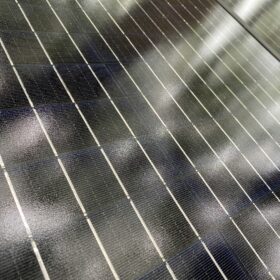
Tilt angle has greatest impact on power losses caused by soiling
Scientists in China have analyzed the impact of soiling of PV module performance and have found that tilt angle has the greatest impact, followed by irradiance intensity and dust deposition density.
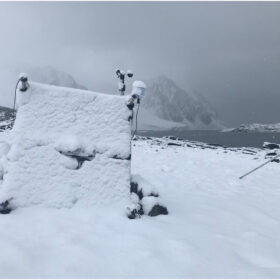
Testing photovoltaic modules in Antarctica’s summer
The Turkish Antarctic Expedition placed four different PV module types – monocrystalline, polycrystalline, flexible and transparent – outside of their research camp for three months to compare performance, finding that monocrystalline was the clear winner.
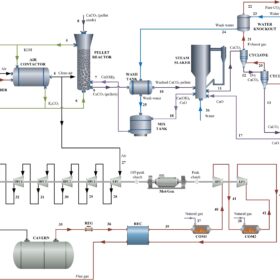
Combining liquid-based direct air capture with compressed air energy storage
Scientists in China have simulated a system that combines liquid-based direct air capture with diabatic compressed air energy storage, for the benefit of both processes. Exploring its economic feasibility, they found the system could achieve a levelized cost of energy of $0.53/kWh and a levelized cost of CO2 captured from air of $259/tCO2.
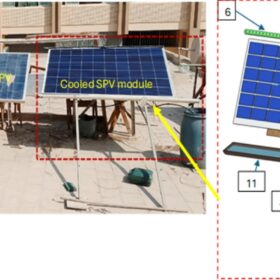
Experimental system cools PV panels while keeping them clean
Researchers had placed a cotton sheet on the back of a PV module, which was then made wet and cooled. On the front side, water was pumped water from a pipe in a way that kept the panel both cool and clean. Their experimental setup showed superior results compared to reference cooling technologies.
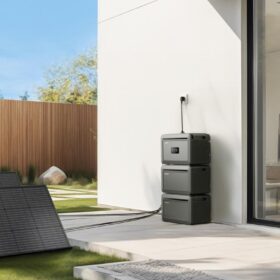
Growatt releases all-in-one 8 kWh balcony storage system
The battery features four MPPTs and can take up to 2,600 W of PV input. It also has an AC nominal output power of 800 W.

Atess Power launches 1,500 kW battery for C&I solar
Atess Power has released a 1,500 kW battery for commercial and industrial (C&I) solar, with up to eight units operating in parallel for 12 MW of capacity. The Chinese inverter manufacturer also offers 1,000 kW and 1,200 kW models.

Atmoce launches new combiners, microinverters
Atmoce’s new combiner boxes can handle up to 30 kW of PV input and offer 42 kWh of battery storage. Its microinverters support PV modules up to 700 W.
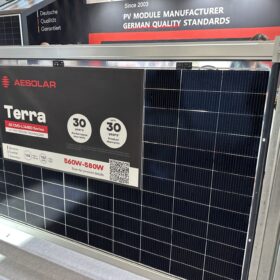
AE Solar releases bifacial solar modules for vertical projects
AE Solar has launched bifacial solar modules with 560 W to 580 W of power output, designed for vertical installations and agrivoltaic projects. The German company says the modules offer up to 10% backside power gain.
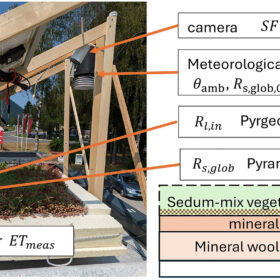
The effect of PV modules on green roofs
Scientists have used simplified 2D view factor and advanced 3D approach to calculate energy fluxes on green roofs with PV systems. They have also constructed an experimental setup to verify their model and have found that without the detailed model, evapotranspiration would be underestimated by 18%.
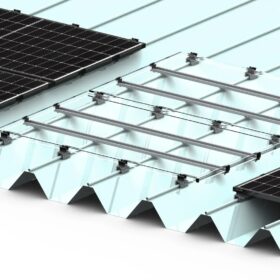
Trina, Daidohant launch new load-bearing mounting solution for heavy snowfall
The Chinese manufacturer has collaborated with Japan’s Daidohant on the new product. It reportedly suppresses deformation with a special bar attached to the back of the solar module.
