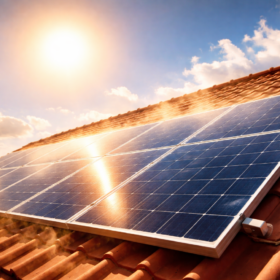
Global-warming-induced degradation could raise rooftop solar LCOE by up to 20%
A global study finds climate change will sharply increase high-temperature risks, accelerate degradation, and raise costs for rooftop PV, with economically disadvantaged regions hit hardest. Researchers warn current IEC standards underestimate future risks, urging urgent updates to avoid stranded assets and rising electricity costs.
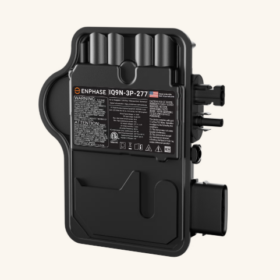
Enphase releases new control software for its IQ8, IQ9 microinverters
The US company said its Power Control software is designed to help installers reduce costs and streamline interconnection. Among its features is the ability to control aggregate system exports through software-based limits.

What happens when type-C cracks strike photovoltaic modules
An international research team used high-resolution electroluminescence imaging to quantify type-C cracks in 100 PV modules after 11 years of operation, linking crack distribution to real-world power loss. Concentrated cracks within individual cells were found to cause disproportionately high losses, highlighting the importance of cell-level crack analysis for effective PV maintenance.

The prospects for ultra-high-temperature heat pumps
An international research team has reviewed emerging solid-state and gas-cycle heat pumps capable of reaching temperatures of up to 1,600 K, assessing their challenges, applications, scalability, and technology readiness levels. The researchers say these systems could outperform conventional high-temperature heating technologies by achieving coefficients of performance above 1.

World’s fastest supercomputers probing future of sodium-ion batteries
Japanese researchers used supercomputer simulations to reveal how sodium ions form clusters and move within hard carbon anodes, identifying nanopore sizes and transition regions that control diffusion and rate performance in sodium-ion batteries. Their findings offer design guidelines for optimizing hard-carbon anodes to improve energy density, cycling, and commercialization prospects.
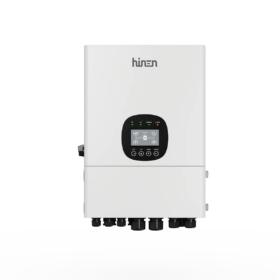
Hinen launches 15 kW three-phase hybrid inverter
The Chinese manufacturer said its 15 kW three-phase low-voltage hybrid inverter is paired with the stackable BP5000 5 kWh battery supporting up to 120 kWh. It features three MPPTs, 150% oversized PV input, and smart load management for optimized self-consumption.
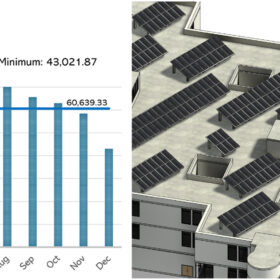
The impact of azimuth angles on PV power production in Saudi Arabia
Researchers in Saudi Arabia conducted a year-long simulation of fixed-tilt PV panels at different azimuth angles, finding that south-facing panels (180°) maximize energy production, while up to 45° eastward shifts cause minimal losses.
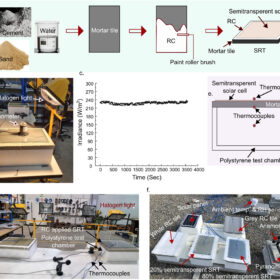
New reflective coating increases BIPV power output by 11%
Australian researchers developed a low-cost reflective coating for semi-transparent solar roof tiles that lowers surface temperatures by up to 20 C and boosts power output by up to 11.7%. Simulations across five global cities showed energy savings of up to 5.85%, highlighting the coating’s strong potential for improving both building cooling efficiency and solar performance in BIPV systems.
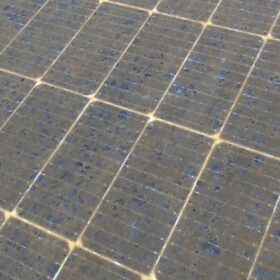
Chemitek offers solution for drone-based cleaning of agrivoltaics
The Portuguese company said its new Drone AgroPV Cleaning Agent is scheduled for release in June. It has a safe formulation for crops and soil.
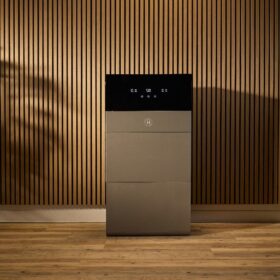
Hoymiles releases all-in-one residential inverter and modular battery
The Chinese company said its modular system supports up to 64 kWh of storage, multiple PV inputs, and 0 ms backup switching for uninterrupted operation.
