
Grenada launches 15.1 MW utility-scale PV tender
Grenada is seeking an independent power producer (IPP) to build and operate a 15.1 MW utility-scale PV project for 25 years. The plant, planned near Maurice Bishop International Airport, will supply about 40% of the island’s peak load.
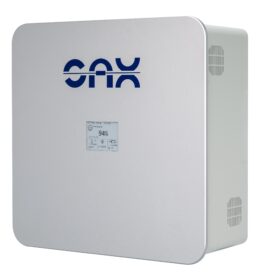
SAX Power releases 5.8 kWh residential AC battery
The German company said that its new storage solution also includes an integrated inverter function. It can be expanded to up to 17.3 kWh by connecting up to three modules.
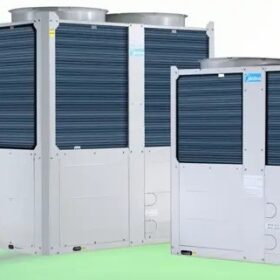
Adveco releases 65 kW, 110 kW heat pumps
Adveco has released 65 kW and 110 kW heat pumps, capable of scaling up to 1,760 kW by controlling up to 16 systems from a single unit. The pumps feature R32 refrigerant circuits.
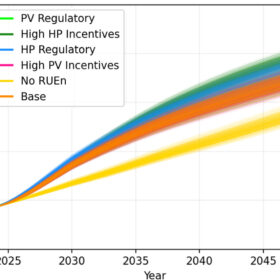
Stuck in a loop: The co-adoption dynamics of PV and heat pumps
Scientists in Switzerland have created a system-dynamics model for the adoption of PV and heat pumps in Swiss residential buildings up to 2050. They have examined several scenarios to see how the incentive for PV affects heat pump adoption and the other way around, and they have concluded that strong regulatory changes are necessary to completely decarbonize the residential sector.
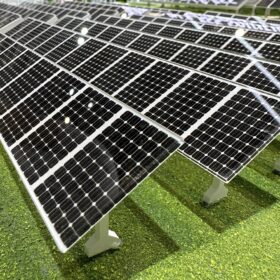
Digital twin for autonomous aerial monitoring of PV power plants
An international research team has created a digital twin that purportedly enables analysis of different scenarios on PV plants’ aerial monitoring. The new tool is claimed to reduce the risk associated with real-world experimentation and help identify the most effective strategies to improve PV system monitoring.
Israel plans 2,000 m2 PV project in occupied Palestinian territories
Israel plans to bild a 2,000-square-meter solar PV project in the occupied Palestinian territories and has directed civilian authorities in the West Bank to identify suitable land and launch a tender within a year. The project may also include energy storage options.
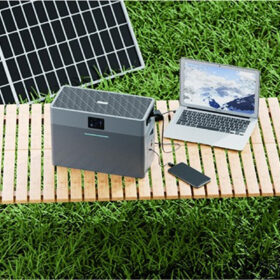
Deye launches 2 kWh hybrid ESS for residential, off-grid PV
Chinese manufacturer Deye says its new energy storage system (ESS) features a microinverter, a lithium iron phosphate (LFP) battery module, and a battery management system (BMS).
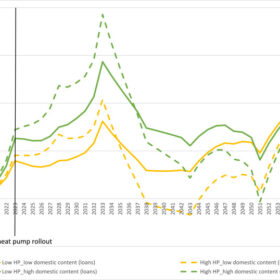
Heat pump rollout could mitigate impacts of higher energy prices
Researchers simulated the United Kingdom’s heat pump rollout through 2050, finding that expansion strategies could help to mitigate high energy prices. They used the UKENVI computable general equilibrium (CGE) model of the UK economy to project a range of scenarios.

Data center specialist begins building 120 MW of solar in South Africa
South African data center company Teraco has started building a 120 MW solar plant. The project, which secured grid capacity in February, is expected to go online in 2026.

UK regulator approves five undersea energy links by 2032
The UK electricity regulator has approved five new undersea energy links to connect the United Kingdom with the Netherlands, Belgium, Germany, Ireland, and between Northern Ireland and Scotland by 2032. Three will serve as traditional interconnectors, while two will also transmit power from offshore wind farms.
