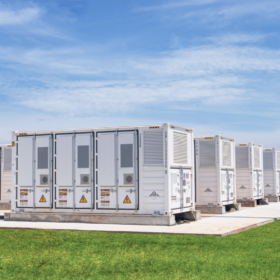
Brazil seeks Chinese investment ahead of first large-scale battery auction
Brazil’s Ministry of Mines and Energy is courting Chinese companies for its inaugural battery energy storage auction, which is expected to improve grid stability and renewable integration.
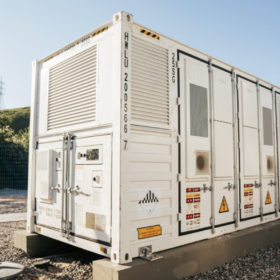
Energy storage could cut Brazil’s electricity system costs 16% in 2029
Storage is essential to expand renewables penetration and ensure grid flexibility, according to a study by consultants PSR. Regulatory and tax barriers still limit the sector, however, and new revenue sources are needed to make projects viable.
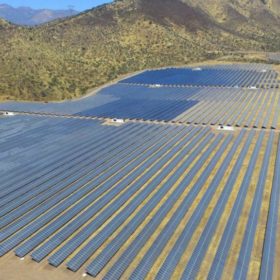
Large-scale PV faces market contraction in Brazil
In the first nine months of 2025, Brazil added 1,718 GW of utility-scale solar generation capacity to its electricity matrix, up from 4 GW in the same period in 2024.
Brazil imports 10.6 GW of solar modules in H1
Brazil imported 10.6 GW of solar modules in the first half of 2025, down slightly year over year as developers rushed to secure shipments before an import tax hike, according to Greener.

Brazil tenders 50 MW of battery, solar and hybrid sites for isolated areas
Two lots were tendered, to serve communities in Amazonas and Pará, with BRL 312 million ($58 million) of equipment. In Amazonas, 20,165 MW will be installed via five solar and diesel-fired thermal generation sites. Pará will get a 30.1 MW battery, solar and diesel facility.

Brazil solar curtailment hits 20% as renewables strain grid infrastructure
Renewables curtailment in Brazil in the first half of 2025 is straining investment and highlighting grid and transmission limits, with analysts calling for clearer pricing and storage solutions.
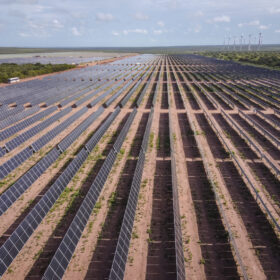
Brazil PV curtailment hits 14% as Voltalia seeks compensation deal
Voltalia has reported a 14% cut in its Brazilian PV output in the first half of 2025. The company expects curtailment to stay near 12% to 15% until 2027 and ease from 2028.
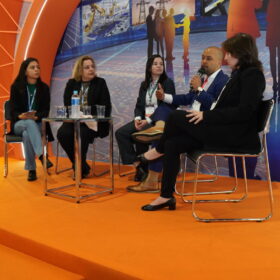
How to size PV systems and batteries
Experts from Fonte Solar, Huawei, and Greener have exchanged solar-plus-storage tips, insights, and case studies at the invitation of pv magazine. In a panel at Intersolar South America 2025, they highlighted the need to understand consumption profiles and customer needs, as well as the technology’s limitations and potential.
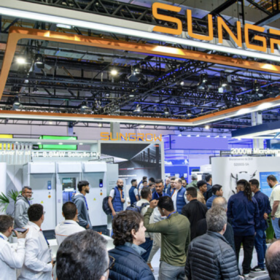
Sungrow’s Brazilian business heating up for batteries as solar demand cools
At Intersolar 2025, Sungrow’s Brazil country manager, Rafael Ribeiro, told pv magazine Brasil the company submitted more than 80 proposals to supply battery energy storage systems (BESS) between January and June alone, to projects interested in participating in the Leilão de Reserva de Capacidade na Forma de Potência (LRCAP) auction for battery storage.
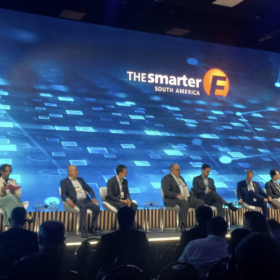
Solar to add 13 GW in Brazil in 2025 amid signs of slowdown
Brazil is expected to add 13 GW of solar capacity in 2025, according to the Brazilian Photovoltaic Solar Energy Association (Absolar), but growth appears to be slowing as curtailment, grid constraints, and regulatory uncertainty challenge new projects.
