
Sunoyster offers lightweight 440 W glass-covered TOPCon PV panel
Germany-based solar tracker developer Sunoyster Systems has developed a 440 W lightweight solar panel with a tempered glass cover for low-load commercial and industrial roofs.

Centrotherm launches new high-volume TOPCon PECVD tool
The Germany-based PV thermal process equipment and technology provider has launched c.Plasma Q Max to process up to 10,000 wafers per hour in high-volume TOPCon solar cell manufacturing lines.

Brightspot Automation launches large-area PV photoluminescence testing tool
The U.S.-based metrology equipment manufacturer has launched a non-contact photoluminescent imaging system to reveal defects and other non-uniformities in silicon, thin film, and III-V multijunction PV devices.
SALD launches large area sheet-to-sheet tool for perovskite solar pilot lines
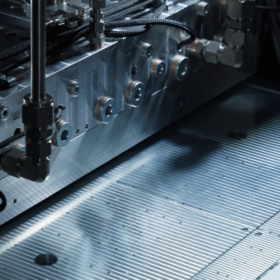
The Dutch spatial atomic layer deposition equipment manufacturer has launched a new sheet-to-sheet tool for pilot production of large area perovskite solar devices on glass substrates.
Retrofit coloring solution makes conventional solar panels less visible
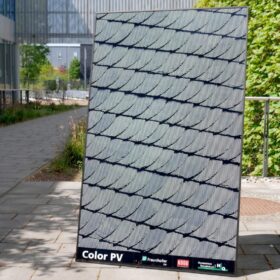
Fraunhofer CSP researchers in Germany are developing printing and color technologies to make conventional silicon PV panels less visible when installed on building façades, roofs, and balconies.
Global cadmium telluride solar module manufacturing capacity could reach 100 GW by 2030
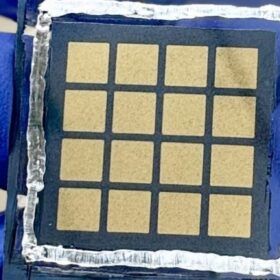
In a perspective paper in Joule, a group of U.S. researchers described technology and supply chain efforts required to reach worldwide annual cadmium telluride (CdTe) solar PV capacity of 100 GW by 2030.

Chinese PV Industry Brief: Solar manufacturers forecast 2025 losses
Hoshine, Risen Energy, Jolywood, and Irico have all issued forecasts for net losses in 2025, as rising raw material costs and weak industrial silicon prices squeeze margins across the solar manufacturing sector.

Modeling subcell degradation rates in perovskite-silicon tandem solar modules
Researchers in the Netherlands developed a model to identify tolerable degradation rates of the top cell in perovskite-silicon tandem modules. Simulations showed that an increase in tandem module efficiency from 28.0% to 32.9% could raise the tolerable degradation rate by approximately 50%.

New surface texturing boosts TOPCon solar cell efficiency by 1%
Chinese researchers have demonstrated a single-step submicron structured surface texturing process that improved the absolute efficiency of a TOPCon solar cell by 1% through broadband anti-reflection and lower electrical resistance. The cell-level performance was validated in laboratory and outdoor tests.

The impact of microclimate effects on floating PV plants
French researchers have developed a high-resolution computational framework to model microclimate effects of large floating solar PV systems, enabling accurate predictions of heat transfer, ambient temperatures, and water evaporation based on panel configuration and wind conditions. The model can inform thermal performance, environmental impacts, and optimize designs for utility-scale floating PV, as well as ground-mounted and agrivoltaic installations.
