
Zinc-iron redox flow battery with zero dendrite growth
Scientists in India fabricated a redox flow battery based on zinc and iron that showed strong storage characteristics and no signs of degradation over 30 charge-discharge cycles. The battery also showed no signs of dendrite formation, overcoming one of the key hurdles for redox-flow batteries based on these low-cost, abundant materials.
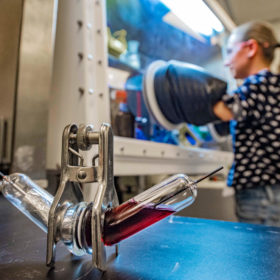
Sandia researchers develop new grid-scale energy storage battery
The battery operates at 230 degrees Fahrenheit, opening what researchers said could be “a whole cascading cost savings” including everything from less expensive materials to less insulation.

Italy notches 212 MW/333 MWh of distributed storage capacity, adding 22.5MW/37.9 MWh in Q1 2021
The country added around 22.5 MW/37.9 MWh of new, small-sized storage capacity in the first quarter of 2021.

As Maui approaches 100% renewables, NREL models grid options
Maui’s electric power grid is expected to operate with 100% solar and wind on an instantaneous basis as early as 2024, and NREL is helping the island plan to reliably supply electricity.
Integration methodologies for solar-assisted heat pumps
Italian scientists have assessed the technical potential of vapor compression heat pumps assisted by photovoltaic-thermal systems. They analyzed two main configurations of this combination describing the advantages and disadvantages of both solutions. The cheapest and easiest to deploy system is a single-source direct-expansion (DX) configuration for hot water for space heating or domestic hot water.
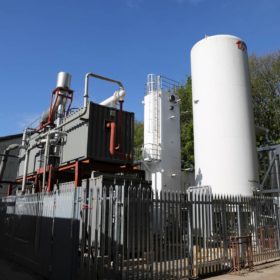
A closer look at liquid air energy storage
A British-Australian research team has assessed the potential of liquid air energy storage (LAES) for large scale application. The scientists estimate that these systems may currently be built at a cost between €300 and €600 per kilowatt-hour and that a positive business case could be favored by certain conditions, including a determined price structure in the energy market and the presence of a grid unable to support high levels of renewable energy penetration.
Residential PV makes EVs cheaper, reduces emissions
The maintenance cost of an electric vehicle is estimated to be significantly lower than internal combustion engines, and studies show home solar furthers the cost savings and boosts carbon emission reductions.

Tesla sells Maxwell Technologies but dry cell tech for lithium-ion batteries retained
Tesla acquired the Californian supercapacitor maker in 2019, leading some to speculate its EVs would use ‘supercaps’ for top acceleration. Two years on, it appears Elon Musk has moved on and sold Maxwell to UCAP Power, but Tesla has retained the company’s dry electrode tech.

The Hydrogen Stream: GCL will use Ethiopian natural gas to feed its ammonia and blue hydrogen
Plus there is news this week of a green hydrogen tie-up in India, plans for another German production facility, and of new hydrogen transport networks for Switzerland and the U.S.

Maxeon secures EU cash to make its ‘stick-on’ solar panels in France
The TotalEnergies-controlled solar manufacturer will secure an, as yet undetermined chunk of a new €118.6 million low-carbon innovation fund to start producing its frameless, glass-free solar roofing products at Porcelette, in northeastern France.
