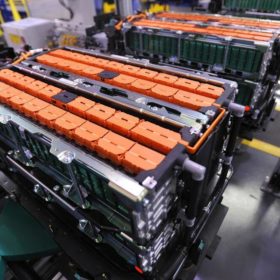
Novel nanomaterial to replace graphite in lithium-ion batteries
Porous nanostructured microspheres made of copper, iron, and iron oxide were used by an international research team as negative anode material in lithium-ion batteries. The new technique is claimed to provide three times more capacity than batteries based on graphite anodes.
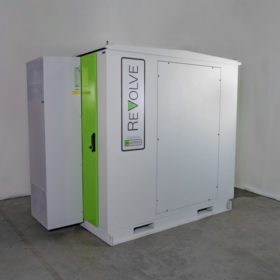
Relectrify launches 36 kW/120 kWh storage system made of second-life EV batteries
Relectrify said its new storage system is suitable for commercial and industrial applications and is designed for installations in the 120 kWh to 2 MWh range.

NREL looks at opportunities in lithium-ion battery recycling
U.S. scientists assessed the reuse and recycling of large-format lithium-ion batteries for electric vehicles and energy storage systems and found there is plenty of room for improvement.

Trina Solar enters storage business
The module manufacturer’s new storage unit, Trina Storage, aims to create innovative solutions for the combination of photovoltaics and storage, grid services and other applications.
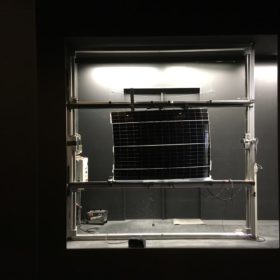
Vehicle-integrated PV reduces EV charging time in sunny regions by 40%
Dutch scientist Bonna Newmann spoke with pv magazine about the present and future of vehicle-integrated PV from a technological and economic perspective. Solar panels installed on cars could have a payback time of only three or four years and ensure 10,000 km of pure PV-generated road travel per year, she said. Furthermore, if you live in a sunny place, you can drive an electric car with solar panels for weeks during summertime, without the need for recharging, she pointed out.
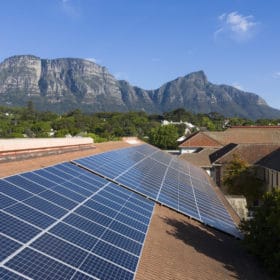
Storage and PAYG critical to deployment of African off-grid renewables
The former need not necessarily relate to conventional lithium-ion batteries, however, as a recent webinar staged by Solarpower Europe and EU body GET.invest discovered.

Northvolt plans to expand gigafactory in Poland
The Northvolt manufacturing facility in Gdansk should become Europe’s largest factory for energy storage solutions. The production is scheduled to begin in 2022 with an annual capacity of 5 GWh. The company wants to expand it to 12 GWh.
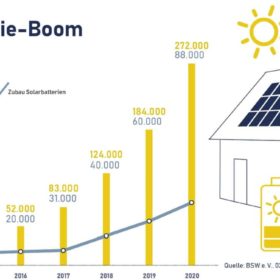
Germany has 270,000 residential batteries linked to PV
Around 88,000 energy storage systems linked to rooftop PV were installed last year in the country, which supports residential batteries through a dedicated scheme.

Finance for 49 mini-grids in Sierra Leone and Uganda
Winch Energy has announced the project, which it hopes will be a significant bridgehead towards building $100 million worth of off-grid systems within two years, alongside Franco-Japanese partner Neot Offgrid Africa.
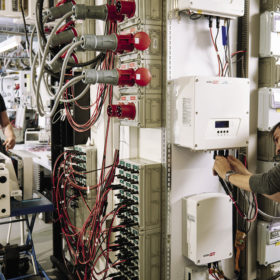
Solaredge records pandemic progress despite tough final quarter
Full-year revenues nudged up despite tough comparisons with the end of 2019 for the final quarter of last year. The inverter maker expects to log revenues of $385-405 million in the current three-month window.
