
European Commission approves further €2.9bn battery research project
Companies from a dozen EU member states will commit the public funds in a bid to come up with novel battery chemistries and production methods as well as recycling and circular economy innovation.
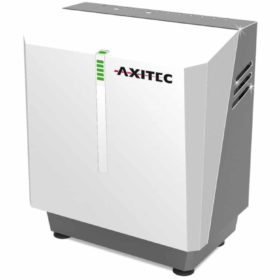
Axitec launches modular residential battery
The battery has a storage capacity ranging from 10 to 15 kWh and is already commercially available in Germany and Europe.
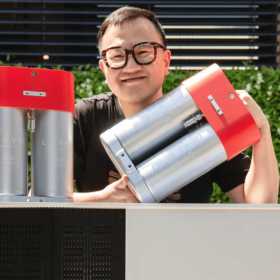
Iconic investor signs up for world-first domestic hydrogen battery in Australia
Gowing Bros has become the first major customer of the LAVO 40 kWh battery in Australia. The system, which features an electrolyzer and domestic fuel-cell tech, will be market-ready in June.
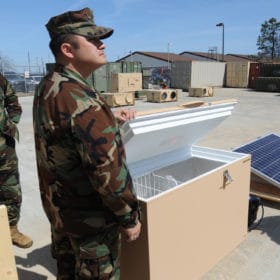
The Indian market for off-grid solar refrigeration
Standalone solar-powered refrigerators present a $20 billion opportunity in India for vaccine storage, milk chillers, households, micro enterprises, and cold storage for farm produce, according to a new report by Gogla.
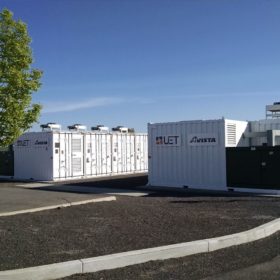
The best redox flow battery tech
Batteries based on vanadium or zinc bromide represent the cutting edge of redox flow storage tech, an international research team has claimed. They have identified challenges and opportunities for about a dozen redox flow storage technologies, while providing estimates of their current and projected levelized costs of storage.

WoodMac predicts 30% drop in Asia-Pacific front-of-meter battery costs by 2025
A new Wood Mackenzie report suggests that costs for front-of-the-meter battery storage systems in the Asia-Pacific region could fall by 30% by 2025. The declining costs are already having a palpable impact, as 2021 has opened with a slew of large-scale battery project announcements.
IFC says green recovery could drive $2.5tn renewables market this decade
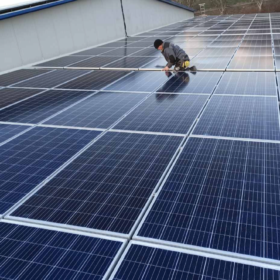
The private-sector arm of the World Bank, which claims to leverage $3 of its own capital and $8 from third parties for every dollar invested in its blended finance funds, has attempted to quantify what devoting Covid recovery funds to green investment would mean for emerging economies.

EU records annual rise of 7 TWh in third-quarter solar output
European renewables, including Spanish solar, made big gains as energy demand recovered before the second wave of Covid infections. Nuclear was a notable loser, in part because clean energy volumes in the north of the continent drove down power prices sufficiently to make reactors uncompetitive.

New phased microgrid approach for industrial-estate development
Peel Renewable Energy is about to energize a 1.2 MW solar farm in Australia, as part of a fresh approach to microgrids. Infrastructure remains small, but the renewables-powered microgrid can grow to meet the needs of incoming businesses.

Renewables cheaper than fossil fuel plants by 2030
A report by McKinsey & Company reinforces the widely-held view renewables will supplant fossil fuels in the energy system but also joins the chorus of voices warning the world is on track to fall well short of limiting global temperature rises this century to 1.5C.
