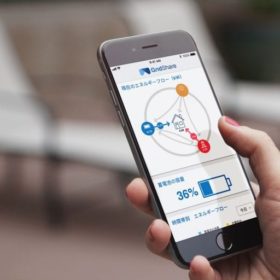
Moixa launches 35 MWh battery cluster in Japan
The smart battery storage supplier has launched a 35 MWh cluster in Japan. This could grow to over 100 MWh within a year, says Moixa.
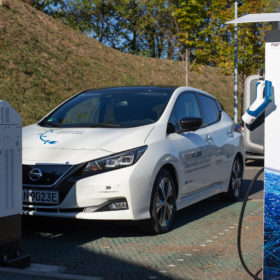
V2G frequency control launched in Germany
A much talked about concept, but the final step into market operationality has not been done – yet. Nissan, The Mobility House, and Enervie have joined forces to allow Nissan Leaf’s to provide frequency control to a distribution grid in Germany. The concept has received permission to pursue its plans, and for corporate customers it will be ready for adoption as of 2019.
BASF to build battery material factory in Finland
As part of a strategic alliance, BASF and Norilsk Nickel aim to meet growing demand for battery materials for electric vehicles.
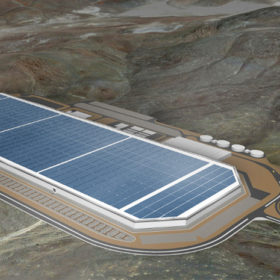
Tesla secures 210 acres in Shanghai for its first international Gigafactory
Tesla is planning accelerated development and construction of this new battery and EV plant, which will mark the company’s first soirée into international production.
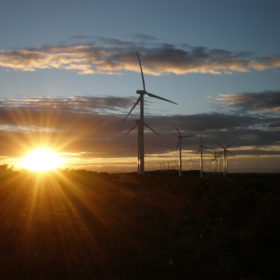
‘There is no alternative to a world of 100% renewables’
Electrifying the global energy system with clean energy is the only way to reach the targets set by the Paris agreement on climate change and avoid the catastrophic scenarios outlined by the recent IPCC report. In an interview with pv magazine, Christian Breyer – Professor of Solar Economy at Finland’s Lappeenranta University of Technology – explains a 100% renewables model is not only technically feasible, but also the cheapest and safest option. With solar and storage at its core, the future energy system envisaged by Breyer and his team will not only stop coal, but also nuclear and fossil gas, while seeing solar reach a share of around 70% of power consumption by 2050. By that time, PV technology could cost a third of its current price.
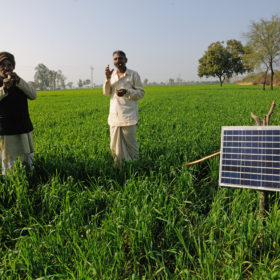
Rural India offers a $50bn opportunity for clean energy innovations
The farming sector alone offers a potential $40bn marketplace, thanks to rice transplanting, pesticide spraying and grain harvesting – says the Council on Energy, Environment and Water thinktank.

EVs could become key to renewables uptake and world’s largest source of battery storage
For renewables to claim a more sizable share of the global energy mix, the adoption of energy storage would need to pick up pace and the rapidly increasing size of the EV fleet will offer a scalable way to ramp up such access, says Fitch Solutions.
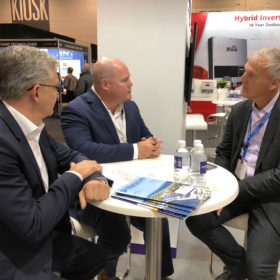
Eguana Technologies recruits new executives
Mercedes Benz execs join Eguana Technologies to help drive Calgary-based business’ global expansion plans.

Report eyes alternative battery technologies due to socio-ecological concerns
Lead, sulphuric-acid, nickel, cobalt and rare earth metals are highly toxic and have adverse impacts on the environment and the societies in which they are mined. As the EU is looking to become a world leader in battery production, a report considers new battery technologies – such as sodium-ion – which would have less negative impacts.
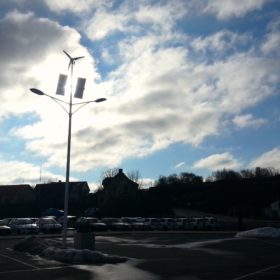
Swedish PV market set for more growth
Although provisional statistics indicated the country had 230 MW of PV capacity at the end of last year, a new report reveals solar growth in 2017 was larger than expected – at 117.6 MW – and that cumulative installed capacity surpassed 300 MW.
