
UK government asks how future renewables incentives should work
The success of unsubsidized clean power facilities in the country – whether driven by corporate power purchase agreements or selling direct to the wholesale electricity market – has prompted the Department for Business, Energy and Industrial Strategy to ponder whether contracts-for-difference payments will be fit for purpose in the years ahead.
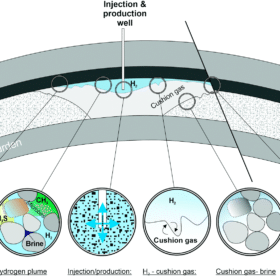
Key challenges for underground hydrogen storage
An international research team has presented challenges and knowledge gaps in the implementation of large scale underground storage of hydrogen. The main issues associated with this technology relate to the fluid flow behavior of hydrogen in subsurface reservoirs, geochemical reactions caused by hydrogen injection, biotic reactions caused by excess hydrogen, and the geomechanical response of the subsurface to hydrogen storage.
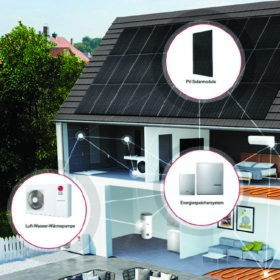
LG Electronics offers hybrid system combining heat pump, PV and storage
The system generates electricity and heat for residential houses and small businesses. An integrated energy management system should guarantee maximum self-consumption of the solar power produced.
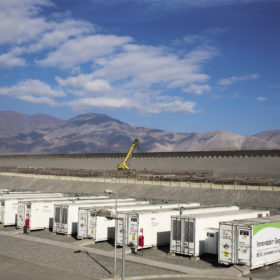
What role will battery storage have in Biden’s America?
Chip Breitenkamp, of Nanograf, discusses American battery manufacturing, how to ensure a resilient and equitable supply chain, and how to create jobs.

Canadian gas giant to build 325 MW pumped hydro project in Australia
Canadian behemoth Atco has purchased the rights to develop the 325 MW Central West Pumped Storage Hydro Project in Central West New South Wales and credits the investment to policy certainty from the NSW Government. As a significant firming agent the project is ideally placed in the state’s proposed Central West-Orana Renewable Energy Zone.
Financing large scale renewables in emerging economies
pv magazine has taken part in a webinar examining the thorny issue of financing clean energy generation in developing markets.

Spain’s Endesa unveils ambitious plans for green hydrogen
The Spanish power utility announced it wants to deploy 23 green hydrogen projects by 2024. The company plans to build around 340 MW of electrolyzer capacity.
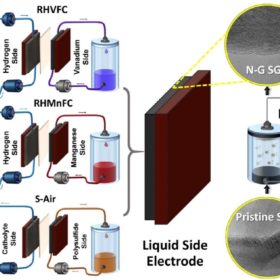
Hybrid electrodes for cheaper redox flow batteries
UK researchers have used standard carbon paper electrodes modified with electrophoretically deposited nitrogen-doped graphene (N-G) to improve the electrochemical performance of hybrid redox flow cells utilized in redox flow batteries. According to their findings, these electrodes are capable of meeting the harsh electrochemical requirements for these HRFCs and offer enhanced performance and operability.
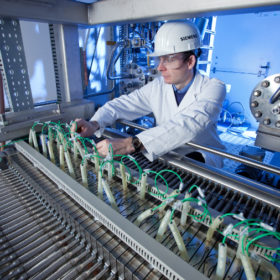
Australian-wide network of 13 clusters to spur hydrogen economy established
National Energy Resources Australia has actioned its instructions from the 2019 National Hydrogen Strategy by investing an initial $1.75 million in 13 regional clusters across all states and territories designed to establish Australia’s global identity in hydrogen technology and expertise.
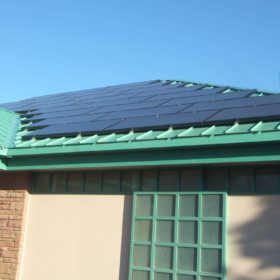
Flexible heat pumps ideal for power grids congested by solar and wind
Dutch transmission system operator Tennet, which also serves Germany, is planning to create flexible electricity demand and reduce grid congestion by promoting the use of smarter heating systems and heat pumps that can also be powered by solar and wind energy. According to its experts, intelligent control of heat pumps may result in the creation of between 0.5 and 1 GW of temporary grid flexibility by 2030.
