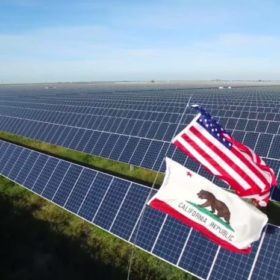
Up to 10 GW more solar, 2-2.5 GW of batteries coming to California
The U.S. state’s recent passage of SB 100 and SB 700 is expected to spur a boom in solar and behind-the-meter battery deployment. pv magazine has done the math on what we can expect.
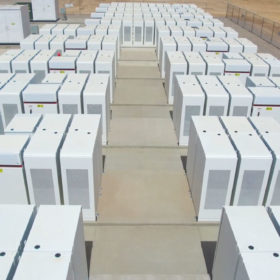
US triples energy storage installations
Wood Mackenzie projects that the U.S. energy storage market will reach well over US$500 million in sales this year, following on 61.8 MW / 156.5 MWh of installations during the second quarter. Residential storage has grown at 61% per quarter since Q1 2017.

If you want peace, prepare for solar
Solar has the potential to foster peace and aid conflict resolution by being deployed in several of the world’s crisis areas. Electricity is one of the highest costs for humanitarian missions in fragile regions, such as South Sudan, the Congo, Somalia, Myanmar and Yemen, among others. In an interview with pv magazine, the CEO and founder of Energy Peace Partners describes how solar installed in camps and protected areas, could improve the outcomes of such missions.
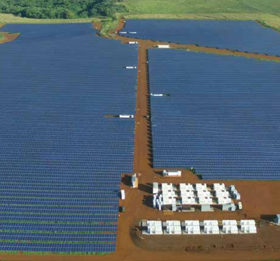
US grid-connected battery energy capacity grew 68% last year
A utility survey shows battery storage capacity growing sharply, including solar + storage installations in several U.S. states. Looking ahead, FERC Order 841 could spark extensive new storage for grid services, helping more utilities become familiar with storage and its benefits.
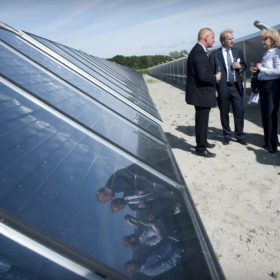
Vattenfall expands PV business in the Netherlands
The company’s Dutch unit, Nuon, has agreed to acquire three solar projects totaling 27.5 MW of capacity from Powerfield. The projects will be developed under the Netherlands’ SDE+ program, for large scale renewables.
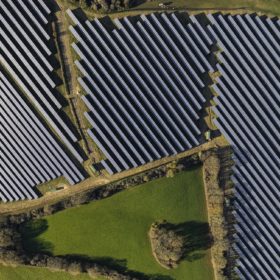
Over 1 GW of PV, 351 MW of storage approved in Ireland
The first round of Ireland’s newly introduced Enduring Connection Policy – 1 (ECP-1), introduced at the beginning of the year, has resulted in considerable success for solar PV and battery storage, with the technologies clearly outcompeting various forms of gas-fired generation, biomass, and wind energy.
California energy storage subsidy extension passes Assembly
A U.S. bill to extend the SGIP program through 2026 and add nearly 3 GW of behind-the-meter energy storage has passed the California Assembly. It will now go to the Senate to be reconciled before going to Governor Jerry Brown.
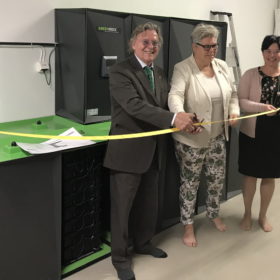
Swedish school installs saltwater battery, highlights environmental benefits
Saltwater batteries can be fully recycled receiving a “cradle to cradle” certificate, and don’t contain lead or lithium. For some, this prevails over the disadvantages of saltwater batteries being considerably bigger and heavier, as well as having a lower discharging current than lithium-ion batteries.

USTDA awards grant for 100 MW solar+storage project in Mozambique
The U.S. Trade and Development Agency (USTDA) has awarded a US$1.2 million grant for a feasibility study assessing the viability of an up to 100 MW solar PV plant, coupled with storage, in Mozambique.
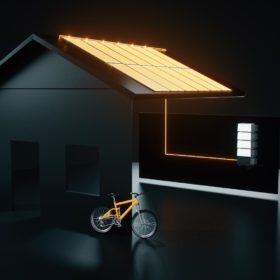
Germany reaches milestone of 100,000 installed storage systems
According to the German solar trade association, BSW-Solar the number of energy storage systems in Germany is set to double in two years. Already, politicians recognize the increasing relevance storage has, in light of the progressing energy transition.
