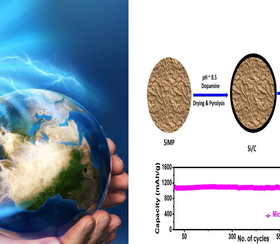
Resilient anode material for high-performance lithium-ion batteries
Scientists in Japan have developed black glasses grafted silicon microparticles as a negative electrode material to improve lithium-ion battery performance.
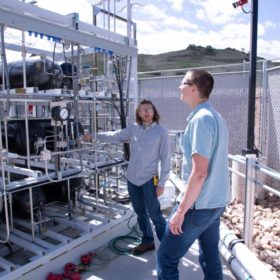
The Hydrogen Stream: Proposed US tax credit could support US hydrogen
The US House of Representatives is set to vote on a bill this week that could provide a new production tax credit for green hydrogen production, while the European Commission has approved plans to support renewable hydrogen in Romania.

Magnesium superionic conductor for lithium-free solid-state batteries
Scientists in Japan have developed a novel metal-organic, framework-based magnesium ion conductor with superionic conductivity, even at room temperature.
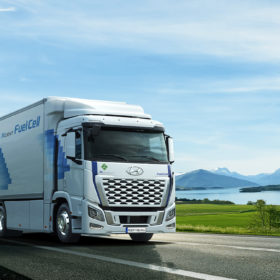
The Hydrogen Stream: Hyundai to export heavy-duty hydrogen trucks to Germany
Seven German companies have agreed to put 27 Hyundai heavy-duty fuel cell trucks into fleet service in the coming months. American Airlines has revealed an investment in ZeroAvia, while New Fortress Energy has invested in a 120 MW industrial-scale plant in Texas.
High-performance aqueous calcium-ion battery
Researchers from Rensselaer Polytechnic Institute in the United States have developed a special class of materials for bulky calcium ions, providing pathways for their facile insertion into battery electrodes.
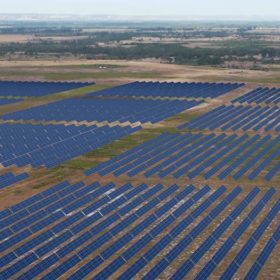
Australian solar park could generate hydrogen for less than $2/kg
A new study shows that hydrogen could be produced for as little as AUD 2.85 ($1.98) per kilogram, supporting Frontier Energy’s plans to make green hydrogen from a 500 MW solar project it is developing in Western Australia.
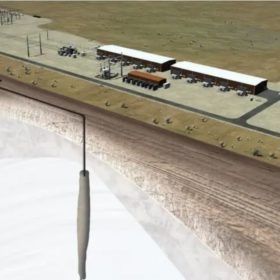
World’s largest underground hydrogen storage project
Mitsubishi Power Americas and Magnum Development are set to begin construction on a 300 GWh underground storage facility in the US state of Utah. It will consist of two caverns with capacities of 150 GWh, to store hydrogen generated by an adjacent 840 MW hydrogen-capable gas turbine combined cycle power plant.
South Africa’s Eskom moves forward with 500 MW BESS initiative
South African utility Eskom has selected contractors for 343 MW of battery storage projects to be deployed in remote locations with limited access to distribution networks, but in proximity to large-scale renewables.
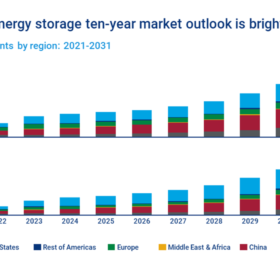
Global energy storage deployment may hit 500 GW by 2031
Wood Mackenzie said it expects the United States and China to represent 75% of global energy storage demand in a highly consolidated market.
Rechargeable silicon redox battery for renewable energy storage
Israeli researchers have developed a device that combines a reversible Si anode with halide cathodes and uses hybrid electrolytes to enable cell recharging. In the proposed system configuration, silicon is dissolved during the battery discharge process, and upon charging, elemental silicon is deposited.
