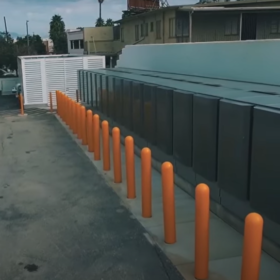
India’s first green hydrogen microgrid
NTPC Limited has selected California-headquartered Bloom Energy’s electrolyzer and hydrogen-powered fuel cell technologies for the nation’s first green hydrogen-based microgrid, which will be powered by a floating solar array.
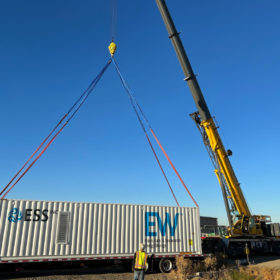
Iron flow battery PV microgrid for fire-prone California
ESS announced the integration of its long-duration batteries for a microgrid project commissioned by San Diego Gas & Electric to mitigate and increase resilience to wildfires.
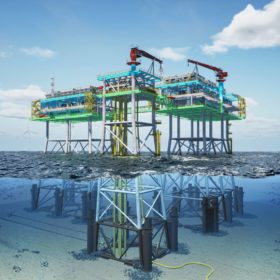
The Hydrogen Stream: Storing hydrogen in offshore caverns
Engie unit Tractebel is developing the technology. Elsewhere, the European Commission has approved, under state aid rules, a €900 million German scheme to support investment in green hydrogen production for EU consumption and Spanish company H2B2 Electrolysis Technologies is developing a project to generate up to 1,000kg per day of electrolytic hydrogen in California.
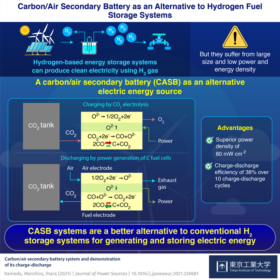
Carbon-air batteries vs hydrogen storage
Researchers from Tokyo Tech have developed an alternative to hydrogen energy storage which is smaller in size and more efficient. The system utilizes carbon as an energy source and demonstrates superior power density and charge-discharge efficiency of 38% over 10 cycles.
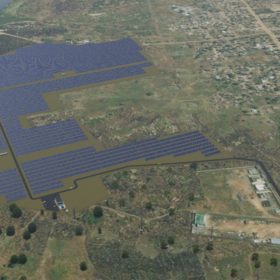
Financial close for Mozambique’s first solar-plus-storage project
Anglo-Norwegian public funding body Globeleq has said the 19 MWp/2MW-7 MWh Cuamba project will be supplying electricity during the second half of next year.
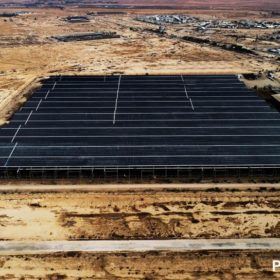
Israel allocates 1.14 GW of PV across two tenders, lowest price comes in at $0.02751/kWh
The Israeli authorities allocated more than 1.14 GW of PV capacity and 210 MWh of storage across two different tenders. In a first procurement exercise for the 330 MW/210 MWh Dimona solar-plus-storage project the winner was Israeli company Shikun & Binui Holdings Ltd. In another tender for innovative PV projects local developer Prime Energy secured 475 MW with the final average price of $0.0541/kWh.
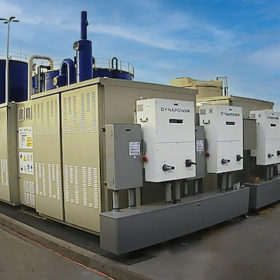
Australian flow battery company completes ‘milestone’ installation
Brisbane-based flow battery company Redflow has completed its single biggest installation to date, a 2 MWh storage system in California for biowaste technology firm Anaergia.
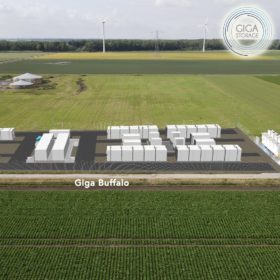
Wartsila to supply Netherlands’ largest battery
The 25MW/48MWh battery will be the country’s largest energy storage system to date. The project is touted as the first large-scale battery project based on lithium iron phosphate (LFP) chemistry in Europe.
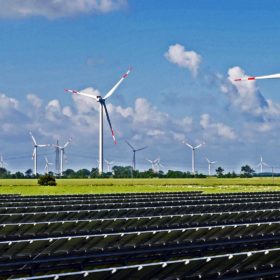
Tata Power builds 300 MW hybrid wind-solar project in India
The project was secured by Tata Power in an auction held by the Maharashtra State Electricity Distribution Company Limited (MSEDCL).
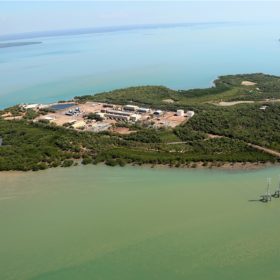
Hitachi wins tender for big battery in Australia, set to pay for itself within five years
Hitachi Energy has won Northern Territory Labor’s tender for the Darwin-Katherine ‘Big Battery’, which is expected to unlock more capacity for residential and industrial PV, generate cost savings of $9.8 million and pay for itself in approximately five years.
