Germany lifts cap on solar FIT program with new Climate Change Act
While the solar industry will welcome the move, the feed-in tariff paid to small systems is still reducing thanks to the volume of new capacity installed every quarter. Announcing a wide-ranging policy package on Friday, Angela Merkel admitted Germany will miss the carbon emission target set for next year.
Siemens and TIES to open battery research center in China
The facility is set to open this year and will offer battery suppliers digitalization research and manufacturing consulting. Smaller manufacturers will be able to use shared laboratories for research.

Tender for megawatt scale solar-plus-storage launched in Sri Lanka
A planned 10 MW solar project will be coupled with a storage system with a minimum capacity of 8 MWh. The facility will be near Hambantota in southern Sri Lanka.
Indian renewables leaders split over need for regulation
While some of the industry insiders at REI 2019 have made predictable calls to scrap restrictions imposed by regulators, others have continued to maintain that policy support is crucial, while audience members voiced concerns about India’s lack of recycling rules.
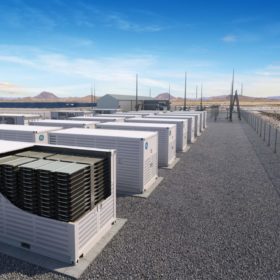
GE to supply 100 MW/300 MWh battery for South Australia solar farm
GE Renewable Energy has been chosen to supply a massive battery for the 200 MW Solar River Project in South Australia.
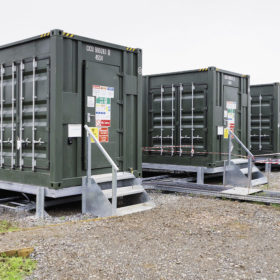
Solar-plus-storage vs grid enhancement, part IV
Co-location of solar and storage may accelerate the deployment of profitable merchant renewable energy projects in the United Kingdom, according to a report by Aurora Energy Research. The study predicts installed solar capacity in the U.K. may increase from around 13 GW next year to 19 GW in 2030 and 32 GW in 2040.
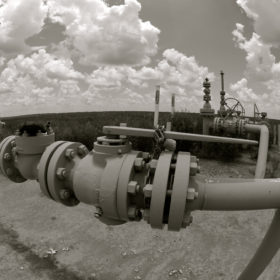
‘The world has no chance of beating climate change if natural gas is part of the mix’
A report by Germany’s Energy Watch Group thinktank has said we would be better off sticking to coal and oil than switching to gas because emissions of methane, the most potent greenhouse gas, caused by gas extraction render any related carbon savings irrelevant.
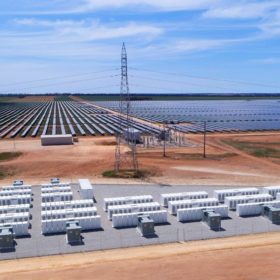
Australia’s AEMO radically curtails output of five large solar farms
The Australian Energy Market Operator constrained the output of several large-scale solar plants by 50% on Friday, in response to voltage fluctuations in a 220 kV network spanning the states of Victoria and New South Wales.
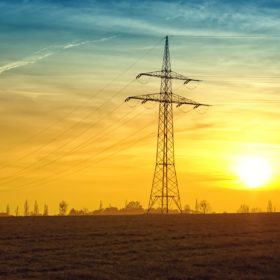
Solar-plus-storage vs. grid enhancement, part III
A new IRENA report highlights how large-scale storage systems can be thought of as “virtual power lines” that enhance the performance and reliability of power networks when congestion occurs. It expects global storage capacity from large-scale batteries to grow from about 11 GWh at present to between 100 GWh and 167 GWh by 2030.
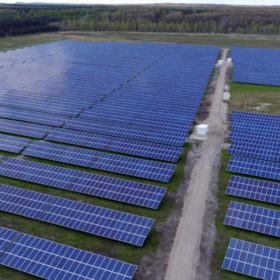
Germany will need 160 GW of solar by 2030 to prevent power shortages
EuPD Research has calculated what needs to be done to replace the nuclear and coal generation to be phased out in Germany. Accelerated expansion of PV appears the best short-term option. However, storage capacity will need to increase 30-fold by 2040 so solar can become the main pillar of the country’s energy system.
