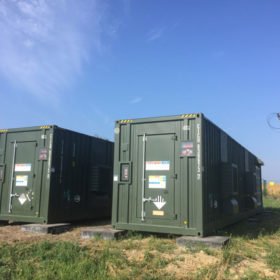
Poland to see its first large-scale solar storage project
Project was developed by Chinese storage system provider and panel manker BYD. The system is linked to a 1 MW solar plant built by the same company.
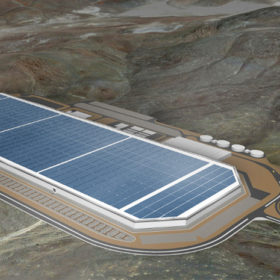
Tesla secures 210 acres in Shanghai for its first international Gigafactory
Tesla is planning accelerated development and construction of this new battery and EV plant, which will mark the company’s first soirée into international production.
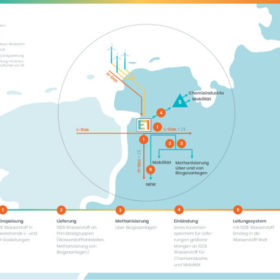
100 MW power-to-gas project planned in Germany
The project, under development by Gasunie, Tennet and Thyssengas, will convert wind power into green hydrogen. The plant commissioning should take place gradually starting from 2022.
Digital Energy Solutions wins tender for 2.19 MWh of storage in Germany
The Munich-based company will receive up to €2 million for a large-scale storage facility in southern Germany. The system will consist of 52 lithium-ion car batteries –which are also used in the BMW i3 – and will be coupled with a wind farm.
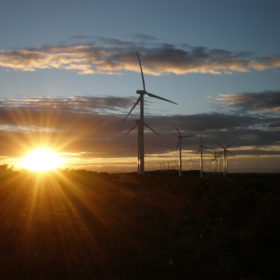
‘There is no alternative to a world of 100% renewables’
Electrifying the global energy system with clean energy is the only way to reach the targets set by the Paris agreement on climate change and avoid the catastrophic scenarios outlined by the recent IPCC report. In an interview with pv magazine, Christian Breyer – Professor of Solar Economy at Finland’s Lappeenranta University of Technology – explains a 100% renewables model is not only technically feasible, but also the cheapest and safest option. With solar and storage at its core, the future energy system envisaged by Breyer and his team will not only stop coal, but also nuclear and fossil gas, while seeing solar reach a share of around 70% of power consumption by 2050. By that time, PV technology could cost a third of its current price.
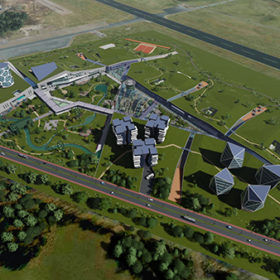
Dutch battery maker signs agreement for €1.6bn Chinese gigafactory
Lithium Werks has ambitious plans for a global chain of utility-scale production lines that has secured the backing of the Netherlands government and PM Mark Rutte, as EU leaders contemplate a post-US trade future.

Decentralized solar-plus-storage would fire sub-Saharan Africa
According to a UC Berkeley study, the falling costs of storage technologies will make it possible for Sub-Saharan countries to rely on decentralized systems based mainly on solar-plus-storage, bringing access to electricity to more than 600 million people.
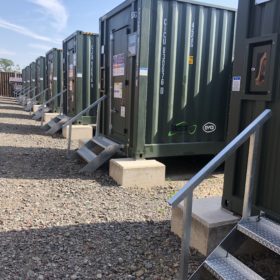
France reveals winners of tender for large-scale storage in Corsica and overseas territories
Eleven storage projects with a power rating of 50 MW and storage capacity of 54 MWh were selected by the French Energy Regulatory Commission through the tender. One will be in Corsica, while Guadeloupe and Guiana will each have three projects. Martinique and La Réunion will each host two.
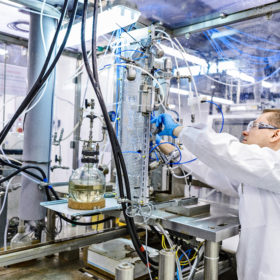
Innolith launches non-flammable battery with 50,000 charging cycles
Inorganic electrolytes will do the trick the company says. For multi-MW grid-scale applications the company says its technology can boost battery life to 50,000 cycles and is non-flammable. It adds that the costs of the product are competitive with conventional battery systems. Innolith is taking over the baton from Alevo, including chief executive and engineers. Alevo, however, went bankrupt last year, making the same promises.
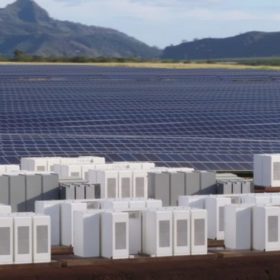
Hawaii’s march to 100% adds 260 MW solar + 1 GWh storage
The Hawaiian Electric Companies are in negotiations with developers to build seven solar projects across three islands.
