
BNEF: Cheap finance is key to PV deployment in the developing world
While solar is lauded as a cheap energy resource in OECD countries, the cost of financing PV projects in developing nations has impeded progress. Development banks and the Clean Technology Fund they finance have played a key role in providing access to cheap financing for clean energy projects in many markets.
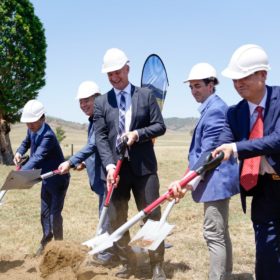
1.5 GW solar, 500 MWh battery project breaks ground in Australia
The first sod has been turned on a massive solar+storage development located between Harlin and Kilcoy, in south-east Queensland. The project was proposed by Sunshine Energy Australia, a newcomer to the Aussie solar scene.

“Spain is the hottest PPA market in the world, but auctions are necessary”
That was the one of the main conclusions reached among 400 attendees at the Solar plants in Spain: development, financing and energy future conference, organized by Soltec and PV association UNEF in Madrid this week.
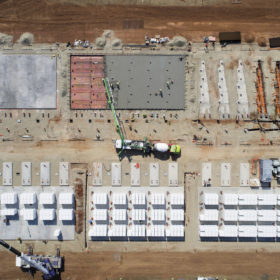
Eight trends for the PV industry in 2019
IHS Markit’s analysts have mapped out what they are keeping an eye out for in the year ahead. Aside from higher installation figures, the number-crunchers predict a continued battle for multi-function in the hard-fought inverter segment and a potential watershed year for utility-scale storage.
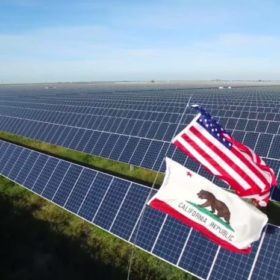
Solar Bill of Rights introduced by California senators
The legislation would enshrine a customer’s right to generate and store electricity as well as to connect to the grid without undue burden and would provide freedom from discriminatory fees and set compensation for battery power exports.

Bullish SolarEdge posts $100 million rise in gross profits and predicts strong start to 2019
Unimpressed by last year’s China policy-related shenanigans, the inverter maker continued to grow at a rapid pace as it acquired storage, uninterruptable power supply (UPS) and e-mobility related businesses. Its full-year results place SolarEdge in a good position going into a more promising year, with solar installations expected to hit double-digit growth figures in many markets and reach 120 GW globally.

IRENA presents its crash course in adopting renewables
The International Renewable Energy Agency has examined how common ground between sectors; digitalization; and technological innovation can transform the energy system and lower the cost of renewables. Storage technologies such as behind-the-meter applications, utility-scale storage and power-to-x are working in the right direction and much can be learned about digitalization from other sectors.

Tender for 20 MW of floating solar-plus-60 MWh storage in Indian archipelago
The Solar Energy Corporation of India has invited bids for the development of an aggregate capacity of 20 MW of lagoon-based floating PV with 60 MWh of battery-based storage systems in the union territory of Lakshadweep.
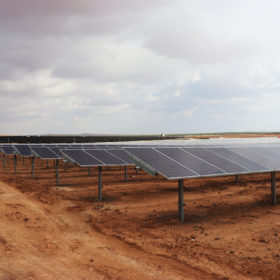
First Middle Eastern utility-scale solar-plus-storage plant comes online
The 23 MW/12.6 MWh facility is near Mafraq, in northern Jordan. The storage system will offer peak shaving to increase grid stability while enhancing solar output.

Researchers upcycle plastic waste into battery anodes
A new approach could extract carbon from polyethylenes in a cost-competitive way, that could be scaled up. Researchers have also performed electric testing with the extracted carbon and found it suitable for use as anodes in Li-ion batteries, among multiple other uses.
