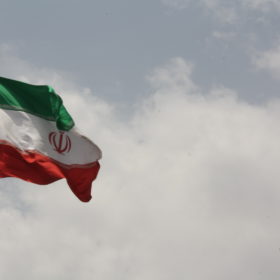
Iran wants to deploy 10 GW of renewables over the next four years
According to the Iranian authorities, there are currently more than 80GW of renewable energy projects that were submitted by private investors for review.
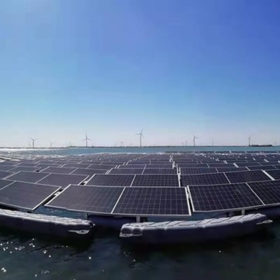
World’s largest floating PV plant goes online in China
Huaneng Power International has switched on a 320 MW floating PV array in China’s Shandong province. It deployed the plant in two phases on a reservoir near its 2.65 GW Dezhou thermal power station.
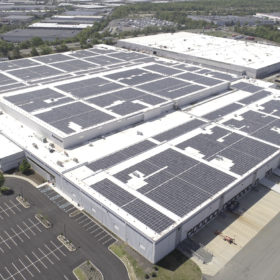
The weekend read: 24/7 hourly matching – a new granular phase of renewable energy sourcing
It’s what Google calls its “biggest sustainability moonshot yet” – 24/7 hourly matching – a new granular phase of renewable energy sourcing. The pursuit of 24/7 moves beyond buying enough renewable energy to match annual consumption, to matching consumption every hour of every day. Some say 24/7 matching could push up the price of renewables, but others say 24/7 is the only way to drive home decarbonization, minimize greenwashing, and create a truly net-zero energy system.

EDF builds 100 MW/100 MWh solar-plus-storage project to power world’s largest remote city
The French energy giant will build the facility near Iquitos, the largest metropolis in the Peruvian Amazon.
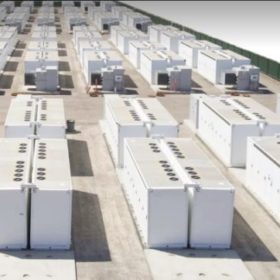
Greenspot plans 500 MW/1,000 MWh battery at former coal-fired power plant in Australia
New South Wales-based development company Greenspot has lodged a planning application for a massive 500 MW/1,000 MWh battery energy storage system to be built at the site of the shuttered coal-fired Wallerawang Power Station near Lithgow in the Central Tablelands.
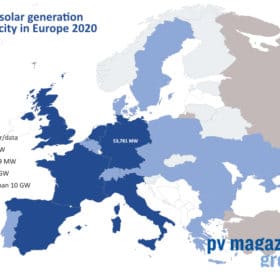
EU member states charging toward unambitious PV targets – SolarPower Europe
The national goals set by European countries two years ago already look hopelessly out of date thanks to the global PV boom. The Euro trade association for the industry has called for ambitions to be radically scaled up in 2023 if the world is to have any chance of capping temperature rises at 1.5C.

Solar takes 25% with one hand, gives 31% with the other
WoodMac Renewables & Power lowered their 2022 US solar capacity projection by 7.4 GW, to 22.2 GW, on supply chain pricing challenges. However, they project the Build Back Better bill could add 44 GW of capacity through 2026.
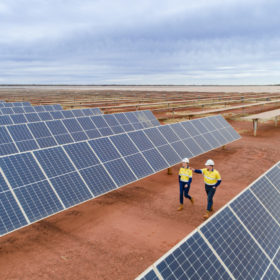
Alinta switches on Australia’s largest remote solar farm
In an Australian first, up to 100% of daytime operations at two major iron ore mines have been powered entirely by renewable energy, as utility Alinta Energy has switched on the 60 MW Chichester Hub Solar Farm in Western Australia’s Pilbara region.
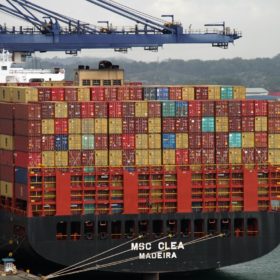
US House unanimously passes forced labor bill for China’s Xinjiang region
The Uyghur Forced Labor Prevention Act would ban all imports from China’s Xinjiang region, unless the US government determines that products were not made with forced labor. The region supplies about 50% of the world’s polysilicon, which is an essential material in solar PV.
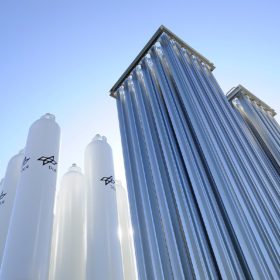
PV-powered hydrogen could already hit LCOH of €6.23/kg in Germany
Green hydrogen can now compete with hydrogen produced with fossil fuels in Germany, according to new research. Scientists have looked at six different scenarios for alkaline and PEM electrolyzers and identified alkaline devices powered by grid-connected PV as the cheapest option.
