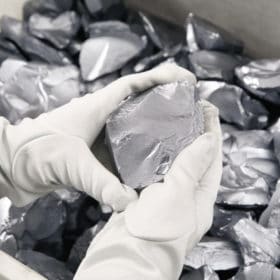
Silicone fab explosion in Xinjiang threatens further poly shortage
With the solar industry already seeing prices rise because of a shortage of panel raw material polysilicon, an explosion yesterday at the factory of a silicon metal
and silicone producer in Xinjiang could have further repercussions on supply. No casualties have been reported.
pv magazine Roundtables Europe live coverage
Welcome to the first day of the pv magazine Roundtable Europe event! We have a packed two-day schedule planned for you comprising four cornerstone issues that will define the industry as it cements itself as a key pillar of the continent’s energy transition: Quality, Asset Management, Sustainability and Made in Europe, and the Innovation Hub: Hydrogen, battery storage, and e-mobility.
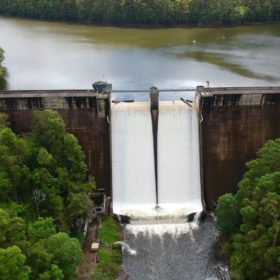
Development of 1 GW pumped hydro project progresses in Australia
The state government in Queensland, Australia, has announced plans to finance design work and cost-related studies for the construction of a new pumped hydro facility.
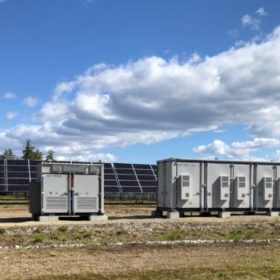
Energy storage deployments slowed in the US in Q1, but the sector is on track for 3x growth in 2021, report says
Favorable federal tax policies and state regulatory reform could help the storage sector notch even higher rates of growth.
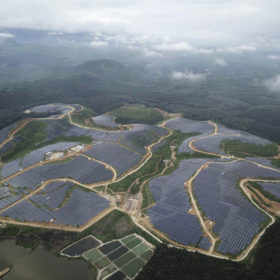
Chinese PV Industry Brief: Huawei launches new unit for renewables and electric vehicles
The technology company and inverter maker has created a new unit to operate in the renewables and e-mobility sectors. Elsewhere, China’s largest e-commerce company, JD.Com, has signed an agreement with the world’s biggest wind company, GoldWind, to establish a renewables joint venture.
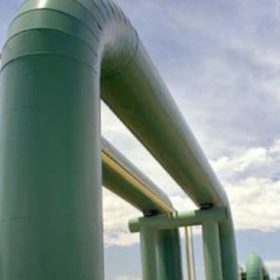
The Hydrogen Stream: 2.7 GW of operational electrolyzer capacity expected for Europe by 2025
According to two new pieces of research, Europe is on track to reach 2.7 GW of operational hydrogen electrolyzer capacity by 2025 and most of this capacity is expected to be located in Germany. Furthermore, three European gas associations have assessed the competitiveness of the different transportation options for hydrogen and have found it depends on the distance over which hydrogen is transported, as well as on scale and end-use.
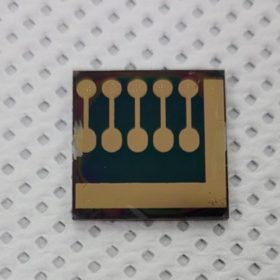
Perovskite solar cell with 19.1% efficiency via CO2 doping
Thanks to a carbon dioxide doping technique, the solar cell interlayers exhibited conductivity around five times higher than that of a perovskite cell based on interlayers doped with oxygen. The device also showed an open-circuit voltage of 1.14 V, a short-circuit current density of 21.2 mA cm2 and a fill factor of 0.79.
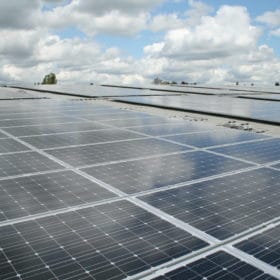
Transposition of new EU laws could increase scope of energy communities in Italy, says ENEA
Energy communities, recognized and supported in Italy’s National Recovery and Resilience Plan, could soon increase their role in the country’s energy transition, Italian research agency ENEA told pv magazine.
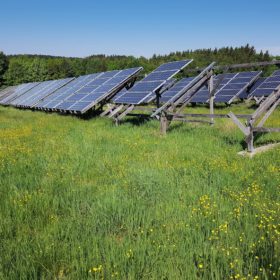
Computational model for agrivoltaics
A U.S. scientist has developed a computational framework that assesses how well a hypothetical agrivoltaic project would perform in achieving desired outcomes such as the volume of PV electricity produced, and energy-to-agriculture. The method considers the high-frequency decomposition of solar irradiance into multiple rays and analyzes how these rays are propagated forward in time, to assess multiple reflections and absorption for various system configurations. It also takes into account panel inclination, panel refractive indices, sizes, shapes, heights, and albedo.
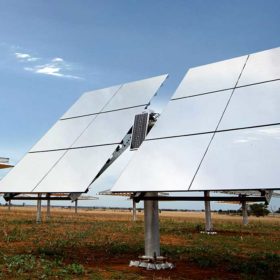
Australia to host 50 MWh ‘solar hydro’ plant with storage
RayGen Resources has secured funding to build a 3 MW/50 MWh ‘solar hydro’ power plant that could become one of the largest, lowest-cost storage projects in Australia.
