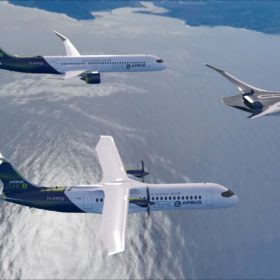
Sustainable aircraft fuel will need a lot more renewables capacity
A research paper into the prospects of manufacturing ‘power-to-liquid’ kerosene in Germany has concluded the government will end up importing it. Wherever the world’s clean aviation fuels are made, however, it seems a lot of clean power will be needed to drive the production process.

EU Council endorses €1.5bn public sector loan facility for energy transition
The credit, to be made available to public bodies in the bloc’s 27 member states, would be bolstered by €10 billion from the EIB and should not, said the Council of Ministers, support nuclear or fossil fuel projects.
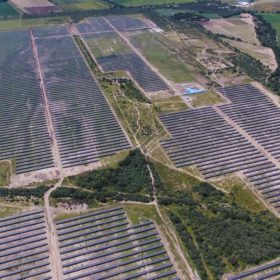
X-Elio to build PPA-linked 200 MW solar park in Australia
The Spanish solar EPC specialist has announced a “landmark” power purchase agreement for the 200 MW Blue Grass solar project in Queensland, Australia.
Corporate funding for battery storage up 75%
Analysts at Mercom Capital Group have tallied up corporate funding, venture capital and debt and public market investment for battery storage, smart grids and energy efficiency companies. From a financial perspective, the industry appears resilient to the Covid-19 crisis and ready to grow further.

New method to measure solar-powered hydrogen production
Indian researchers have used an “adaptive neuro-fuzzy inference system” to assess the performance of hydrogen production backed by a photovoltaic-thermal collector. They claim it can be applied to other hydrogen production systems.
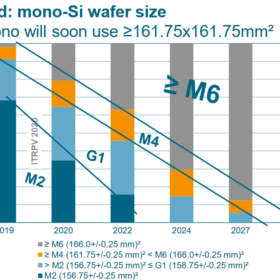
Update of the ITRPV roadmap shows three wafer formats will prevail
In an update to its International Technology Roadmap for Photovoltaics, the German engineering association the VDMA said that solar module sizes of up to 4.0m² may be brought to mass production in the future.
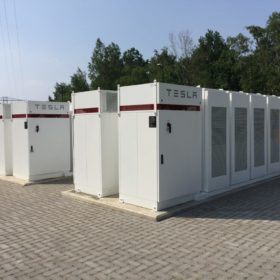
Tesla’s Musk: ‘Energy business will ultimately be as large as our vehicle business’
Tesla’s solar and battery businesses show signs of life in another profitable quarter for the EV manufacturer.
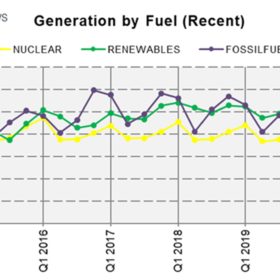
Solar generation retreats as hydro and wind lead Euro renewables dominance
Clean energy electricity generation surpassed that from nuclear and fossil fuels for the sixth successive quarter in the July-to-September window, according to data analyst Enappsys, but Europe saw a fall in solar output and demand patterns at the end of the window may presage a second wave of Covid-19.
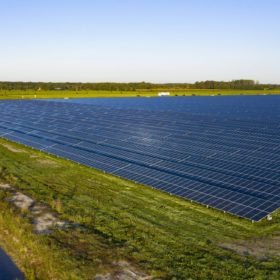
BayWa r.e and Alliander develop solar-plus-hydrogen in northern Netherlands
The pilot project, consisting of a 50 MW solar plant and a utility scale electrolyzer, is planned to test how this combination may help reduce grid constraints in the country.
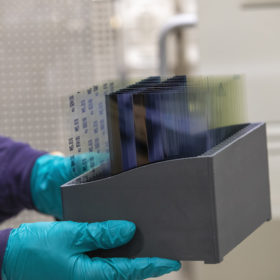
Armor announces 26% efficiency for organic solar cell
The French organic PV specialist has achieved the record efficiency for cells exposed to low light (1000 lux). Armor sees potential in energy-intensive applications.
