
Rebuilding for resilience
The islands of the Caribbean have been focusing on the deployment of storage solutions, minigrids and microgrids in response to the damage their power systems suffered during the 2017 hurricane season. But with the opportunities, there are also challenges.
Export analysis
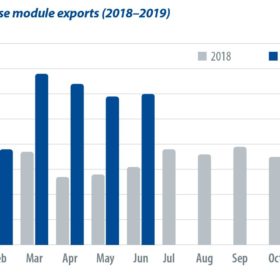
PV InfoLink analyzed the key markets of China’s big module manufacturers, as well as product trends, based on export statistics. According to trade figures, the nation’s module exports totaled 34.2 GW in the first half of 2019, up by more than 90% from the corresponding period of 2018. In a nutshell, overseas demand has been strong in 2019.
Meyer Burger resists rebel shareholder at EGM
The Swiss solar equipment supplier today fought off an attempt by its largest single shareholder to have a representative appointed to its board and to have its executive pay regime reviewed. Victory in that battle may secure the company some wiggle room, but the war over corporate strategy appears far from over.

China installed 920 MW of household solar last month
Hopes are high up to 5 GW of residential solar capacity will have been added by the time this month’s figures are added, as the household solar feed-in tariff still applies – but only until Thursday. However, the AECEA consultancy has again revised down its overall new capacity expectation for the year.
German supplier fields orders for 10 GW of PERC cell production lines in three months
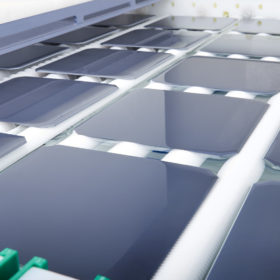
RENA Technologies may struggle to feed the insatiable demand for production capacity in China fast enough and has welcomed orders worth ‘tens of millions of euros’ from three big clients.
Kalyon Enerji finds Chinese partner for 500 MW module fab in Turkey
The factory, backed by the Turkish government in September, was originally intended to be built with the support of Korean solar manufacturer Hanwha Q Cells. The new partner is China Electronics Technology Group Corporation (CETC). Production is planned to start next year.

Runergy plans another 6 GW of mono PERC manufacturing capacity by 2022
The fact solar manufacturers in China are still aggressively expanding output illustrates the strength of global demand for PV even as hopes for a rebound in Chinese installations appear to have been groundless.
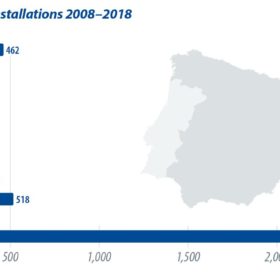
Political uncertainties and market speculation
After several years of stagnation, Spain has started to see a revival in its PV market, writes IHS Markit’s Maria Chea. The country’s newfound growth has been due to a combination of tender and private PPA projects, along with decreasing component costs.

Four out of five fossil fuel giants dismiss findings of report into EU lobbying efforts
Exxon Mobil and BP did not produce figures for their clean energy investment activity and Total responded only with its ‘low carbon electricity’ spending. Shell stated it had invested €1.6 billion in clean energy from late 2016 up to June and Chevron gave details of its spending to reduce emissions and enable ‘greater diversity of energy sources’.

PV against cancer
Research from the United States has demonstrated how PV technology can be used to kill cancer cells. Although still at an embryonic stage, the findings of the study and initial test results suggest solar power could be an effective tool in relation to light-activated fluorescent dyes for disease diagnosis, image-guided surgery and site-specific tumor treatment.
