Harnessing heat for 80% theoretical efficiency
Scientists at Rice University in Texas have developed a device which converts heat into light by squeezing it into a smaller bandgap. The ‘hyperbolic thermal emitter’ could be combined with a PV system to convert energy otherwise wasted as heat – a development the researchers say could drastically increase efficiency.

State news service: China has already connected 870 MW of this year’s subsidized PV projects
The state-owned China News Service today reported almost $80 million is left in the pot for large scale project subsidies this year despite almost 420 facilities with a combined generation capacity of 1.77 GW having missed out in the auction.
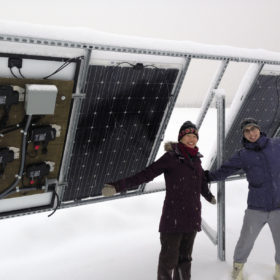
The weekend read: Pursuing a 20% bifacial boost
Research on bifacial solar panel performance has moved performance analysis closer to a standardized practice than ever before. More field tests are underway across the United States, and the first waves of data are expected this year. These tests will help standardize a predictive model for bifacial projects that is bankable.

Nigeria aims to lower solar electricity tariffs agreed three years ago
In July 2016 Nigeria signed power purchase agreements with 14 utility scale PV projects with a total generation capacity of 1,075 MW. None of the projects has reached financial close and pv magazine has learned the government wants to reduce the agreed tariffs.

Chinese solar production figures continue to ramp up
Quasi-governmental body the CPIA has released first-half figures for the world’s biggest solar marketplace which show production volumes for export markets continuing to expand and the domestic picture set to rebound after public solar subsidy levels were published.
Solarcentury chief calls for policy support for UK solar on day Boris Johnson is anointed
The London-based developer revealed blockbusting annual figures which show it is debt free, has almost £20 million in the bank, raked in more than half that figure in net profits in 2018-19 and expects twice as much in a year’s time.

Global PV market: 114 GW to be installed in 2019, with continued growth onwards
According to the latest market forecast published by Wood Mackenzie, it seems that global PV installation figures will rise to 125 GW per year from 2020. Continued global capacity expansion will come in through a growing gigawatts-club.

Tesla results: solar down, batteries up
Elon Musk’s EV and energy company is becoming increasingly irrelevant in the rooftop solar market, but battery sales are booming.

No respite for REC Silicon as shutdown dominates Q2 figures
The Norwegian polysilicon supplier – which has most of its manufacturing operations on U.S. soil – cannot give any estimate on when its solar material production lines will return, and has been left entirely dependent on the semiconductor products made by its Montana facility.

The U.S. Congress is (finally) talking about full decarbonization
Details are sparse, but today the U.S. House of Representatives’ Committee on Energy and Commerce is holding its first hearing towards coming up with a plan to fully decarbonize the U.S. economy by 2050.
