Turkey: 20 MW of new licensed PV capacity connects to the grid
Asunim Turkey has built and grid connected two new solar farms, thus boosting Turkey’s licensed PV market.

SunPower makes good on its promise to manufacture in America
The high-efficiency PV maker has closed on SolarWorld’s Oregon factory, which will transition from SolarWorld products to SunPower’s P-type shingled modules.
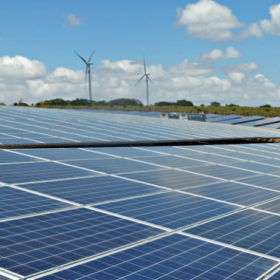
Financing renewables in the EU and Latin America: Trends and market designs
A new report on the financing mechanisms in the European Union (EU) and the Latin America and the Caribbean (LAC) regions offers lessons that link financing to electricity market design. The report also acknowledges the increasing presence of PV manufacturers in the LAC region.
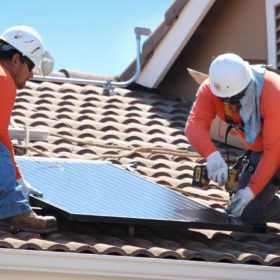
US: EnergySage finds $236.5 million tax on solar due to Section 201, USITC
Two major policy decisions in the United States have caused a temporary tax and stagnation in the residential solar industry, finds EnergySage’s Solar Marketplace Intel Report.

Elon Musk to step down as Tesla chair
Under the terms of a settlement with the Securities and Exchange Commission (SEC), Musk will be ineligible to serve as chair for three years. The deal also involves a US$40 million penalty and structural changes at Tesla.
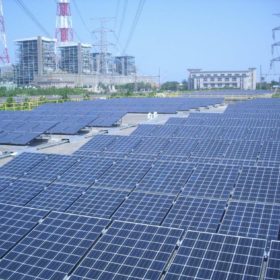
Taiwan’s cell makers: A$44.8 bn loan, new layoffs and falling shares
In the latest news emerging from the struggling world of Taiwanese solar cell makers, Motech has announced more layoffs, and a NT$4.8 billion loan; GET has let 203 employees go; and shares of the new UREC merger are said to be down. India’s safeguard tariffs are also hitting the country’s manufacturers hard.

200 GW Saudi-Softbank solar plans abandoned – reports
Plans to establish the world’s largest solar energy project have been shelved, according to the Wall Street Journal. Saudi Arabia is instead said to be working on a new, “more practical” renewable energy strategy.
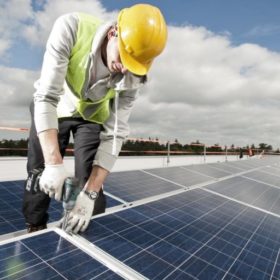
Germany deployed nearly 2 GW of PV so far this year
In the first eight months of 2018, newly installed PV capacity in Germany totaled almost 2 GW, and is already well above the previous year’s level. New residential and commercial PV systems, with a combined capacity of nearly 241 MW, have been reported to the Federal Network Agency. In October, solar incentives will drop by another 1%.

Taiwan takes India to WTO over safeguard tariffs
Taiwan has joined Malaysia in requesting consultations with India under the safeguard agreement of the World Trade Organization (WTO), following India’s decision to impose 25% safeguard duties on imports of solar cells, whether or not assembled in modules.
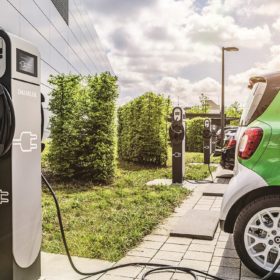
The weekend read: EV charging meets Blockchain
There are a number of reasons to be bullish on electric vehicles. Government support is growing, battery prices are falling, and the technology is constantly developing. But, for the prospect of owning an electric car to become even more attractive, existing EV charging infrastructure needs to be enhanced. This is where blockchain comes in.
