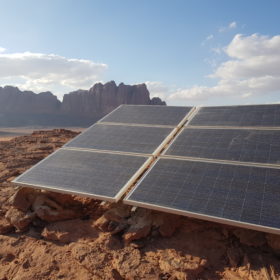
Uncertainty and challenges in Jordan’s Round 3 RE auction
Changes to Jordan’s Round 3 renewable energy auction will mean just 150 MW of capacity will be allocated for PV projects, down from 200 MW. Meanwhile, the government has accepted all 16 of the technical bids submitted in April, meaning it now hangs on price. The final results are expected soon.

Nigeria kicks off 1 GW solar IPP program for rural electrification
Nigeria’s Rural Electrification Agency is seeking consultants to conduct feasibility studies and develop a masterplan design for the ambitious program, which aims to establish a new energy infrastructure in the state of Jigawa. The program is backed by the African Development Bank.

Argentina to launch 400 MW mini RE auction next month
The mini-tender will be held under the RenovAr program for large-scale renewables, but will be limited to projects not exceeding 10 MW in size. The quota for solar and wind will be around 350 MW. Auctions for projects larger than 10 MW were suspended by the Argentinean government in early August.

Centrica moves into California solar with Vista acquisition
The British energy and services company’s acquisition of the C&I solar contractor is the latest among a number of moves it has made into solar and batteries.
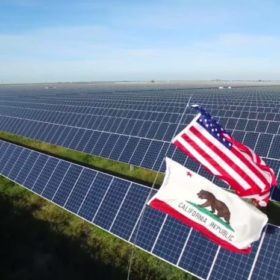
Up to 10 GW more solar, 2-2.5 GW of batteries coming to California
The U.S. state’s recent passage of SB 100 and SB 700 is expected to spur a boom in solar and behind-the-meter battery deployment. pv magazine has done the math on what we can expect.
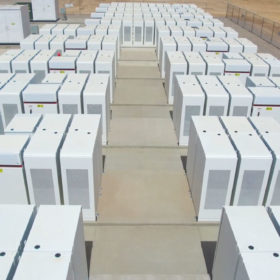
US triples energy storage installations
Wood Mackenzie projects that the U.S. energy storage market will reach well over US$500 million in sales this year, following on 61.8 MW / 156.5 MWh of installations during the second quarter. Residential storage has grown at 61% per quarter since Q1 2017.

Interview: Solar is paving its own road in Brazil, regardless of politics and economy
In an interview with pv magazine at this year’s Intersolar SA in Sao Paulo, Rodrigo Sauaia, president of Brazilian solar association, ABSSOLAR discussed the current issues and opportunities in Brazil’s PV market. The association is calling on the Brazilian Government to contract up to 2 GW of solar power in future auctions, and to maintain current rules for DG. The private PPA segment, meanwhile, which only a year ago appeared unviable, has begun to show positive results. All in all, solar in Brazil is growing, despite the hurdles created by a difficult political and economical environment.
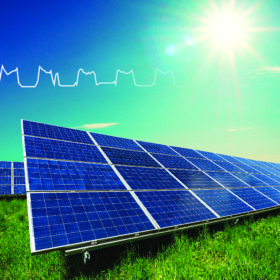
US scientists create MPP algorithm to measure PV panel degradation
The algorithm is said to be able to examine the relationship between weather forecast data and the projection of electric circuit parameters. Through this innovation, Purdue University researchers claim they can interpret the routinely collected maximum power point (MPP) time-series data, to assess the time-dependent “health” of installed solar modules.

The Philippines needs a cost-effective net metering policy – report
Under the current scheme, rooftop PV remains far below its huge potential in the country. Regulatory, administrative and financial hurdles are preventing more electricity consumers from installing rooftop arrays, as well as the resistance of local utilities.
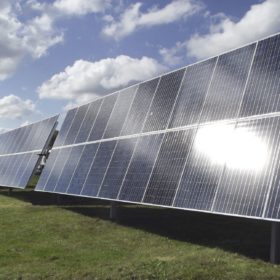
Deger Energie, Kavitsu announce new PV tracker manufacturing fab in India
Germany’s Deger Energie and India-based Kavitsu Robotronix will open a new solar PV tracker manufacturing facility in India. The first products are set to come off the production line in January 2019.
