
India’s Supreme Court allows imposition of 25% duty on solar imports – reports
In a significant move, which will greatly impact India’s solar industry, the country’s Supreme Court has reportedly given the go-ahead for the government to impose 25% safeguard duties on imports of PV cells and modules. The levy will be effective July 30, 2018.
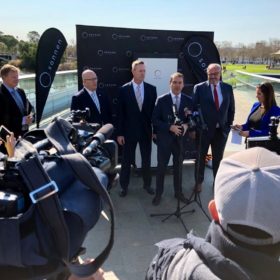
South Australia unveils details of $100 million battery scheme, sonnen sets up production plant
The South Australian government will launch its Home Battery Scheme in October, which will offer South Australians subsidies of up to AU$6,000. In the wake of the government’s announcement, the German storage provider has revealed plans to manufacture up to 50,000 battery storage units at the former Holden site in Elizabeth, creating hundreds of jobs.
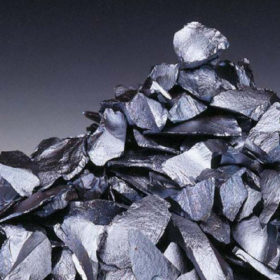
Daqo stops wafer production
Daqo New Energy Corp. has announced plans to stop its wafer manufacturing operations this month. It instead intends to focus solely on polysilicon production. Challenging market conditions were cited as the reason.
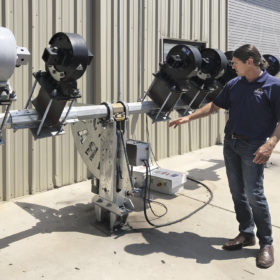
The weekend read: A new test for trackers
The benefits of deploying bifacial solar panels on single-axis trackers are touted like snake oil these days, with promises of anywhere from 5 to 50% gains in energy output compared with a monofacial panel. Unfortunately, the field data that might delineate the actual energy gain of a bifacial panel on a tracker are hard to acquire, and the data that are available typically describe small-scale tests under tightly defined conditions.
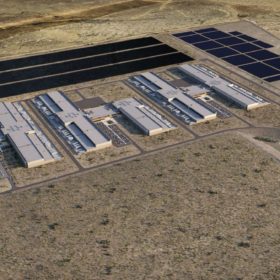
New Mexico prepares to approve 100 MW-AC of solar for Facebook data centers
The social media giant’s Los Lunas data center plans to buy power at $30/MWh.

US utility-backed fund raises $681 million for advanced energy technologies
Energy Impact Partners, who partners with 14 electric utilities, has raised US$681 million to continue investing in technologies that have a high probability of influencing the future power grid.

Interview: Sonnen MD, Schröder resigns, announces start-up
During the past three years, Philipp Schröder has built up and consolitaded the Sonnen brand. Now the self-proclaimed “Sonnen Warrior” is going his own way, although he will remain an advisor to the German storage provider. Managing Director, Christoph Ostermann regrets the departure, but emphasizes that with the strong management team that has been established, he will continue to promote the company’s growth.
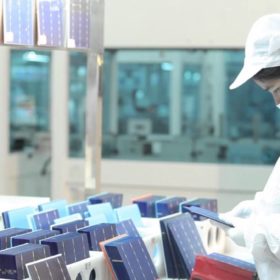
PERC market to reach 158 GW by 2022
Taiwan-based analyst firm, WisolPro says the global capacity for PERC cells is rapidly increasing, with the technology likely to replace polycrystalline cells. HJT, thin film, and n-type PERT technologies are also on the rise.

Italy to hold first 500 MW wind-solar auction in January
The new Italian government has maintained, almost unchanged, the provisions for the creation of an auction scheme for solar, wind and other renewables designed by the previous government. It has, however, postponed the first auction for large-scale projects from November to January. Furthermore, it has introduced new rules to enable the replacement of asbestos covers with rooftop PV systems through an ad-hoc FIT scheme.

Will Taiwan meet its 20 GW solar goal by 2025?
By 2025, Taiwan aims to reach a cumulative installed solar PV capacity of 20 GW. However, by mid-2018, just 11.2% of this goal had been met. TrendForce analyst, Rhea Tsao, examines the situation and discusses what needs to be done to reach the target.
