
Tremendous demand: An interview with First Solar CEO Mark Widmar
In this interview Mark Widmar talks about the market for PV modules and his company’s supply situation, First Solar’s position in the Section 201 case, and the role he sees for solar in the future of energy.
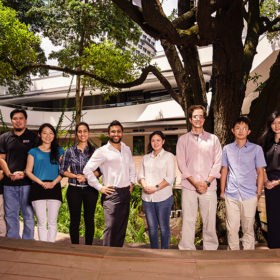
SERIS reaches 21.5% efficiency for fully screen printed cell
The Solar Energy Research Institute of Singapore (SERIS) announced a new efficiency milestone, achieving 21.5% average cell efficiency for its fully screen printed bifacial silicon technology. According to SERIS, the milestone was achieved at pilot-scale production using commercially available wafers.

Latin America’s largest PV project comes online
The Villanueva III projects, part of the 754 MW Villanueva complex, has started to inject power to the Mexican grid nine months ahead of schedule. Part of the solar park is still under construction by Italian energy company Enel.
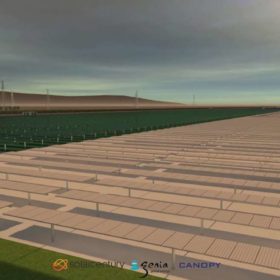
Spain’s Extremadura region prepares to host another giant solar plant
The new 300 MW project is being planned by U.K.-based Solarcentury, Spanish developer Genia Global Energy, and France’s Canopy.
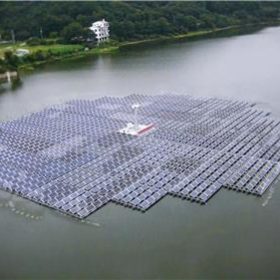
Solar installations to soar under new South Korean energy plan
South Korea’s total installed renewables capacity will spike to 58.5 GW by 2030, from just 11.3 GW at present, under a new energy plan that prioritizes solar and wind development over nuclear generation.

EU Council emphasizes right of solar self-consumption under new climate target strategy
The EU Council has defined its negotiating strategy for the so-called winter package, with which the EU wants to reach its energy and climate targets. The representatives of member states accepted, inter alia, the right to self-generation and CO2 limits for power plants to be financed through capacity mechanisms.
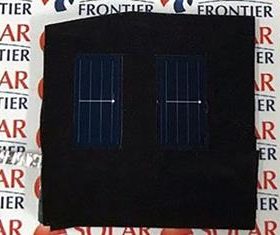
Solar Frontier hits new thin film cell efficiency record
The Japanese thin film module manufacturer has announced the achievement of a new world record, having achieved a 22.9% conversion efficiency for a CIS cell measuring 1cm². The record has been verified by Japan’s National Institute of Advanced Industrial Science and Technology.

India drafts $1.7bn solar PV manufacturing scheme
India invites suggestions and feedback for its new solar PV manufacturing scheme, which aims to ramp up domestic manufacturing capacity of modules, cells, wafers and ingots, and polysilicon. The scheme is expected to be implemented at the beginning of 2018.
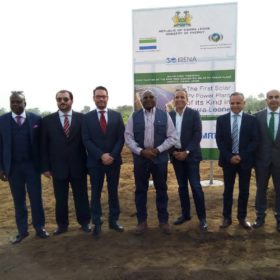
Sierra Leone begins construction on its first solar park
The 6 MW Solar Park Freetown will be built with the support of the Abu Dhabi Fund for Development (ADFD).
Yingli posts $355 million net loss in Q3
Yingli Green Energy’s net loss widened to RMB 2.3 billion ($354.9 million) in the three months to the end of September, from just RMB 335.4 million a year earlier, as its PV module shipments fell roughly 48% from the preceding quarter to 597.7 MW.
